

Is A Park Model Considered An RV – Fact Check
A park model is legally considered an RV only if it meets strict certification standards like RVIA or NOAH. These certifications guarantee compliance with safety, construction, and fire regulations.
Without certification, it’s often classified as a permanent structure. That can limit your financing and placement options.
Certification affects legal classification, financing, insurance, and where you can park it long-term. Understanding these distinctions will help clarify your options and potential restrictions around park models versus tiny houses.
What Makes a Park Model an RV?
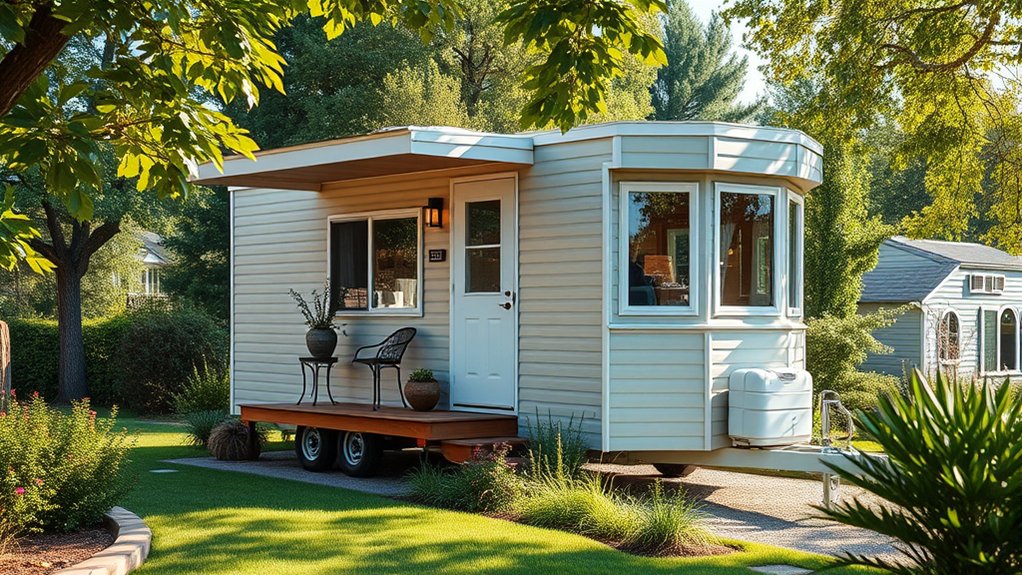
What exactly qualifies a park model as an RV? You’ll find that a park model earns its RV status primarily by being built on a mobile or towable chassis designed for recreational use. It must comply with specific standards set by authoritative bodies like the RV Industry Association (RVIA), ensuring it meets strict safety and manufacturing criteria.
Its mobility features, such as wheels and hitches, enable you to tow it, which distinguishes it from conventional mobile homes. Additionally, park models adhere to Federal Motor Vehicle Safety Standards (FMVSS) and NFPA 1192 fire safety regulations. Both of these are critical in classifying them as RVs.
You might notice certification labels on these models. Those labels confirm they comply with these technical standards and legally recognize them as recreational vehicles meant for temporary or seasonal living.
Why Certification Matters for Park Model RVs

Why does certification hold such significance for park model RVs? Certification, such as RVIA’s seal, verifies compliance with NFPA 1192 standards covering wiring, plumbing, propane, and fire safety. This assurance directly affects your financing and insurance options, as lenders and insurers often require certified models.
Additionally, many RV parks restrict access to uncertified units. So, a visible RVIA seal near the entry door expands your placement opportunities. Certification also influences the legal classification of the park model, determining whether it’s recognized as an RV or a permanent dwelling under local codes. This impacts your rights and responsibilities.
Unlike RVIA’s spot-check method, NOAH certification inspects every unit and accommodates DIY builders, providing an alternative pathway for validation. Ultimately, certification guarantees your park model meets rigorous safety and construction benchmarks essential for legal and practical acceptance.
Comparing Park Model RVs and Tiny Houses: Construction and Durability

Although park model RVs and tiny houses both offer compact living solutions, their construction and durability differ quite a bit because of their intended use and regulatory standards. Park model RVs follow NFPA 1192 safety standards and often use lightweight materials like aluminum frames and fiberglass exteriors. They focus more on portability and short-term use.
Their design puts safety compliance above long-term structural integrity.
On the other hand, tiny houses, even the ones on wheels, use residential-grade materials like solid wood framing, thicker insulation, and durable roofing. They’re built more like permanent homes.
This heavier construction means they’re usually more durable and energy-efficient. Some park model RVs are RVIA-certified, but their build quality still isn’t the same as tiny houses that meet higher residential standards.
Financing Your Park Model RV vs. a Tiny House
When you’re financing your park model RV, you’ll usually go for RV loans that come with terms of 10 to 20 years and interest rates ranging from about 5 to 8%.
On the other hand, tiny houses that are built on permanent foundations often qualify for more traditional mortgages or construction loans.
Certification status really matters here. If your park model RV is certified, you can typically get standard RV financing.
But if your tiny house isn’t certified, you might have to settle for personal loans, which tend to have higher interest rates and shorter repayment terms.
Knowing these differences can make a big difference when you’re exploring your loan options.
It helps you pick the financing strategy that works best for your unique situation.
Financing Options Compared
How you finance a park model RV compared to a tiny house depends largely on certification and classification. Certified park model RVs typically qualify for traditional RV loans with 10-20 year terms and interest rates between 5-8%.
In contrast, tiny houses on wheels, lacking RV certification, often require personal loans with higher rates. Tiny houses on permanent foundations usually need conventional mortgages or construction loans, which aren’t available for park model RVs.
| Financing Aspect | Park Model RV | Tiny House |
|---|---|---|
| Loan Type | RV loan (if RVIA certified) | Personal loan or mortgage |
| Loan Term & Rate | 10-20 years; 5-8% interest | Shorter term; higher interest |
| Classification Impact | RV classification enables RV loans | Foundation status affects mortgage |
Impact Of Certification
Why does certification matter so much in financing your park model RV compared to a tiny house? Certification, like RVIA approval, shows that your RV meets strict safety and construction standards. This makes lenders feel more confident.
Because of that, you can access traditional RV financing with favorable terms, usually 10 to 20 years at 5-8% interest.
Without certification, tiny houses on wheels usually don’t qualify for these loans. That pushes you toward personal loans, which come with shorter terms and higher rates.
If your tiny house sits on a permanent foundation, you’ll probably need a mortgage or construction loan instead. These loans work under different criteria than RV financing.
Loan Terms Explained
Certification plays a key role in shaping the loan terms you’ll encounter when financing a park model RV compared to a tiny house.
Park model RVs typically secure loans ranging from 10 to 20 years with interest rates between 5% and 8%. This is similar to traditional RV financing.
Tiny houses present varied options depending on certification and permanence. Certified park model RVs qualify for standard RV loans with favorable rates and terms.
On the other hand, uncertified tiny houses on wheels often require personal loans, which usually come with shorter terms and higher interest.
Tiny houses on permanent foundations may access traditional mortgages or construction loans offering longer durations.
Lenders classify park models as recreational vehicles, which influences down payment requirements and financing availability.
Understanding these distinctions is critical for optimizing your financing strategy. It really helps to know what kind of certification your home has before you start applying for loans.
That way, you can find the best terms suited to your situation.
Where You Can Legally Stay in a Park Model RV
You should know that where you can legally stay in a park model RV really depends on local zoning laws and regulations—they can vary a lot from place to place.
In many areas, you’re only allowed to stay long-term in designated RV parks or campgrounds.
Other places might have rules about needing a specific classification for your RV or require it to be set on a permanent foundation.
Legal Stay Limitations
Where can you legally stay in a park model RV? The answer depends heavily on state and local regulations, which often limit your stay to between 30 and 180 days in RV parks or campgrounds. Many jurisdictions restrict long-term residence, requiring park models to serve as temporary or recreational dwellings.
However, some areas allow year-round occupancy if the unit qualifies as a permanent structure, subject to different zoning or building codes. To clarify, consider these key points:
- Stay limits vary widely, typically 30–180 days in designated RV parks.
- Long-term or permanent residence is frequently prohibited.
- Permanent structure classification may allow year-round living with code compliance.
- Local permits and HOA rules enforce these limitations strictly.
Understanding these restrictions ensures you remain compliant and avoid legal issues. It’s always a good idea to check local rules before settling in.
Zoning And Regulations
Although park model RVs offer flexibility, zoning laws and local regulations strictly govern where you can place and use them for long-term living. Many jurisdictions limit park models to recreational use, prohibiting permanent residency without specific approvals. You must verify local zoning classifications to determine if long-term habitation is permitted.
In urban areas, stricter rules often apply, while rural zones may provide more leniency. Additionally, some locations require permits or special zoning designations to legally park a park model RV for extended periods.
Without appropriate zoning approval, using a park model as a permanent residence on private land is frequently restricted or outright prohibited. To comply, always consult local planning departments to ensure your intended use aligns with applicable land-use regulations and avoid costly enforcement actions.
Breaking Down the Total Costs of Park Model RVs in Florida
When considering a park model RV in Florida, it’s essential to understand that the initial purchase price typically covers only part of the total investment. Total costs range from $62,000 to over $150,000, influenced by size, features, and customization. You’ll need to budget for additional expenses and ongoing fees.
Key cost components include foundation, site prep, utility hookups, and hurricane anchoring, which can add $10,000 to $30,000.
Property taxes, HOA fees, insurance, and utility bills vary depending on your location. Certification status, like RVIA or NOAH, can impact your financing options and upfront costs.
The initial purchase price usually represents 60-75% of the full investment, including land and first-year expenses. Understanding these factors helps you plan effectively for acquiring and maintaining a park model RV in Florida.
It’s all about knowing what to expect so you can budget accordingly.
Frequently Asked Questions
Can I Tow a Park Model RV With a Standard Vehicle?
You can’t tow most park model RVs with a standard vehicle. Their weight often exceeds typical towing limits. So, you’ll usually need a heavy-duty truck or SUV with the right hitch and towing capacity.
Always double-check the specs before you transport. It’s better to be safe than sorry! Towing something too heavy with the wrong vehicle can cause serious problems.
Are Park Model RVS Allowed on Public Campgrounds?
About 70% of public campgrounds allow park model RVs, but you’ll need to check specific site rules and certifications like RVIA. Always confirm campground policies since size, zoning, and safety standards can restrict your park model’s access.
It’s a good idea to call ahead or visit the campground’s website to get the latest info. Rules can vary a lot depending on the location and type of campground. So, don’t assume your park model will be welcome everywhere.
Do Park Model RVS Require Annual Inspections or Registrations?
You don’t always need annual inspections or registrations for park model RVs if they’re permanently installed and meet ANSI standards.
But if you move them frequently, local laws may require you to register and inspect them yearly.
How Do Park Model RVS Handle Utilities Like Water and Electricity?
Like a well-oiled machine, you connect park model RVs to water and electricity via standard hookups. These usually include 30 or 50-amp power connections, on-board tanks, and pumps.
Often, when the RV is set on a foundation, you’ll find permanent utility lines in place. This setup ensures seamless service and makes living there feel more like home.
Can I Customize the Interior Layout of a Park Model RV?
Yes, you can customize your park model RV’s interior layout extensively. Manufacturers offer options for floor plans, cabinetry, appliance placement, finishes, and even wall configurations. This means you can really tailor the space to fit both your functional needs and your style preferences.
It’s pretty flexible, so whether you want a cozy nook or an open living area, you’ve got options. Customizing allows you to make the RV feel more like home, which is always a bonus.
Conclusion
In the world of mobile living, park model RVs straddle the line between traditional RVs and tiny houses, offering a unique blend of comfort and mobility. Understanding certification, legal restrictions, and financing options is essential before making a move.
Think of park model RVs as the Swiss Army knife of dwellings—compact yet versatile. By mastering these details, you’ll confidently navigate your options and find the perfect fit for your lifestyle and budget.