
Can You Use An RV Park As A Permanent Address – Find Out
You can use an RV park as your permanent address, but whether it’s legally accepted depends on the park’s official recognition and your state’s rules. Many RV parks lack formal addresses, which can complicate legal documents like driver’s licenses, voter registration, and vehicle registration.
Using mail forwarding services or parks in states with flexible residency laws can help. However, local regulations and HOA rules may restrict long-term stays. Keep exploring to understand how to make an RV park work as your legal base.
Can You Legally Use an RV Park as Your Permanent Address?
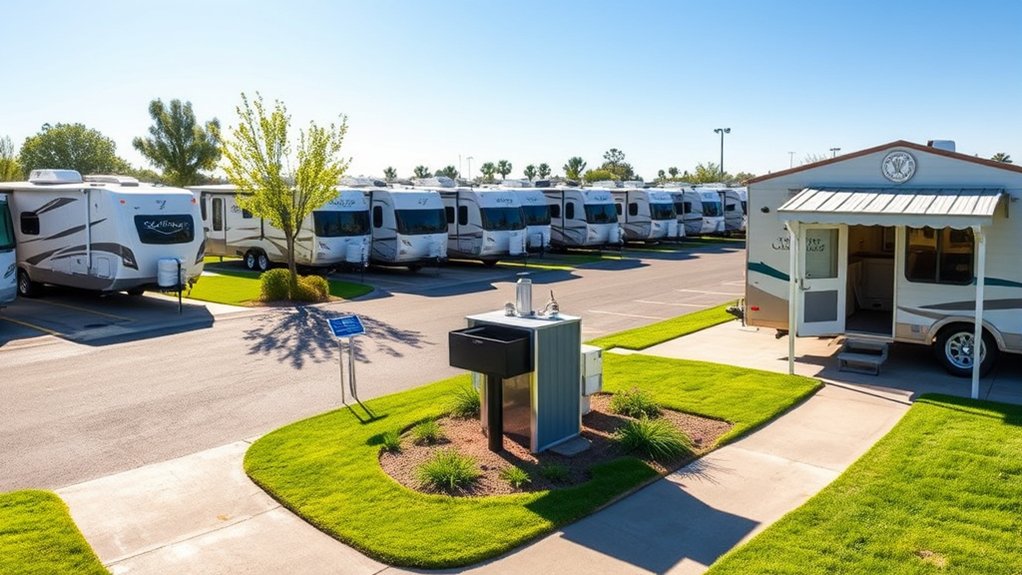
While you might enjoy the freedom of living in an RV park, using it as your permanent address isn’t always straightforward. Whether you can legally list an RV park as your residence depends on if the park is recognized as a legal address by government agencies.
Many RV parks don’t qualify because they lack a formal street address or unit number required for official documents like driver’s licenses or voter registration.
Many RV parks lack formal addresses or unit numbers needed for official documents like IDs and voter registration.
Some states demand a physical, legal residence, which most parks don’t provide unless they’re specifically designated for long-term stays.
To use an RV park legally, it must offer a recognized street address. You might also need to register with local authorities or use a mail forwarding service that provides a compliant address.
What Establishing Domicile Means for Full-Time RVers

When you establish domicile as a full-time RVer, you’re not just picking an address—you’re choosing a legal residency. It involves meeting certain state requirements, like getting a driver’s license or registering to vote.
You might use mail services or an RV park address, especially in states with friendly residency laws. This step is really important because it impacts your taxes, vehicle registration, and overall legal standing.
Legal Residency Requirements
Because establishing your legal residency, or domicile, is key to securing benefits like voting rights, tax advantages, and proper vehicle registration, you need a physical address recognized by the state.
For full-time RVers, this usually means having a lease, property deed, or a legally accepted address, not just an RV park’s name.
Some states, like South Dakota, make it easy by requiring only one overnight stay to establish residency.
But you still have to meet other requirements such as obtaining a driver’s license, registering your vehicle, and voting in that state.
If your RV park provides a formal street address accepted by state agencies, it can serve as your domicile.
Just make sure your chosen address complies with state laws to avoid complications with taxes, voting, and legal residency.
Mail And Address Importance
How do you establish a stable home base when your life is on the road? For full-time RVers, securing a legal domicile means having a physical address recognized for official documents. You can use an RV park’s address or a mail forwarding service in a state with favorable laws to register vehicles, vote, and get a driver’s license.
This address anchors your legal residency and keeps you compliant with state requirements.
| Purpose | Address Type | Benefit |
|---|---|---|
| Vehicle Registration | RV Park / Mail Service | Legal compliance |
| Voting | Physical Domicile | Civic participation |
| Tax Optimization | State with Favorable Laws | Financial advantage |
Choosing the right address is vital. It’s more than mail; it’s your legal identity on the road.
How to Choose the Right RV Park for Your Legal Address
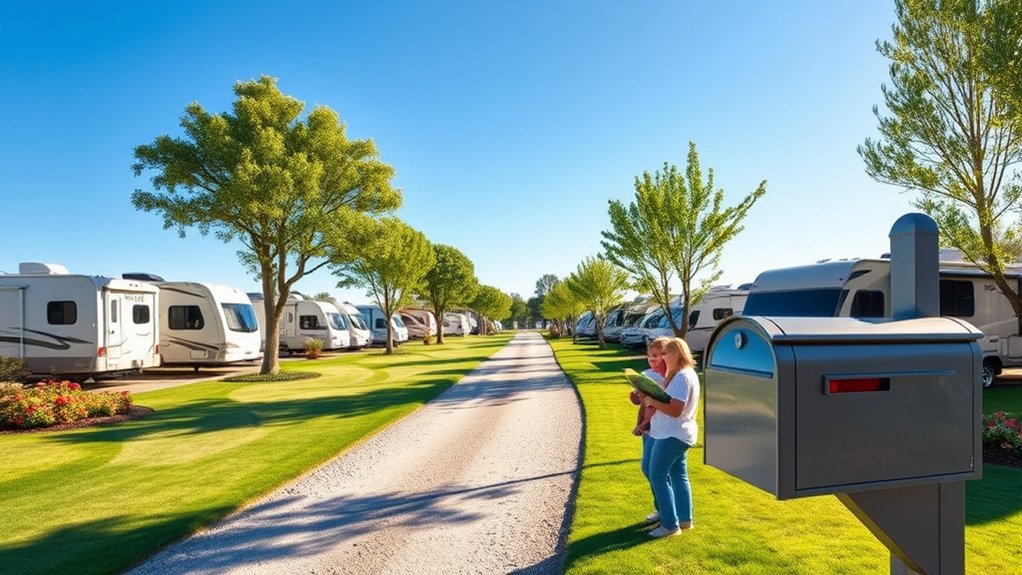
Selecting the right RV park as your legal address means making sure it meets key requirements that support your residency needs. First, confirm the park offers a formal street address accepted by the DMV, banks, and legal entities. PO boxes won’t cut it.
Also, check that state and local authorities recognize this address for vehicle and voter registration. Make sure the park allows long-term or permanent residency and understand any restrictions or permits involved.
Choose one with reliable mail forwarding and scanning services to keep your residency documentation consistent. Finally, consider parks in states with favorable domicile laws like South Dakota, Texas, or Florida. These locations make using your legal address a lot simpler.
Setting up Mail Forwarding and Vehicle Registration From an RV Park
When you’re setting up your permanent address at an RV park, it’s a good idea to pick one that offers a valid street address for mail forwarding and official use. A lot of parks either have their own mail services or work with forwarding companies to help you stay connected.
Plus, having that physical address makes it easier to handle things like vehicle registration and updating your driver’s license without any hassle.
Choosing RV Park Addresses
Although RV parks aren’t traditionally seen as permanent residences, many offer services that make them viable options for establishing a legal address. When choosing an RV park address, make sure it provides a physical street address rather than just a PO Box or mailbox number. This is really important for things like vehicle registration and official documents.
You’ll want to check with the park’s management to confirm their address is accepted by DMVs and tax agencies. That way, you can avoid any unnecessary complications.
Setting up mail forwarding through the park is a smart move too because it guarantees you’ll receive important correspondence consistently. This helps support your legal residency status.
Working closely with the park also helps you stay compliant with local and state regulations, which makes the whole process a lot smoother.
In the end, picking the right RV park address is key to establishing a reliable and recognized permanent address.
Mail Forwarding Services
Because many RV parks offer mail forwarding services, you can use their address as your legal residence for vehicle registration and other official purposes. Setting up mail forwarding usually means using the park’s main address or a dedicated mailbox service linked to it.
Some parks even provide official documentation you’ll need to register your vehicle or update your driver’s license.
Before you finalize anything, make sure the DMV and other government agencies accept the RV park’s address for legal registration.
Using an RV park’s address this way simplifies establishing your domicile and maintaining legal residency while full-time RVing.
This service helps you receive important mail without a fixed home, keeping your official records consistent and hassle-free. It’s a handy way to stay on top of your paperwork even when you’re always on the move.
Vehicle Registration Process
Setting up your vehicle registration using an RV park address involves a few key steps that guarantee your residency is legally recognized. First, confirm the RV park provides a legal street address, not just a PO Box, since most states require this for registration.
Next, set up mail forwarding through a reputable service in your chosen state. This serves as proof of residency.
When registering your vehicle, be ready to present documents like proof of insurance, your driver’s license, and verification of your RV park residency.
States like South Dakota and Florida make this process easier by accepting RV park addresses more readily.
Finally, update your DMV records to reflect your RV park address to stay compliant and avoid future complications.
Managing Voting, Insurance & Banking With an RV Park Address
When you choose to use an RV park as your permanent address, managing practical matters like voting, insurance, and banking requires careful attention.
You can often register to vote in the jurisdiction where your RV park is located, as long as the park qualifies as a legal residence under local laws.
For insurance, companies usually want a stable, physical address. So, using an RV park may affect your coverage options or premiums.
Banks might accept your RV park address for accounts, but some will ask for extra proof of residence.
Luckily, many RV parks provide mail forwarding and official address services, making it easier for you to handle legal, banking, and voting needs.
Always verify local regulations to make sure your RV park address meets all requirements. It’s a good idea to double-check so you don’t run into any issues later.
Challenges of Using an RV Park as Your Permanent Address
Although RV parks offer a convenient place to stay, using one as your permanent address comes with several challenges. Many RV parks don’t provide legal addresses for permanent residency since they’re designed for temporary stays.
This can complicate things like vehicle registration, voting, and official documents, as most parks lack formal legal address services.
Even if a park offers mail services, those addresses often aren’t accepted by banks or government agencies. You might also face zoning restrictions or HOA rules that limit long-term RV parking.
Relying solely on an RV park address can cause problems with mail delivery and proving residency, especially if the address isn’t recognized legally.
Frequently Asked Questions
Can I Receive Packages From All Carriers at an RV Park?
You can receive packages from most carriers at an RV park, but you’ll need to check their specific policies. Some parks accept all carriers, while others restrict certain services or charge fees for package handling.
It really depends on the park’s rules. So, before you order something, it’s a good idea to ask about their package policy. That way, you won’t run into any surprises when your package arrives.
How Do Utility Services Work With a Permanent RV Park Address?
You’ll usually coordinate with park management to set up water, electricity, and sewage hookups. Some parks include utilities in your fee, while others require separate accounts so you can track and pay your individual usage directly.
It’s a good idea to ask about how the billing works before you move in. That way, you know if you’re paying a flat rate or based on what you actually use. Either way, setting things up is pretty straightforward once you’re in touch with the right people.
Are There Tax Implications for Using an RV Park as an Address?
Yes, using an RV park as your address can affect your taxes. You might owe state income or property taxes depending on residency laws. So, be sure you understand local rules to avoid unexpected tax obligations or audits.
It’s a good idea to check with a tax professional or local authorities if you’re unsure. That way, you can stay on top of any potential issues and keep things running smoothly.
Can I List an RV Park Address on My Professional Licenses?
You generally can’t list an RV park address on your professional licenses unless it includes a verifiable street address and proof of residency.
Always check your specific licensing board’s rules to avoid denial or renewal issues.
It’s a good idea to be sure your address meets their requirements before you submit anything. That way, you won’t run into any unexpected problems.
What Security Measures Are Common for Mail at RV Parks?
You’ll find RV parks guarding mail like a fortress. Locked boxes, secure package lockers, and keycard access are pretty common.
Cameras watch every move, and you’ll often need ID or to sign in. This all helps keep your mail safe and sound.
Conclusion
Using an RV park as your permanent address can be like anchoring a boat in shifting tides. It’s possible, but it needs careful planning. You’ll want to choose the right park, set up reliable mail forwarding, and stay on top of voting, insurance, and registration details.
While challenges exist, establishing your legal domicile at an RV park can offer freedom and flexibility. It turns your home on wheels into a stable base you can truly call your own.


