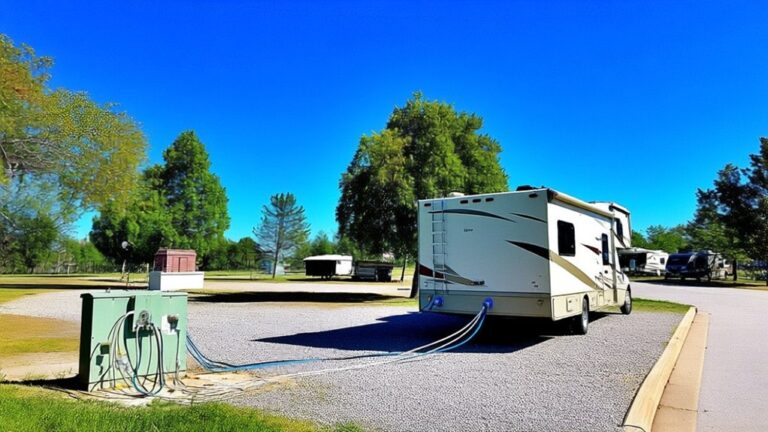
Can You Park An RV Anywhere – Here’s the Answer
You can’t park your RV just anywhere. You’ll need to find legal spots like public lands, rest stops, or retail lots with permission. Many places allow overnight stays if you follow local rules and respect property.
Apps and membership programs can help you discover safe, affordable options. Avoid stealth camping because of legal risks and safety concerns. Staying informed and courteous guarantees a smooth experience.
Keep exploring for tips on finding and enjoying ideal RV parking spots.
Where Can You Legally Park an RV Overnight?

If you’re wondering where you can legally park your RV overnight, there are several convenient options to think about.
Public lands like BLM and national forests often welcome RV parking, usually free or at low cost.
Public lands such as BLM areas and national forests offer affordable or free RV parking options.
Retail store parking lots such as Walmart, Costco, and Home Depot typically allow overnight stays if you get prior permission. Always check store policies and signage before you park.
Rest stops, truck stops, and highway service areas generally permit overnight parking, but rules vary. So, it’s a good idea to verify local signage before settling in.
If you’re a Harvest Hosts member, you can park overnight at farms, wineries, and other private locations without fees. Usually, you just need to book ahead.
Try to avoid parking in neighborhoods or roadside spots. Stealth camping is often illegal and could lead to fines or safety issues.
It’s better to stick to the legal spots and enjoy a worry-free night.
How to Find Free and Low-Cost RV Parking Spots

Although finding affordable or free RV parking can seem challenging, there are lots of resources that make the search easier and more rewarding. You can tap into several tools and locations that offer budget-friendly options. This helps you save money while enjoying your travels.
Here’s how to find free and low-cost RV parking spots:
Use apps like Campendium, iOverlander, and The Dyrt to discover spots all over the country. You can find some hidden gems this way.
Explore public lands such as BLM areas and national forests where dispersed camping is often allowed. It’s a great way to stay close to nature without spending much.
Check with chain stores like Walmart or Costco about their overnight parking policies. Just make sure to get permission first before you park.
Consider rest stops and truck stops for quick, inexpensive overnight stays. Keep in mind, though, amenities might be limited.
Remember to respect local rules and support businesses when you park overnight. It makes the experience better for everyone!
What Are the Rules for Parking at Stores and Public Lands?

When parking your RV at stores or public lands, you need to follow specific rules to avoid fines or being asked to leave. Many stores like Walmart, Costco, and Home Depot may allow overnight parking, but you should always get permission from management first since policies vary by location.
On public lands such as BLM areas and national forests, dispersed camping is often allowed without permits. However, you must follow local signage and regulations to stay compliant.
Rest stops and truck stops might permit short-term stays, yet time limits differ widely. Always check for posted signs or rules indicating if overnight parking is allowed.
Securing explicit permission, respecting stay limits, and adhering to local laws are essential to park your RV legally and hassle-free in these areas. It’s better to ask first than risk a fine or being asked to move.
Tips for Safe and Respectful Overnight RV Parking
Securing permission to park your RV overnight is just the beginning of ensuring a smooth stay. Once you have the go-ahead, it’s essential to respect the property and neighbors to avoid trouble and maintain goodwill.
Here are some tips to keep your overnight parking safe and considerate:
Park discreetly without blocking entrances, sidewalks, or access points. Limit your stay to 24-72 hours unless you have explicit authorization. Keep noise levels low and turn off generators at night to minimize disturbances.
Carry essential safety supplies like a fire extinguisher and emergency contacts to be prepared for unexpected situations. Following these guidelines helps you enjoy your trip responsibly while protecting your ability to park overnight in the future.
Is Stealth Camping Safe? Risks and Alternatives for RVers
Because stealth camping relies on blending in unnoticed, it can feel tempting for RVers seeking free overnight spots. But it carries significant risks. You face legal fines, safety concerns, and the discomfort of staying in noisy, visible areas.
Cities are cracking down on stealth camping, making it less safe and often illegal. Instead, consider designated free overnight parking spots that offer both legality and security. Here’s a quick comparison to help you decide:
| Aspect | Stealth Camping | Designated Overnight Parking |
|---|---|---|
| Legal Risk | High (fines, eviction) | Low |
| Safety | Low (noise, visibility) | High |
| Comfort | Often poor | More comfortable |
| Accessibility | Limited and unpredictable | Reliable and planned |
| Peace of Mind | Low | High |
Choose wisely for a safer RV experience.
Frequently Asked Questions
Can I Park My RV Overnight in Residential Neighborhoods?
You usually can’t park your RV overnight in residential neighborhoods without permission. Cities often ban it to avoid clutter and safety issues. Always check local rules and get property owner approval to avoid fines or towing.
It’s a good idea to ask around or look up your city’s specific regulations before you park. That way, you can avoid any surprises. Plus, getting permission keeps things friendly with neighbors.
Are There Size or Weight Restrictions for RV Parking Spots?
You’ll find many RV parking spots limit length to around 40-45 feet and enforce weight restrictions to protect surfaces. Always check signs carefully, since ignoring these limits can lead to fines or towing.
It’s pretty important to follow these rules. Not only do they keep the parking lot safe, but they also help you avoid any unexpected trouble. So, before you park, take a moment to make sure your RV fits within the allowed size and weight.
How Do RV Parking Rules Differ Between States?
You’ll find RV parking rules vary widely. Some states let you park overnight freely on private or public land. Others enforce strict permits or limit parking to designated spots.
Always check local regulations before settling in. It’s better to be safe than sorry when it comes to parking your RV. Different places have different rules, so a quick look can save you a lot of hassle.
Can I Leave My RV Parked Long-Term in One Location?
You can leave your RV parked long-term, but you’ll need to check local laws, property rules, and permits first.
Consider RV parks or private land for extended stays to avoid fines, restrictions, or eviction hassles.
It’s always better to be safe and know the rules before settling in one spot for a while.
What Are the Penalties for Illegal Overnight RV Parking?
You’d love a surprise fine, towing, or impoundment for illegal overnight RV parking, right? Unfortunately, cities don’t.
Expect hefty tickets, possible legal trouble, and a record that’ll haunt your future parking attempts. It’s definitely not worth the risk. So, always check local rules before you park overnight.
Conclusion
So, can you park your RV anywhere? The answer isn’t that simple. Like a puzzle, legal spots, store policies, and public lands all fit together to guide your journey.
By knowing where to park and respecting rules, you turn every overnight stop into a safe, enjoyable adventure. Remember, stealth camping might seem tempting, but weighing the risks guarantees you keep your travels smooth and worry-free.
Happy parking, and even happier travels!