Do I Need A Permit To Park An RV On My Property – The Truth
You need a permit to park an RV on your property if you plan extended parking or living in it. Local rules and HOAs typically ban front yard or street parking, require setbacks, and limit RV size.
Without proper permits, you risk fines starting at $210, towing, or legal action. Permits involve applications, fees, and inspections to guarantee compliance.
Understanding these requirements is essential for lawful parking and avoiding penalties. Keep exploring to fully grasp the rules and processes involved.
RV Parking Permits You Need to Know
Although regulations vary by location, you’ll typically need a permit to park your RV on private property for an extended period, especially if you intend to use it as a dwelling. Most local governments require you to obtain temporary RV permits that specify duration, location, and conditions such as utility hookups and waste management.
These permits often involve application fees, inspections, and strict adherence to setback and size restrictions, which differ by jurisdiction. Be aware that parking your RV in front yards or on streets usually demands special approval or is prohibited.
For long-term or permanent RV living, you must secure zoning compliance or a specific land use permit to guarantee legality. Understanding these permit requirements is vital before parking your RV to avoid violations and penalties.
How Local Rules and HOAs Affect Your RV Parking
Understanding the permit requirements for parking your RV on private property is only part of the equation. Local regulations and homeowners association (HOA) rules play a big role in what’s allowed.
Local laws often restrict RV parking in front yards, with setbacks, paving requirements, and time limits that range from 24 hours to 14 days.
Local laws limit RV parking in front yards with specific setbacks, paving rules, and time restrictions from 24 hours to 14 days.
Your HOA might prohibit RV parking entirely or limit it to certain designated areas. Sometimes they ban storage in driveways or require that your RV be concealed.
Municipalities may also require permits for extended parking, and these permits can have different fees and approval durations.
These rules usually come from community concerns about aesthetics, safety, noise, and property values. Because of this, enforcement tends to be strict, and penalties can follow if you don’t comply.
If parking on your property is restricted, think about off-street storage or community parking platforms as alternatives to stay within the rules.
RV Parking Size and Location Rules
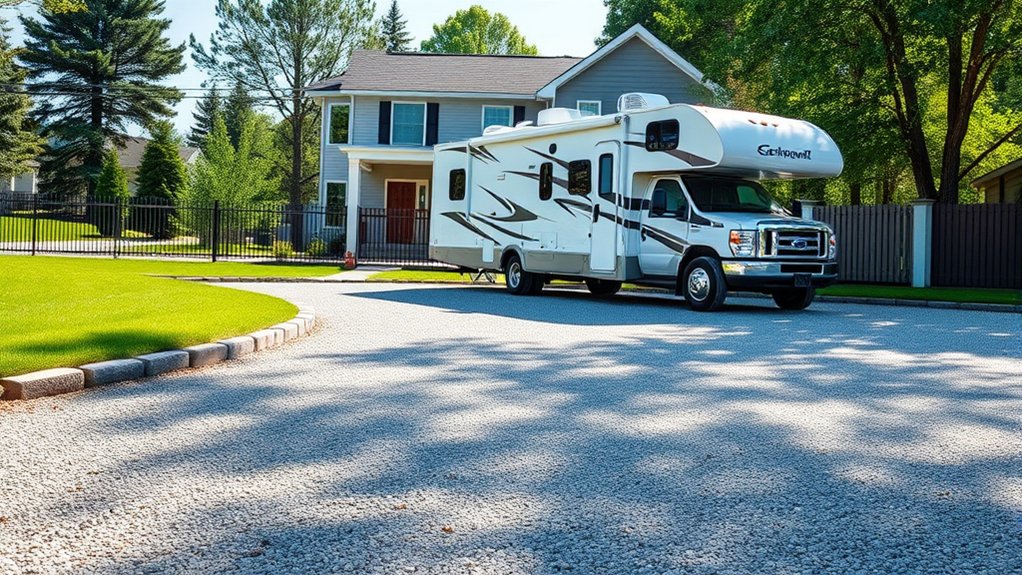
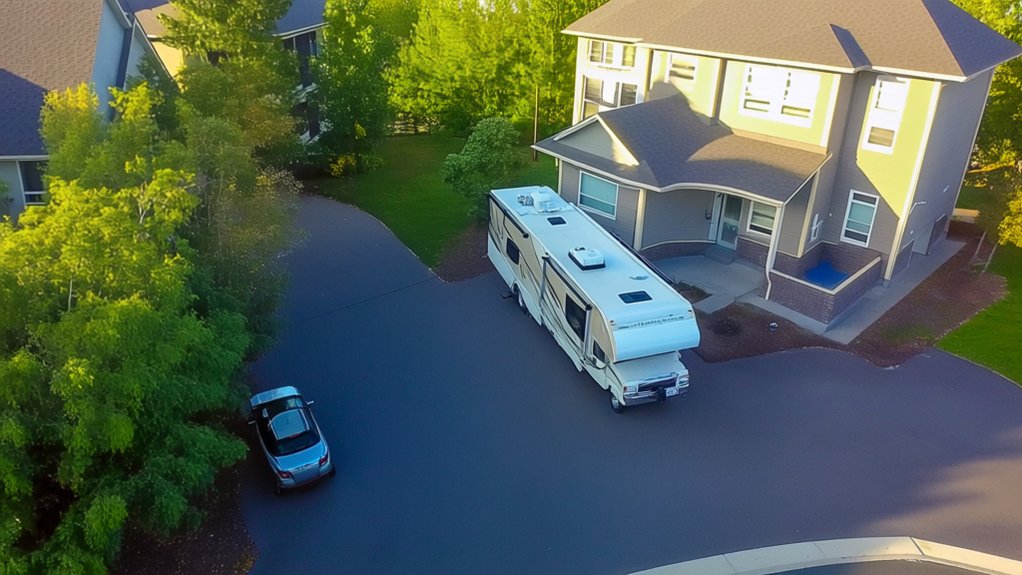
Where exactly can you park your RV on your property, and what size limits must it meet? You must park your RV behind the front building line, strictly in the rear or side yard. The vehicle can’t exceed 30 feet in length or 10 feet in height.
Additionally, you must guarantee the RV is secured during high winds or hurricanes to prevent damage. It also needs to display a current registration license plate at all times.
Plus, maintain a minimum 10-foot setback from the rear property line.
If you park it in the side yard, it has to match the main building’s side yard setbacks. Parking on the street or in front yards is typically prohibited.
Following these rules helps keep your property looking great and makes sure you’re complying with local ordinances.
What You Can’T Do With Your RV at Home
You can’t use your RV for living, sleeping, or even storage while it’s parked on your residential property. It’s important to remember that performing major repairs or converting it into a permanent living space is strictly off-limits.
Knowing these rules can save you from violations and help you stay in line with local regulations.
Prohibited RV Uses
Although owning an RV offers flexibility, you can’t use it for living, sleeping, housekeeping, or storage on your property without proper authorization. Strict regulations prohibit:
- Using the RV as a permanent residence or primary dwelling without permits.
- Attaching service connection lines except for brief maintenance periods.
- Conducting major repairs or overhaul work on the premises.
- Storing household items or modifying the RV to facilitate living quarters.
Violating these rules can lead to penalties and enforcement actions. You must comply with local zoning laws and obtain necessary permits before considering any non-temporary use.
This makes sure your RV stays a recreational asset, not a permanent fixture that conflicts with residential regulations. Understanding and respecting these prohibitions helps protect you from legal issues and keeps neighborhood standards intact.
Repair And Habitation Limits
Adhering to repair and habitation limits is essential when parking your RV on private property. You must avoid performing major repairs or overhauls on the vehicle at home, as such activities are prohibited.
Also, using your RV for living, sleeping, housekeeping, or storage while parked on your property isn’t allowed. Permanent utility connections to your RV, like water, electricity, or sewage lines, are generally forbidden, except for limited, periodic maintenance purposes.
Modifying the RV to support long-term habitation or making it your primary residence on-site violates regulations. Failure to comply with these limits may lead to enforcement actions, fines, or citations.
Penalties for Parking an RV Without Permits
If you park an RV without the proper permits, you could get hit with citation fines starting at $210 for the first offense. And it doesn’t stop there—those fines can go up if you keep violating the rules.
On top of that, enforcement might include towing your vehicle, impoundment, or even legal actions. This can affect not just the owners but tenants as well.
Citation Fines Overview
What consequences can you face for parking an RV on your property without a permit? The penalties can be severe and costly. Authorities start with fines of $210 for the first offense, and these can jump up to $810 if you repeat the violation within five years.
You might run into a few issues like citations from local authorities asking you to fix the problem right away. Your RV could even be impounded, which means extra fees to get it back.
Plus, liens might be placed on your property until all fines and penalties are paid off.
If you keep ignoring the rules, the legal actions could escalate, making things even more expensive and complicated. These fines add up fast and often cost more than just getting the proper permit in the first place.
Enforcement Procedures Explained
Although parking an RV on your property without a permit might seem harmless, enforcement officers actively monitor compliance and can issue citations or fines promptly. They conduct inspections and may issue warnings or tickets for unpermitted RV parking.
If you ignore these notices, persistent non-compliance can lead to escalating legal actions, including fines up to $810 for repeat offenses within five years. Beyond fines, your RV may be impounded, and unpaid penalties can result in liens against your property.
It’s important to understand that both property owners and tenants bear responsibility for violations, but owners are ultimately held accountable. To avoid these enforcement consequences, make sure you secure the necessary permits before parking your RV on your property.
Owner And Tenant Liability
How liable are property owners and tenants when an RV is parked without a proper permit? Both parties share responsibility for following local rules. Violations can lead to serious consequences.
These include citations and fines starting at $210 for the first offense, which can go up to $810 for repeat violations within five years. You might also face vehicle towing and storage costs, often without any warning. Legal notices can demand immediate RV removal, and ignoring these can result in court actions.
In some cases, persistent non-compliance might even lead to criminal charges.
As a property owner, you’re ultimately responsible for making sure RV parking laws are followed, even if your tenants park illegally. Tenants also need to respect permit requirements to avoid getting into trouble.
Knowing these liabilities helps you avoid costly enforcement actions and keeps you on the right side of the law. It’s a good idea to stay informed and communicate clearly with tenants about these rules.
How to Apply for RV Parking Permits
Where should you start if you want to park your RV on your property legally? Begin by submitting an application to your local city or county planning department, either online or in person. Your application must include detailed information about your property, the RV, and demonstrate compliance with zoning and land use regulations.
Be prepared to pay a permit fee, which varies based on duration and location, ranging from modest short-term costs to several hundred dollars for long-term permits. Approval may take from a few days to several weeks, especially if inspections are required.
Remember to renew or extend your permit before it expires to avoid fines or revocation. Following these steps guarantees you meet all legal requirements for RV parking on your property.
Frequently Asked Questions
Can I Rent Out My RV While Parked on My Property?
You can rent out your RV while it’s parked on your property, but you’ll probably need permits or licenses.
It’s important to check local zoning laws and regulations carefully. Make sure you understand any restrictions or rules about commercial activities before you move forward.
Are There Tax Implications for Storing an RV at Home?
Yes, storing an RV at home can affect your property taxes or deductions if used for business. You should consult a tax professional to understand local regulations and potential tax impacts based on your RV’s use and classification.
It’s a good idea to get clear advice because rules can vary widely depending on where you live. Plus, how you use your RV—whether just for fun or as part of a business—can change the tax outcome. So, talking to an expert will help you avoid surprises.
Does Parking an RV Affect My Homeowner’s Insurance?
Think of your homeowner’s insurance as a shield. Parking an RV usually won’t pierce it unless you live in it or break local rules.
Then, you’ll need extra coverage to keep your protection intact and claims valid. It’s all about making sure you’re covered when it counts.
Can I Use Solar Panels on My Parked RV?
You can use solar panels on your parked RV, but you should verify local zoning laws and HOA rules.
Portable panels usually don’t require permits, while fixed rooftop systems might need approval due to size or electrical connections.
It’s always a good idea to check before installing anything permanent. That way, you avoid any surprises or fines down the road.
Are There Environmental Restrictions for RV Wastewater Disposal?
When it comes to RV wastewater disposal, you can’t cut corners. You must follow strict environmental regulations. Using certified dump stations or approved septic hookups is essential to avoid fines.
This also helps protect water sources and soil from contamination. So, always make sure you’re disposing of wastewater properly. It’s better for the environment and for you in the long run.
Conclusion
You might think parking your RV on your property is simple, but local rules, HOA restrictions, and permit requirements often come into play. These factors usually intertwine to shape what’s allowed.
Ignoring them can lead to fines or even forced removal. That’s why it’s so important to understand and follow all the regulations.
By getting the proper permits and respecting size and location limits, you protect your investment and avoid penalties. Preparation and knowledge really go hand in hand for hassle-free RV parking.