What Is An RV Park – Meaning & More
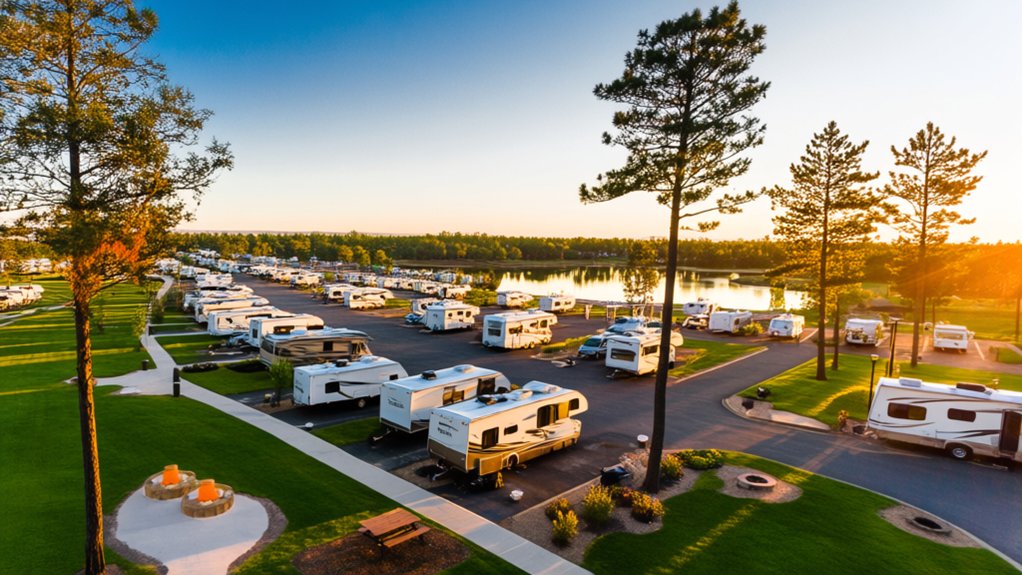
An RV park is a specially designed place where you can park your motorhome or trailer, complete with essential hookups like electricity, water, and sewage for a hassle-free stay. You’ll find amenities ranging from Wi-Fi to pools, depending on the park’s style and location.
Whether near highways or scenic spots, RV parks cater to short stops or longer visits. Curious about costs, regional differences, and future trends? There’s plenty more to explore.
What Is an RV Park and How Does It Work?
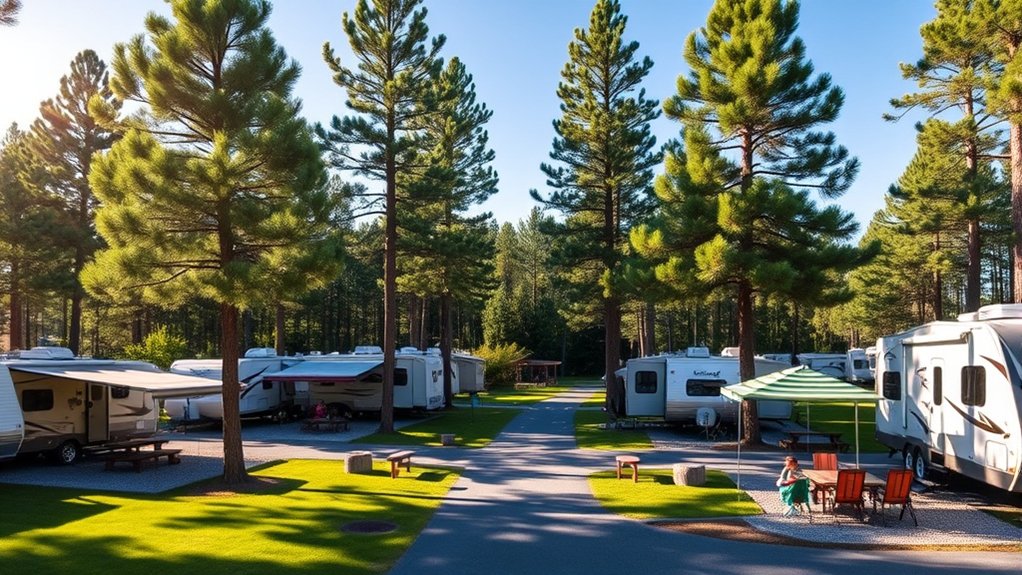
Although you might think an RV park is just a place to park your vehicle, it’s much more than that. It’s a carefully designed area with level parking spots tailored for recreational vehicles like trailers and motorhomes.
An RV park is thoughtfully designed with level spots perfect for trailers and motorhomes, not just a parking area.
When you arrive, you’ll find essential utility hookups such as electricity, water, and sewage disposal ready for use.
Some spots offer full hookups while others provide partial services. These parks accommodate various RV sizes, though some have restrictions you’ll want to check.
Many RV parks also feature extras like Wi-Fi, showers, and laundry facilities, enhancing your stay.
They’re conveniently located near highways, attractions, or scenic areas. RV parks serve as perfect stopping points or extended stay destinations.
They really make your travel experience smoother and more enjoyable.
What Amenities to Expect at RV Parks
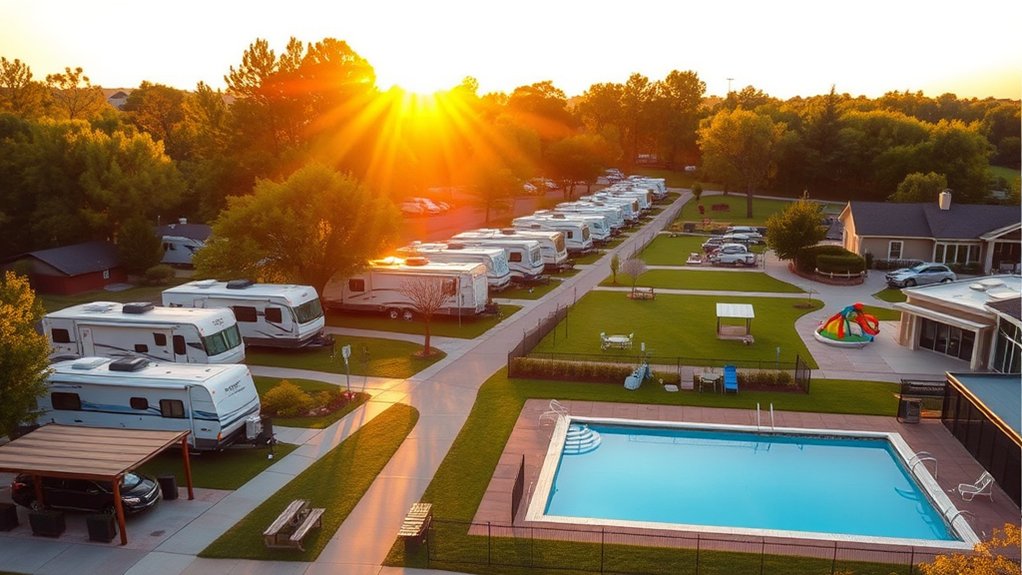
When you park at an RV site, you’ll usually find essential hookups like water, electricity, and sewage ready for your rig. It makes setting up pretty straightforward.
A lot of parks also offer conveniences like Wi-Fi and laundry facilities, so you can stay connected and keep your clothes fresh without any hassle.
And if you’re looking to relax or have some fun, many places have recreational spots like pools or playgrounds. They’re great for adding a bit of enjoyment and socializing during your stay.
Essential Utility Hookups
Since staying connected and powered up is essential for a comfortable RV experience, you’ll find that most RV parks offer fundamental utility hookups like water, electricity, and sewage disposal.
Electrical connections usually come in 15, 20, 30, or 50-amp options, with North American parks commonly providing NEMA 14-50 (50 amp), TT-30 (30 amp), and NEMA 5-20 or 5-15 (15 or 20 amp) outlets.
These hookups supply 120V or 240V power, supporting everything from your RV appliances to electric vehicle charging.
Outside North America, 16-amp connections often serve basic power needs.
The amperage capacity directly affects how quickly you can charge your vehicle and the overall energy available for your gadgets.
With these utilities in place, you can enjoy a seamless, convenient stay at any RV park.
It really makes your trip hassle-free and lets you focus on the fun stuff!
Recreational Facilities Offered
Beyond the basic utility hookups that keep your RV running smoothly, many parks enhance your stay with a variety of recreational facilities designed to elevate your experience. You can often find swimming pools and hot tubs where you can relax after a day on the road.
Sports courts invite you to play basketball or tennis, while some parks organize group activities that help you connect with fellow campers.
If you enjoy outdoor adventures, look for parks offering bike or kayak rentals.
Higher-end RV resorts might surprise you with upscale amenities like fitness centers, cabanas, and beautifully landscaped communal areas perfect for unwinding.
These features turn a simple overnight stop into a mini-vacation, giving you plenty of options to stay active, social, or simply chill out during your travels.
Connectivity And Convenience
How connected and comfortable do you want your RV stay to be? At most RV parks, you’ll find a variety of essential amenities designed to keep you plugged in and at ease. Electrical hookups come in different amperages, ensuring your power needs are met.
Many parks offer Wi-Fi, sometimes free, sometimes for a small fee. Water and sewer hookups let you stay longer without hassle. Pet-friendly spots and clean, convenient facilities like laundry and showers add to your comfort.
| Amenity | Details |
|---|---|
| Electrical Hookups | 15, 20, 30, 50 amps (NEMA types) |
| Wi-Fi | Free to $50/day or week |
| Water & Sewer | Full utility connections |
| Pet-Friendly | Dog parks, walking areas |
| Facilities | Laundry, restrooms, showers |
RV Hookups: Electricity, Water, and Sewage Explained
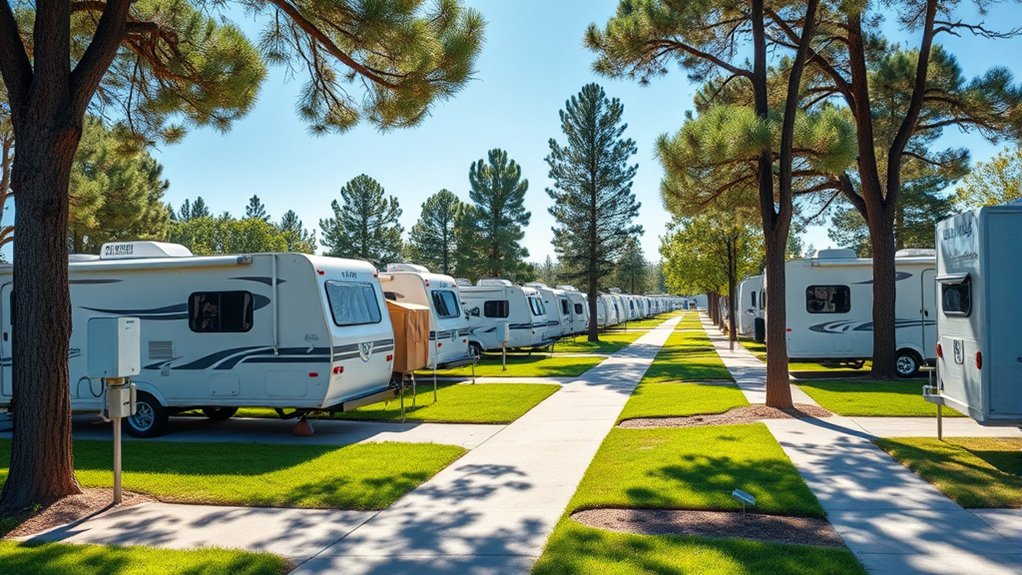
What makes an RV park truly convenient for travelers? It’s the availability of essential hookups: electricity, water, and sewage. These are what transform your stay from basic to comfortable.
Electrical connections vary, typically offering 15, 20, 30, or 50 amps. Common North American standards like NEMA 14-50 and TT-30 let you power appliances and stay connected without hassle.
Water hookups supply fresh water directly to your RV. This is vital for drinking, cooking, and cleaning.
Meanwhile, sewage hookups connect your RV’s waste system to the park’s sewer. This ensures proper disposal of black and grey water.
Having reliable hookups means you can enjoy extended stays with ease. It makes your RV park experience smoother and way more enjoyable.
Regional Differences in RV Parks: North America, Europe, and Australia
Although RV parks share a common purpose worldwide, you’ll find notable differences depending on the region you visit. North American parks range from rustic to luxury resorts, offering full hookups and amenities like pools.
In Europe, sites vary by age. Newer ones meet higher environmental and vehicle standards but tend to be smaller and more basic.
Australia’s caravan parks blend basic and holiday features. They often highlight on-site cabins and natural settings.
| Region | Key Features |
|---|---|
| North America | Full hookups, luxury resorts, Wi-Fi |
| Europe | Smaller, eco-friendly, utilitarian |
| Australia | Cabins, natural surroundings, mixed amenities |
| All Regions | Serve diverse traveler needs |
Understanding these differences helps you choose the perfect spot for your next adventure.
How Much Does Staying at an RV Park Cost?
When planning your RV trip, knowing the cost of staying at an RV park can help you budget wisely and choose the best spot for your needs. Prices typically range from $20 to over $120 per night, depending on location and amenities.
If you’re aiming for a budget-friendly option, rural parks usually charge between $20 and $40, offering basic hookups and facilities.
For a more comfortable stay, private parks with full hookups often cost $40 to $80 per night.
If luxury is your priority, resort-style parks with upscale amenities can exceed $80 to $120 nightly.
Many parks offer discounted weekly rates, usually 10 to 25% off.
Monthly stays often range from $500 to $1,200 or more, giving you flexibility and savings for longer adventures.
Who Stays at RV Parks? From Vacationers to Full-Time Residents
If you’ve ever wondered who fills the spaces at RV parks, you’ll find a diverse mix of travelers and residents enjoying these versatile communities. RV parks welcome people from all walks of life, each with unique reasons for staying.
Here are four common types you’ll encounter:
- Vacationers and families seeking scenic getaways and leisure trips.
- Full-time residents living in their RVs year-round, making these parks their home.
- Retirees and seasonal travelers who enjoy community and comfort part of the year.
- Budget-conscious and seasonal workers who stay for affordable rates or regional events.
No matter your travel style or length of stay, RV parks offer a welcoming spot tailored to your needs.
Whether you’re just passing through or settling in for a while, there’s a place for you here.
Choosing the Right RV Park for Your Trip
Since your RV trip is all about comfort and convenience, choosing the right park is essential to making the most of your journey. Start by thinking about the size and layout of the park to make sure your RV fits comfortably without any hassle. It’s also important to look for essential hookups like electric, water, and sewage.
Plus, check out amenities such as Wi-Fi and laundry. These little things can really make your stay smoother. Location matters too, so pick a park near your planned attractions or along your travel route to save time.
Don’t forget to check the policies on stay duration, pets, and noise to make sure they match your needs. Finally, read reviews to get a feel for real experiences. Also, verify availability, especially during busy seasons, so you can confidently choose the RV park that suits your trip perfectly.
Booking Tips for Reserving an RV Park Site
Because RV parks can fill up quickly during peak seasons, securing your spot early is essential to avoid missing out on your preferred site and amenities. When booking, you want to make sure your RV fits comfortably and your needs are met without surprises.
Here are four key tips to help you reserve the perfect site:
- Confirm the park’s maximum vehicle length and site size to fit your RV.
- Review policies on hookups, pets, and stay duration to avoid unexpected issues.
- Check online reviews and photos to get a feel for cleanliness and facility quality.
- Use official park websites or trusted reservation platforms for accurate rates and cancellation terms.
Following these steps will help ensure a smooth booking experience and a relaxing stay at your chosen RV park.
Don’t wait too long—getting these details right makes all the difference!
RV Parks vs. RV Resorts and Campgrounds: Key Differences
While RV parks, RV resorts, and campgrounds all cater to travelers who love the road, they offer distinctly different experiences tailored to your preferences and needs. RV parks provide essential amenities like electric hookups, water, and dump stations, perfect for short-term stays near attractions.
RV parks offer essential amenities for convenient short-term stays near your favorite attractions.
If you crave luxury, RV resorts elevate your visit with pools, hot tubs, organized activities, and beautifully landscaped grounds. They’re ideal for longer, indulgent trips.
On the other hand, campgrounds immerse you in nature, offering minimal facilities and a rustic environment that emphasizes outdoor adventure.
Your choice depends on whether you want convenience, upscale comfort, or a back-to-basics experience.
Each type serves a unique purpose, so think about what kind of getaway suits your lifestyle and travel goals best.
The Future of RV Parks: Tech and Sustainability Trends
You’ll notice RV parks are getting smarter these days, especially with energy management systems that help cut waste and boost efficiency. It’s pretty cool how they’re using eco-friendly infrastructure, like solar panels and water-saving features, to create a greener future for these spots.
And on top of that, digital reservation systems have made booking way easier than ever—putting convenience right at your fingertips.
Smart Energy Management
As RV parks evolve, smart energy management is becoming a game-changer for both operators and travelers. You’ll find these parks using cutting-edge systems to optimize electricity use, reduce waste, and boost sustainability.
By integrating renewable energy like solar panels, parks power their facilities while cutting costs and environmental impact. Advanced monitoring tools give operators real-time data to adjust energy consumption efficiently.
Plus, smart grids and IoT devices balance loads seamlessly, making sure your RV and park infrastructure run smoothly without power interruptions.
Here’s what smart energy management offers you:
- Real-time tracking of energy use for efficiency
- Renewable energy sources powering facilities
- Automated load balancing via smart grids
- Reduced waste and lower operational costs
This makes your stay greener and more reliable.
Eco-Friendly Infrastructure
Building on smart energy management, many RV parks now embrace eco-friendly infrastructure to push sustainability even further. You’ll find solar panels powering amenities, permeable paving that lets rainwater seep naturally, and green roofs that cool buildings and reduce runoff.
Automated lighting and energy-efficient systems help optimize resource use while enhancing your stay. Parks often seek certifications like LEED or Green Key, showcasing their commitment to the environment. Composting toilets and greywater recycling systems also minimize water waste, making your visit greener.
| Eco-Friendly Feature | Purpose | Benefit |
|---|---|---|
| Solar Panels | Renewable energy source | Lowers carbon footprint |
| Permeable Paving | Stormwater management | Reduces runoff, prevents flooding |
| Green Roofs | Insulation and water retention | Improves air quality, saves energy |
| Composting Toilets | Waste reduction | Minimizes water use |
| Greywater Recycling | Reuses wastewater | Conserves water resources |
Digital Reservation Systems
How do digital reservation systems transform your RV park experience? They put convenience and efficiency right at your fingertips. Instead of waiting in lines or making multiple calls, you can book your site online in real-time, choosing exactly what suits your needs.
These systems streamline the entire process, making your trip planning smoother and stress-free.
Here’s how digital reservation systems enhance your stay:
- Real-time booking lets you secure spots instantly.
- Integrated platforms handle payments and availability seamlessly.
- Advanced features allow site selection and filtering by amenities.
- Electronic transactions reduce paper waste, supporting sustainability.
As mobile apps and contactless check-ins grow, your RV trips will become even safer and more effortless.
Frequently Asked Questions
Are Pets Allowed at Most RV Parks?
Yes, most RV parks allow pets, but you’ll want to check specific rules first. They often have pet areas and may charge fees. You’ll need to follow size, breed, and cleanup policies to keep things smooth.
It’s a good idea to know the rules ahead of time so you and your furry friend can have a great stay without any surprises. Just a little planning goes a long way!
Can I Bring a Generator to an RV Park?
You can bring a generator to an RV park, but it’s like carrying a thunderstorm in your pocket. Check the park’s noise rules and hours before you fire it up.
Use it quietly and respectfully to keep the peace with fellow campers. Nobody wants a noisy neighbor, right? Just be considerate and enjoy your stay!
What Are the Quiet Hours at RV Parks?
Quiet hours at RV parks usually run from 10 PM to 8 AM. You’ll want to keep noise low during that time.
This helps everyone enjoy a peaceful, restful stay without disturbances or loud sounds. It’s all about making sure everyone can relax and get a good night’s sleep.
How Do RV Parks Handle Waste Disposal Fees?
You’ll often find waste disposal fees included in your nightly rate, but some parks charge separately.
If you stay long-term, you might get free dumps. Full hookup sites usually cover waste disposal within their fees.
Are Campfires Permitted in RV Parks?
Campfires often dance in designated fire pits at RV parks, but you’ll need to check local rules first. During dry spells, restrictions tighten. So always confirm policies and permits to keep your evening glow safe and legal.
Conclusion
Now that you know what an RV park offers, you’re ready to hit the road with confidence. Think of an RV park as your cozy harbor amidst the vast travel sea, offering comfort, convenience, and community wherever you roam.
Whether you crave full hookups or scenic simplicity, choosing the right spot makes all the difference. Embrace the journey, plan ahead, and enjoy the freedom that comes with every RV adventure!