How To Winterize Winnebago Solis – The Right Way
To winterize your Winnebago Solis properly, first open all cabinet doors and drain the water lines by opening faucets and low point drains. Use low-pressure air to blow out any remaining water, then pump RV-specific antifreeze through all fixtures, bypassing the water heater.
Keep the interior heated and insulated to safeguard plumbing and control panels from freezing. When temperatures rise, flush the system thoroughly before use to avoid damage.
Follow these steps closely to guarantee your Solis is fully protected through the cold season. It’s pretty straightforward once you get the hang of it!
Get Your Winnebago Solis Ready for Winter

How do you guarantee your Winnebago Solis withstands freezing temperatures without damage? Begin by opening all cabinet doors to let interior heat circulate around water lines and controls. This helps prevent localized freezing.
Keep your RV plugged in and heated during cold nights to maintain a consistent interior temperature above freezing. Disconnect and drain external hoses completely because any leftover water can freeze and cause damage.
Maintain heat by keeping your RV plugged in and drain external hoses to prevent freeze damage.
Consider installing bypass loops around the water heater to isolate it from water lines during winterization.
Regularly monitor outdoor temperatures and weather forecasts to adjust your winterization strategy proactively.
These steps form the foundation of preparing your Solis for winter. They ensure essential components stay protected from freeze-induced damage while preserving system integrity and operational readiness throughout cold conditions.
Drain and Blow Out Water Lines Properly
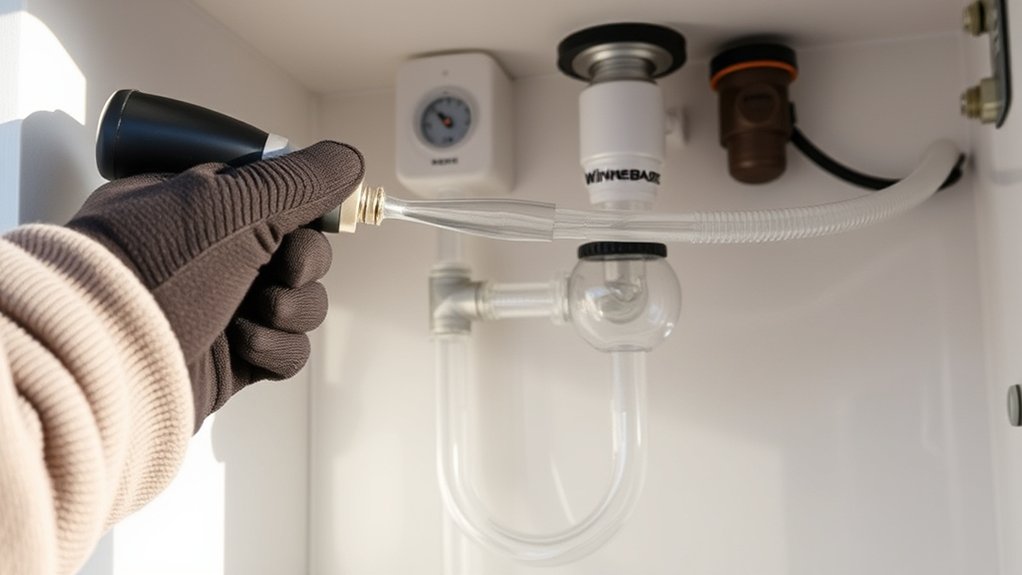
Start by opening every faucet and low point drain. This lets the water flow out completely using gravity. Once all the water has drained, you can move on to the next step.
Next, attach an air compressor set to low pressure. Use it to blow out any remaining water in the lines, but be careful not to damage the plumbing. This helps make sure there’s no water left that could freeze later.
Finally, disconnect any external hoses and blow air through the inlet. Then, securely close all the valves to keep any leftover water from freezing.
This way, your water lines will be properly protected.
Draining Water Lines
Why must you drain and blow out the water lines thoroughly when winterizing your Winnebago Solis? Because any residual water left in the system can freeze, expand, and cause costly damage to hoses, pipes, and fittings.
Begin by opening all low-point drains and faucets to let trapped water escape. Next, open the water drain valve and remove the water filter if installed. Disconnect external hoses and drain them completely to prevent freezing.
After draining, use compressed air cautiously to blow out remaining moisture, making sure every line, hose, and pipe is clear.
Finally, close all valves securely to stop air or water from sneaking back into the system during winter.
This careful process protects your water system from freeze damage and keeps it in great shape for the next season.
Using Air Blower
After thoroughly draining the water lines, you’ll need to use an air compressor to expel any remaining moisture from the plumbing system. This step guarantees no water remains that could freeze and cause damage.
Here’s what you need to do: Connect the air compressor to the low-point drain valve or water inlet, keeping pressure below 50 PSI. Then, open all faucets, toilets, and outdoor showers to let air circulate through the entire system.
Run compressed air until only a steady stream of air emerges from every fixture.
After that, pour pink RV antifreeze into traps and drains to safeguard against freezing.
Finally, close all drain valves, disconnect the compressor, and verify all lines are dry and secure.
Taking these steps carefully will protect your Winnebago Solis plumbing during winter.
Preventing Water Residue
Because any remaining water can freeze and expand, you must thoroughly drain all lines and tanks to prevent damage. Begin by opening every drain valve and faucet to guarantee complete water evacuation.
Next, connect an air compressor to the water outlet and blow out each plumbing line carefully. Use low pressure to avoid damaging seals, and continue until no water droplets emerge from the faucets.
After confirming all lines are dry, add RV antifreeze into traps and drain points to provide an extra freeze barrier. This step is essential, as residual moisture in traps can still freeze.
By systematically draining, blowing out, and antifreezing your Winnebago Solis’s plumbing system, you minimize the risk of cracked pipes and costly repairs during winter storage.
It might seem like a lot, but taking these steps will really save you headaches later on.
Use RV Antifreeze Safely When Winterizing Your Solis

When winterizing your Winnebago Solis, you’ll need to use RV-specific antifreeze designed for potable water systems to guarantee safety and effectiveness. This non-toxic, pink antifreeze prevents ingestion hazards and assures your water lines stay protected throughout freezing temperatures.
Make sure you use only RV-specific antifreeze; never automotive or windshield types. Pump 1 to 1.5 gallons through all water lines, including faucets, toilets, and drains.
It’s a good idea to utilize a bypass kit so you don’t have to fill the water heater with antifreeze.
Run the pump long enough to circulate antifreeze through every fixture and drain. Check that the antifreeze reaches each outlet to maximize protection. Taking these steps will help keep your Solis safe and ready for winter.
Prevent Freezing in Plumbing and Control Panel
How can you effectively prevent freezing in the plumbing and control panel of your Winnebago Solis? Although the 2021 Solis control panel is insulated, insulation alone only slows heat loss without fully preventing freezing.
To combat this, keep cabinet doors open in the plumbing area, allowing interior heat to circulate around the control panel. Minimize external exposure and wind infiltration, as they speed up heat loss and increase the risk of freezing.
Try to maintain a consistent interior temperature near the control panel to reduce vulnerability.
For added protection, use supplemental heat sources like space heaters or heat tape specifically around the control panel and plumbing components.
These measures help make sure critical systems stay above freezing, protecting your Solis’s plumbing and electronics during winter conditions.
Manage Heat and Ventilation to Protect Pipes in Winter
Although maintaining insulation is important, managing heat and ventilation effectively plays a crucial role in protecting your Winnebago Solis’s pipes during winter. You need to maintain consistent warmth and control moisture to prevent freezing.
Here’s how to optimize heat and ventilation: Open cabinet doors to allow interior heater air circulation around water pipes. Ensure the heating system operates reliably and maintains steady temperatures. Use space heaters or heat tape on vulnerable plumbing sections for targeted warmth.
Keep vents and windows slightly open or properly adjusted to reduce moisture buildup. And don’t forget to stay plugged into shore power or run the generator overnight to keep heating levels steady.
These simple steps can really make a difference in avoiding frozen pipes.
Dewinterize Your Winnebago Solis the Right Way
Maintaining proper heat and ventilation throughout winter keeps your Winnebago Solis’s plumbing intact. But once the cold season ends, you need to carefully restore your water system for safe operation.
Start by making sure all components like the freshwater tank, water heater bypass, and pumps are free of antifreeze. Open all faucets to flush the system with fresh water until it runs clear.
Next, check the valves to ensure they’re in the correct position. Also, get rid of any air pockets to prevent damage.
| Task | Key Action |
|---|---|
| Flush Water Lines | Pump fresh water through system |
| Check Components | Inspect tanks, pumps, bypass |
| Valve & Air Pocket Check | Confirm valve positions, remove air |
Follow these steps methodically to dewinterize your Solis efficiently and safely. You’ll be ready to hit the road in no time!
Frequently Asked Questions
Can I Use Automotive Antifreeze Instead of RV Antifreeze?
You shouldn’t use automotive antifreeze in your Winnebago Solis because it contains toxic chemicals that are unsafe for plumbing and potable water. Always choose RV-specific antifreeze to protect your components.
This will guarantee safe and compliant winterization. It’s really the best way to keep everything in good shape through the colder months. Using the right antifreeze makes all the difference!
How Often Should I Winterize My Winnebago Solis?
You should winterize your Winnebago Solis at least once yearly or whenever temperatures drop below freezing for over 24 hours. This helps prevent costly freeze damage by thoroughly draining your water system.
Make sure to protect your system with RV-specific antifreeze. It’s a simple step that can save you a lot of trouble later on.
Better safe than sorry, right? Taking these precautions keeps your Solis ready for the next adventure.
Is It Necessary to Winterize the Engine and Generator?
Yes, you need to winterize the engine and generator to prevent coolant and fuel from freezing, avoid corrosion, and guarantee reliable startup.
Use antifreeze and fuel stabilizers, especially if temperatures drop below freezing for extended periods.
Taking these steps helps keep everything running smoothly when the cold hits. It’s definitely worth the effort!
What Should I Do With the Propane System During Winter?
You should turn off and disconnect the propane tank. Take some time to inspect and repair any leaks or cracks you find. It’s important to verify that all appliances are off and properly vented.
Make sure the system is sealed tightly to prevent any issues. You might also want to consider using a propane tank cover. This helps prevent freezing and protects the tank from damage during winter.
Can Winterizing Damage the Winnebago Solis Warranty?
Winterizing your Winnebago Solis won’t void the warranty if you use approved antifreeze and follow manufacturer guidelines precisely. Just be sure to avoid unauthorized modifications.
Think of it like properly tuning a Model T to keep everything running smoothly and maintain your coverage. It’s all about doing it the right way, step by step.
Conclusion
Winterizing your Winnebago Solis is like weaving a protective cocoon, guarding every pipe and panel against the icy grasp of winter. By draining water lines, applying RV antifreeze correctly, and managing heat and ventilation with precision, you guarantee your Solis emerges unscathed when spring thaws.
Follow these detailed steps meticulously, and your rig will awaken ready for adventure. Its systems will be intact, and its spirit won’t be tarnished by the cold’s silent siege.