How Many Miles Per Gallon Does A Winnebago Get – Guide
You can expect your Winnebago to average between 8 and 18 miles per gallon, depending on the model, engine type, and driving conditions. Gasoline Class C models typically get 8-10 MPG, while diesel versions reach 10-12 MPG or higher.
Lighter models like the View Profile 24G can hit around 17 MPG. Factors like load, terrain, and your driving habits considerably affect efficiency.
It’s worth exploring practical strategies and model comparisons to make the most of every mile on your journey.
How Many Miles Per Gallon Does a Winnebago Typically Get?
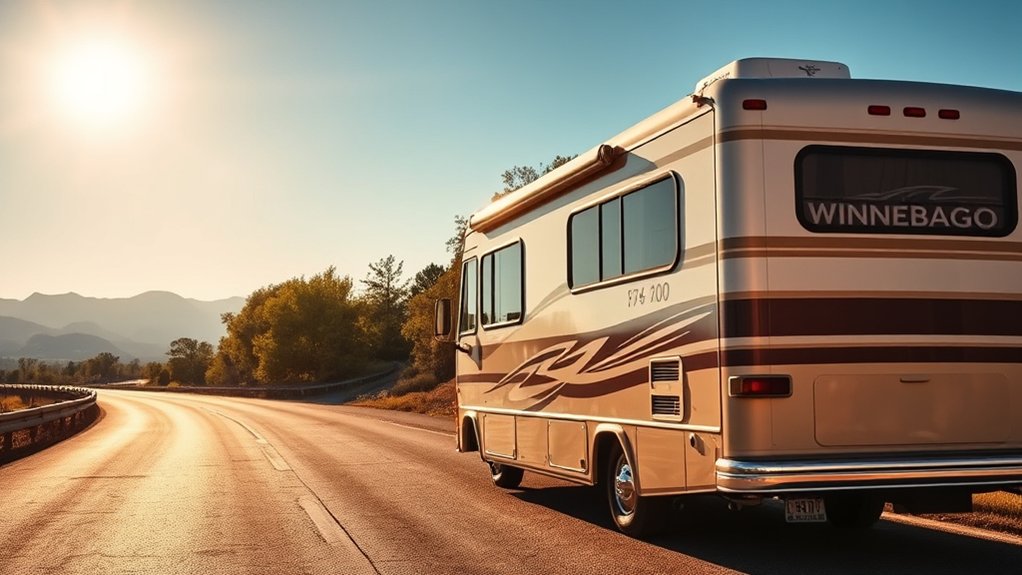
While fuel efficiency varies by model and conditions, a Winnebago Class C RV typically gets between 8 to 12 miles per gallon (MPG). You’ll find gasoline models generally average 8 to 10 MPG, influenced by factors like load, terrain, and driving habits.
Diesel-powered Winnebago models tend to be more efficient, often reaching 10 to 12 MPG thanks to their advanced engines. For example, the Winnebago View Profile 24G stands out by averaging around 17 MPG on highway trips, exceeding most older or larger models.
Knowing these ranges helps you set realistic expectations for your travel plans. Understanding typical MPG figures allows you to better budget fuel costs and plan routes, making sure your Winnebago trips are efficient and enjoyable.
Key Factors That Affect Winnebago MPG

Because several variables influence fuel consumption, understanding the key factors that affect Winnebago MPG can help you optimize your travel efficiency. You’ll notice that load weight, terrain, and speed all notably impact fuel economy.
For example, heavier loads increase fuel demand, while hilly terrain requires more engine power, reducing MPG.
Diesel-powered Winnebago models usually provide better fuel economy and torque compared to gas-powered versions, which might influence your choice.
Additionally, maintaining your Winnebago plays a vital role. Keeping tires properly inflated and ensuring regular engine servicing can prevent inefficient fuel use.
Although models like the Solis and View Profile 24G average between 16 to 17 MPG on highways, these factors cause fluctuations.
Being aware of them enables you to manage and potentially improve your Winnebago’s fuel efficiency.
How Driving Habits and Load Affect Your Winnebago’s MPG
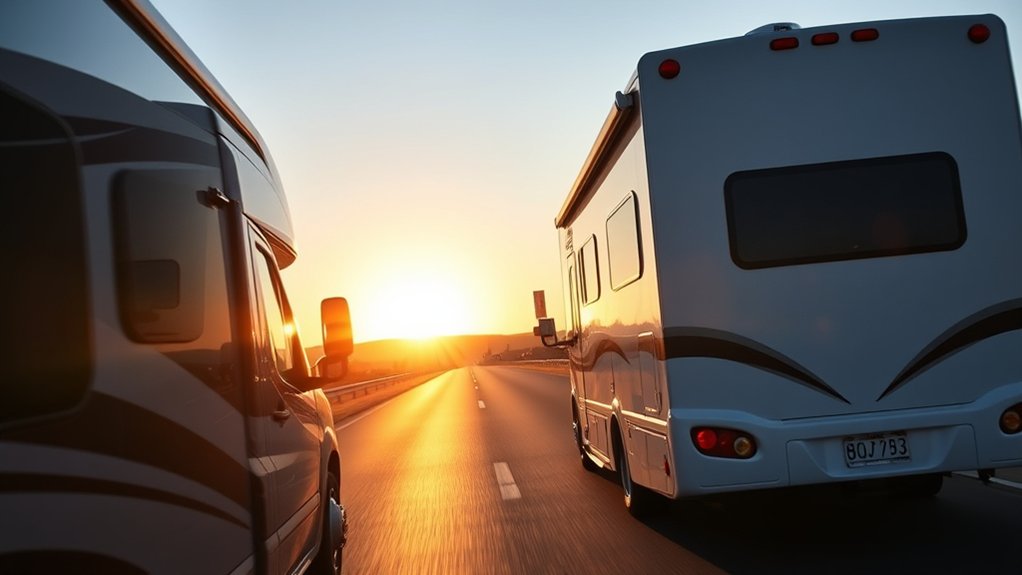
Your driving speed and the weight you carry play a big role in your Winnebago’s fuel efficiency. When you drive faster, the air resistance goes up, making your engine work harder. This means your MPG will drop.
On top of that, if you’re hauling heavier loads, your engine has to put in more effort. So, the more weight you have onboard, the fewer miles you’ll get per gallon.
It’s all about balancing speed and load to keep your fuel economy in check.
Impact of Speed
How does your driving speed influence your Winnebago’s fuel efficiency? Driving faster, such as at 75 mph instead of 55 mph, can reduce your MPG by 20-30%. This happens because higher speeds increase aerodynamic drag, making your engine work harder.
To optimize fuel efficiency, maintain a steady, moderate speed, ideally between 55 and 65 mph, where many Winnebago models perform best. Using cruise control on highways helps keep your speed consistent, avoiding unnecessary acceleration and braking, which can drop your MPG by 10-15%.
Rapid speed changes force your engine to consume more fuel. So, by adopting smooth, steady driving habits and controlling your speed, you can greatly improve your Winnebago’s fuel economy.
This makes your trips more economical and environmentally friendly.
Effects of Weight
What impact does extra weight and driving habits have on your Winnebago’s fuel efficiency? Carrying additional weight, such as luggage or heavy gear, can reduce your MPG by 2-4 miles per gallon. Overloading beyond recommended limits further decreases fuel economy by about 10%, due to increased engine strain and worse aerodynamics.
Your driving style also plays a vital role. Aggressive acceleration and hard braking can cut fuel efficiency by up to 20%. To optimize MPG, focus on maintaining smooth, steady speeds and avoid excessive idling.
Consider these factors to improve fuel economy:
- Keep load within the recommended weight limits.
- Use cruise control on highways to guarantee consistent speed.
- Avoid rapid acceleration and hard braking to conserve fuel.
Which Winnebago Model Gets the Best MPG?
When you look at fuel efficiency across Winnebago models, you’ll see that lighter vehicles usually get better MPG than the heavier ones. It just makes sense—less weight means the engine doesn’t have to work as hard.
Also, diesel engines, like the ones in the View and Navion, often do better on fuel compared to gas engines.
So, if you’re after better mileage, those diesel models are worth checking out.
Knowing how weight and engine type impact MPG can really help you pick the most efficient Winnebago for your trips. It’s all about finding the right balance for your travel needs.
Fuel Efficiency Comparisons
Although Winnebago offers a range of RVs catering to different needs, their fuel efficiency varies considerably across models. When comparing fuel economy, diesel-powered models typically outperform gas-powered ones, offering better miles per gallon.
For example, the Winnebago View Profile 24G, a Class C diesel model, averages around 17 MPG on highways. Diesel models like the Navion can reach up to 20-22 MPG, benefiting from engine efficiency.
Smaller campers like the Solis deliver about 16-18 MPG, depending on load and conditions.
In contrast, larger Class A Winnebagos usually get between 8-12 MPG because of their size and engine demands.
Lightweight Versus Heavy Models
Fuel efficiency in Winnebago RVs varies a lot between lightweight and heavy models. This mainly comes down to differences in weight, aerodynamics, and engine size.
Lightweight models like the Winnebago View and Solis usually get around 16-18 MPG because they’re smaller and lighter. That makes them more economical for long trips and for travelers who want to save on fuel costs.
On the other hand, heavier models such as the Winnebago Adventurer, which have bigger chassis and more amenities, tend to average closer to 8-10 MPG. The extra weight and less sleek design really cut into their fuel efficiency.
Engine Types And MPG
Since engine type plays a crucial role in determining a Winnebago’s miles per gallon, understanding the differences between gas and diesel options can help you choose the most efficient model.
Gas-powered Winnebagos typically get 8-12 MPG, varying with size and driving conditions, while diesel engines generally offer better fuel efficiency, averaging 10-15 MPG.
Importantly, diesel models often outperform gas in highway mileage.
Consider these examples to guide your choice:
Gas models like the Spirit or Minnie Winnie average around 8-10 MPG.
Diesel models such as the Forza or Boldt can reach over 15 MPG on highways.
The Winnebago View Profile 24G with a diesel engine delivers approximately 17 MPG on the highway.
Focusing on diesel options will usually yield the best fuel economy for your travels.
Tips to Boost Your Winnebago’s MPG on Road Trips
When you maintain a steady speed between 55 and 65 mph, you can improve your Winnebago’s fuel efficiency by 10-15%. To further boost MPG on road trips, regularly check and inflate your tires to the recommended pressure. This helps reduce rolling resistance and saves fuel.
Keep up with routine engine maintenance, like replacing air filters and spark plugs, to ensure your vehicle runs at peak performance.
Regular engine upkeep, including air filter and spark plug replacement, keeps your Winnebago running efficiently.
Try to minimize idling and avoid rapid acceleration because those habits use up unnecessary fuel.
Also, plan your route carefully to avoid heavy traffic, steep hills, and congested areas. Driving in smoother conditions really helps your fuel economy.
Best Tools to Track and Plan Your Winnebago’s Fuel Usage
Although managing your Winnebago’s fuel usage can seem complex, several specialized tools make the process a lot easier. They help you track consumption, plan routes, and optimize refueling stops.
For example, apps like RV LIFE Trip Wizard let you input your vehicle’s fuel capacity and MPG to create routes that maximize efficiency. Plus, satellite and street view features help you check if fuel stations are accessible and easy to maneuver around.
Real-time fuel price updates also help you budget smarter and find the best refueling options.
Key tools include:
- RV LIFE Trip Wizard for route planning and fuel simulation
- Gas Buddy for live fuel price comparisons
- Google Maps with satellite views to assess fuel station access
Frequently Asked Questions
How Does Winnebago Maintenance Affect Fuel Efficiency?
You’ll improve your Winnebago’s fuel efficiency by regularly maintaining the engine, keeping tires properly inflated, and using quality fuel. Neglecting these tasks causes engine strain and reduces miles per gallon, increasing your fuel consumption.
Taking care of these simple maintenance steps can really make a difference. It’s all about keeping everything running smoothly. When your engine is in good shape and your tires are right, your Winnebago uses less fuel. So, it pays off to stay on top of it!
What Type of Fuel Does a Winnebago Require?
Like choosing the right key for a lock, you’ll need gasoline for most Winnebago models. Some diesel-powered ones, however, require diesel fuel.
Always check your owner’s manual to make sure you’re fueling your Winnebago correctly. It’s the best way to avoid any mix-ups and keep your vehicle running smoothly.
Are There Eco-Friendly Upgrades Available for Winnebago RVS?
Yes, you can upgrade your Winnebago with solar panels, LED lighting, energy-efficient appliances, and improved insulation. These eco-friendly options help reduce energy use and lower emissions.
They also enhance fuel efficiency, which means you can travel more sustainably without compromising comfort. It’s a great way to make your adventures kinder to the planet.
How Does Altitude Impact a Winnebago’s MPG?
Altitude reduces your Winnebago’s MPG because thinner air lowers engine efficiency. Expect a 10-15% drop above 5,000 feet.
Diesel engines handle altitude better, but you can improve performance with altitude-specific tuning adjustments. It’s a smart move if you’re planning to travel high and want to keep your fuel economy in check.
Can Tire Pressure Influence a Winnebago’s Fuel Consumption?
Yes, tire pressure directly influences your Winnebago’s fuel consumption. Keeping tires at the recommended PSI reduces rolling resistance, which can improve fuel economy by up to 3-4%.
It’s a simple thing that makes a noticeable difference. So, make sure to regularly check and adjust your tire pressure, especially before long trips. This little habit can save you some fuel and hassle down the road.
Conclusion
When you hit the road in your Winnebago, expect fuel efficiency that might not win any races but still gets you comfortably from A to B. Factors like driving habits, load, and model choice can drastically shift your MPG.
By tracking fuel use and adopting smart driving tips, you’ll stretch every gallon further than you ever thought possible, like squeezing a river into a teacup. Staying informed helps you maximize your Winnebago’s fuel performance.