When Was The First Winnebago Made – A Quick History
You’ll find that the first Winnebago motorhome was made in 1966. It marked a breakthrough in mobile living with its compact fiberglass design and home-like comforts tailored for families.
Winnebago actually started back in 1958 with towable trailers before launching this innovative motorhome. It quickly gained popularity by blending travel freedom with practical, high-quality furnishings.
Knowing this history gives you insight into how Winnebago’s early innovations shaped today’s trusted outdoor adventure vehicles. It also explains their ongoing leadership in the industry.
The Origins of Motorhomes Before Winnebago

Although the concept of mobile living dates back to nomadic peoples traveling by camel or horse, the first true motorhomes appeared around 1910 when inventors began modifying automobiles into “auto campers” with basic kitchens and sleeping areas. You’d see these early vehicles equipped for simple travel needs, blending transportation and shelter.
The first motorhomes emerged around 1910, transforming automobiles into mobile shelters with kitchens and sleeping spaces.
Over the following decades, the designs evolved steadily, adding more comfort and practicality.
By 1958, the term “motorhome” was coined by Raymond Frank, who crafted the first RV tailored for family use.
This marked a turning point from basic auto campers to more sophisticated, sturdy living spaces. Features like extendable walls and onboard toilets soon became standard, setting the foundation for modern motorhomes you recognize today.
Winnebago’s Founding and Early Market Entry (1958)
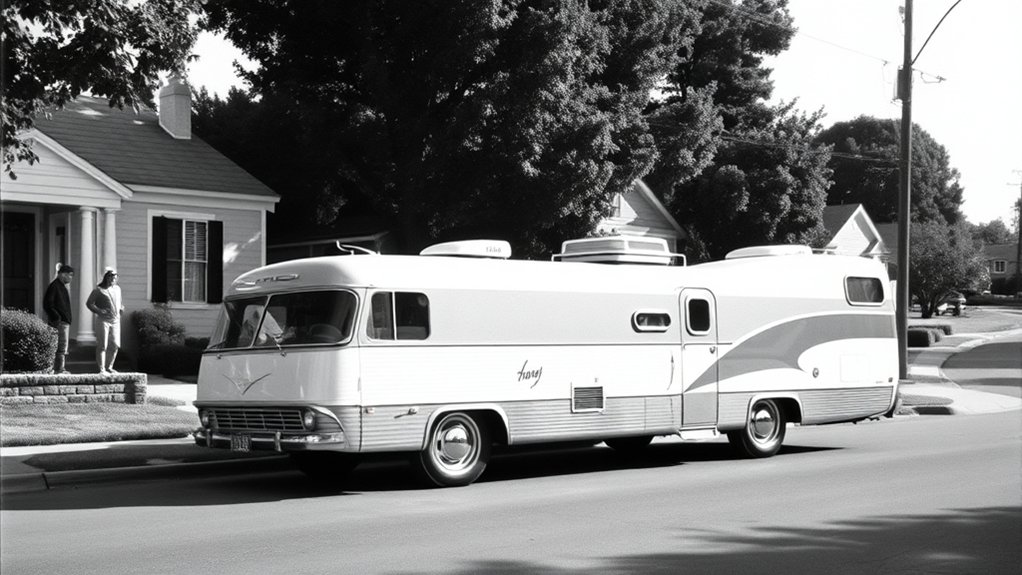
When John Hanson founded Winnebago in 1958 in Forest City, Iowa, he aimed to revitalize the local economy by tapping into the growing outdoor recreation market. He named the company after the nearby Winnebago River, signaling a strong local connection.
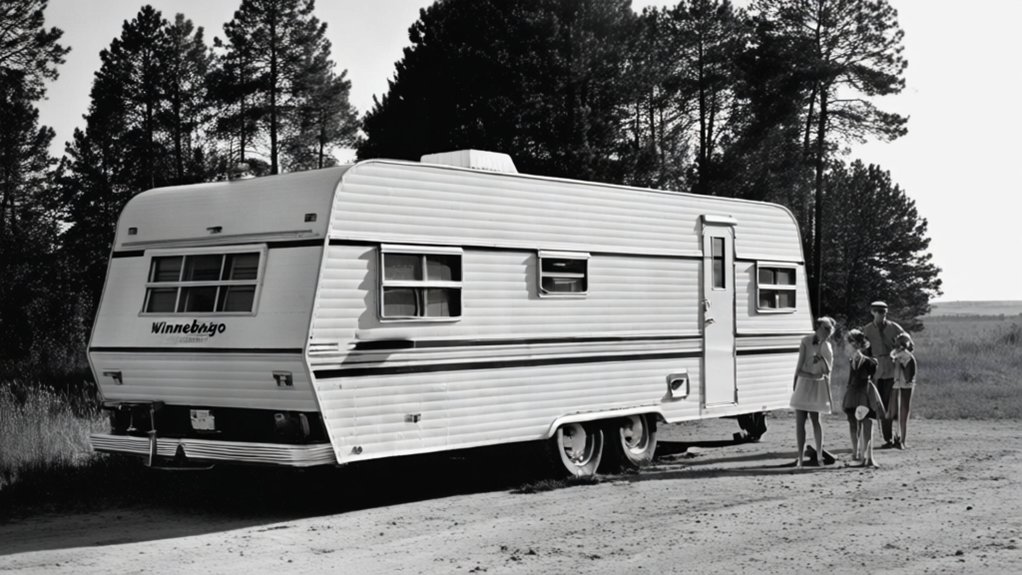
At first, Winnebago focused on producing towable travel trailers. They built a reputation for making high-quality, well-furnished units that outdoor enthusiasts loved.
Even though motorhomes had been around since about 1910, Winnebago’s entry was a big deal for the RV industry.
By putting emphasis on craftsmanship and comfort, the company quickly gained traction in the market. This early success set the stage for Winnebago to become an iconic brand in outdoor recreation.
It laid the foundation for their expansion into motorhomes and broader markets in the years that followed.
What Made the First Winnebago Motorhome So Special?

Because Winnebago introduced its first motorhome in 1966, it quickly changed how people experienced travel and mobile living. You’d notice its innovative, compact fiberglass body that maximized space without sacrificing comfort.
Inside, the interior was thoughtfully designed with high-quality furnishings and careful attention to detail, giving you both practicality and coziness on the road.
This blend of home convenience and travel freedom set it apart from other options available then. The motorhome’s distinctive “flying W” logo and retro styling added to its unique charm, making it instantly recognizable and appealing.
Winnebago’s first motorhome wasn’t just a vehicle; it was a pioneering lifestyle choice that reshaped how you could explore and live on the move.
Winnebago’s Early Motorhome Models That Changed the Game
Following the groundbreaking introduction of Winnebago’s first motorhome in 1966, the company quickly expanded its lineup with early models that set new standards in the industry. In the 1960s, Winnebago introduced designs emphasizing comfort and practicality, which helped popularize motorhomes among American families.
The 1970s saw the arrival of the iconic Brave model, known for its retro styling and innovative features that captured attention. Early Winnebago models displayed distinctive elements like the “flying W” logo and the “eyebrow” bunk-over-the-cabin design, making them instantly recognizable.
These models built on Raymond Frank’s 1958 design foundation, transforming motorhomes into mainstream recreational vehicles. By focusing on quality and innovation, Winnebago’s early models changed the game for motorhome design and usability.
It’s pretty clear these early designs set the stage for what motorhomes would become.
How Winnebago Grew Into a Leading Motorhome Brand
You’ll notice that Winnebago’s growth really took off when its leadership started looking beyond just motorhomes. Back in the 1970s and in the years that followed, the company didn’t just stick to what it knew.
Instead, it expanded its product lineup, which included acquiring brands like SunnyBrook in 2010. This move helped them step into the trailer and luxury segments.
Strategic Leadership Shift
When Michael Happe took the helm as CEO of Winnebago Industries in 2016, he initiated a strategic shift that transformed the company beyond its traditional motorhome roots. You’ll notice that under his leadership, Winnebago expanded into towable RVs, marine products, batteries, and outdoor segments, boosting non-RV revenue streams.
The company adopted a focus on premium branding and innovation to stand out in a competitive market, emphasizing customer loyalty.
Strategic acquisitions like Barletta and Chris Craft diversified the product portfolio and strengthened Winnebago’s market position. Financial discipline became a priority, and Winnebago moved away from routine model updates, focusing instead on customer-driven product improvements.
This leadership shift laid the foundation for sustained growth and a broader market presence. It really set the stage for the company to thrive in new areas and keep customers coming back.
Market Expansion Efforts
As Winnebago sought to broaden its appeal beyond traditional motorhomes, it took a decisive step in 2010 by acquiring SunnyBrook. This allowed the company to re-enter the trailer segment with affordable models.
This move, paired with launching retro-styled products like the Brave, attracted younger customers. Licensing deals for camping and tailgating gear further expanded Winnebago’s brand reach.
The company also developed lower-priced models with modern features, boosting market share from 17.2% in 2009 to over 20% recently. These targeted efforts helped Winnebago grow steadily in a recovering industry.
Winnebago’s Key Innovations Over the Decades
You’ll see how Winnebago got started with the iconic Brave motorhome back in 1972, really setting a new standard in design.
Then, moving into the 1980s and 1990s, they worked on refining their chassis to be lighter and more aerodynamic, which helped boost fuel efficiency.
And if you jump to recent years, you’ll find Winnebago leading the way in electrification and smart innovations, including electric RVs and some pretty advanced comfort features.
Early Motorhome Designs
Although motorhomes existed before, Winnebago revolutionized the industry in 1966 by introducing the first modern model featuring the distinctive “eyebrow” bunk-over-the-cabin design. This innovative layout maximized sleeping space without sacrificing driving comfort.
In the 1970s, Winnebago launched the “Brave” model, which combined retro styling with a spacious interior. It appealed to families and adventurers alike.
Over the decades, the company enhanced motorhome functionality by adding extendable walls and slide-outs, creating more living space on the go. Integrated bathrooms became standard, improving convenience during travel.
Winnebago also pioneered lightweight, durable construction materials early on, boosting fuel efficiency and maneuverability. Their consistent focus on blending comfort, functionality, and iconic design helped shape motorhome architecture, setting the benchmark for others in the industry.
Towable RV Expansion
Winnebago didn’t stop at motorhomes; in the 1960s, the company expanded into towable RVs, applying its expertise in quality and innovative design. You’ll find that early models focused on lightweight, durable travel trailers, perfect for families wanting versatile outdoor travel options.
Over the decades, Winnebago refined these trailers, introducing slide-outs and modern interiors to boost comfort and appeal.
In 2010, Winnebago strategically re-entered the trailer market by acquiring SunnyBrook, emphasizing value and innovation.
If you tow one today, you’ll appreciate how the designs prioritize ease of towing and comfort, while integrating seamlessly with the motorhome lineup.
This towable expansion highlights Winnebago’s commitment to evolving with customer needs and broadening their outdoor adventure possibilities.
Electrification And Innovation
How has Winnebago transformed outdoor recreation through electrification and innovation? Since its early adoption of onboard batteries and solar power options, Winnebago has steadily enhanced energy independence in its RVs.
Over time, the company developed more efficient propulsion systems, setting new standards for sustainability.
Recently, Winnebago took a major leap by acquiring Lithion, enabling it to pioneer all-electric RVs and boats. You’ll find electric boats and Ford Transit-based electric motorhomes showcasing their commitment to eco-friendly, quiet travel.
Winnebago’s focus on electrification aligns with the industry’s shift toward electric mobility. This reflects a long-term strategy emphasizing environmental responsibility and customer experience.
Why Outdoor Enthusiasts Love Winnebago Motorhomes
When you crave the freedom to explore the outdoors without sacrificing comfort, Winnebago motorhomes deliver with features like outdoor kitchens and flexible interiors designed for adventure.
Over time, Winnebago has aligned with the rising trend of younger outdoor enthusiasts seeking wellness, family bonding, and stress relief through nature.
Winnebago embraces the growing trend of young adventurers valuing wellness, family connection, and nature’s calming effects.
Their innovative Class B “Solace” model offers a compact, easy-to-access vehicle perfect for spontaneous trips.
The brand’s dedication to durability, functionality, and comfort guarantees you can rely on your motorhome in diverse environments.
Winnebago’s tagline, “Be great outdoors,” reflects their commitment to inspiring you to explore natural landscapes comfortably.
This focus on outdoor recreation has made Winnebago a trusted name among nature lovers and adventure seekers alike.
How Winnebago Motorhomes Adapted to Changing Market Trends
Although the 2008 recession challenged the recreational vehicle market, the company responded quickly by introducing more affordable Class B and Class C motorhomes to attract a wider range of customers. By 2015, Winnebago revived the retro-themed Brave model, combining nostalgia with modern amenities to appeal to younger buyers.
Shifting from fixed model-year updates, Winnebago embraced customer feedback for faster product development. Expanding into camper vans like the Travato, they targeted active, outdoor-oriented consumers. Their focus on innovation, design, and diversification helped maintain relevance amid evolving market tastes.
| Market Trend | Winnebago’s Response |
|---|---|
| Economic Downturn | Affordable Class B & C models |
| Younger Buyers | Retro Brave revival & camper vans |
| Consumer Feedback | Agile product development |
What the First Winnebago Motorhome Means for Today’s Buyers
Since Raymond Frank designed the first Winnebago motorhome in 1958, it has laid the groundwork for decades of innovation and quality that you still see in today’s models. That original design established Winnebago’s reputation for reliable craftsmanship and forward-thinking features.
Over the years, Winnebago has continuously refined its motorhomes, integrating new technologies and improving comfort while maintaining the pioneering spirit of the first model.
As a buyer today, you benefit from this rich history. Modern Winnebagos offer advanced amenities, efficient layouts, and durable construction rooted in that initial concept.
The company’s commitment to enhancing outdoor travel experiences means you get a motorhome designed not just for travel but for lifestyle.
It’s all about blending innovation with the classic values that started it all in 1958.
Frequently Asked Questions
What Was John L. Hanson Jr.’s Background Before Founding Winnebago?
You’ll find John L. Hanson Jr. worked as a mortician before founding Winnebago. His funeral service experience gave him business skills and community ties.
His camping passion inspired innovative RV designs and boosted Forest City’s economy.
How Did Winnebago Choose Its Company Name?
You might think Winnebago just picked a catchy name, but they actually chose it to honor the Winnebago tribe near Forest City, Iowa.
This tied their brand to local heritage before launching their adventurous motorhomes in the late 1950s.
It’s a cool way to connect their identity to the place where it all began.
What Materials Were Used in the First Winnebago Motorhome?
You’ll find the first Winnebago used lightweight aluminum and wood for framing, fiberglass or aluminum exterior panels, wood veneer cabinetry, fabric upholstery inside, and basic propane stoves and refrigerators designed for durability, safety, and ease of travel.
They really focused on making it practical and sturdy. The materials were chosen to keep the motorhome light but durable enough for the road. Inside, the wood veneer and fabric made it feel cozy without adding too much weight.
The appliances were simple but effective, perfect for travelers who needed reliability over fancy features. Overall, it was built with a clear purpose—to make traveling comfortable and safe.
Were There Any Competitors to Winnebago in 1973?
Imagine spotting an Airstream zipping down the highway in 1973. That was a key competitor to Winnebago.
You’ll find Airstream, Volkswagen, and GMC all challenged Winnebago’s dominance with diverse RV styles and price points. They each brought something different to the table, making the market more exciting and giving buyers more options.
How Much Did the First Winnebago Motorhome Cost at Launch?
The first Winnebago motorhome cost about $5,000 at launch. You’ll find that price reflected its advanced features and premium craftsmanship, setting it apart from basic travel trailers.
It really helped establish Winnebago as a high-end RV brand. So, paying a bit more made sense to people who wanted something top-notch and durable for their travels.
Conclusion
Now that you know the first Winnebago was made in 1958, you might wonder if its success was just luck or smart innovation. The truth is, Winnebago combined early motorhome ideas with clever design and market insight, setting a new standard.
From those humble beginnings, Winnebago evolved by listening to outdoor lovers like you, adapting through decades of change. So, the first Winnebago isn’t just history; it’s the foundation of your next adventure.