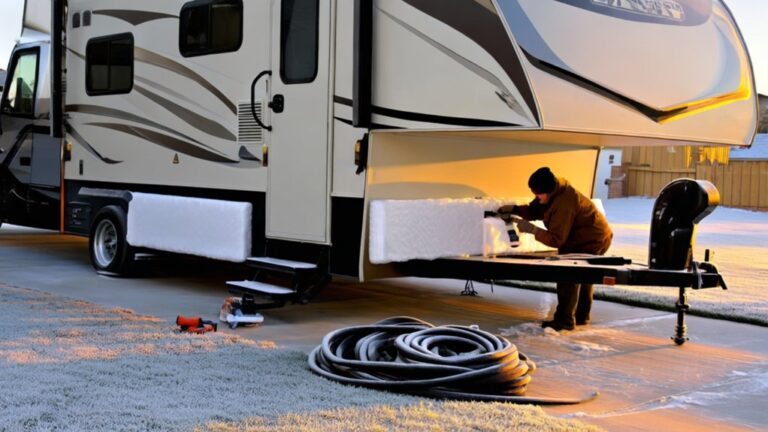
What Is Winnebago Extreme Weather Package – Straight Answer
The Winnebago Extreme Weather Package gives you advanced insulation in the walls, roof, and underbelly, plus dual-pane gas-filled windows to keep heat in and cold out. It features a sealed underbelly and heated tanks to protect plumbing down to about 15°F. That said, freezing can still happen below that temperature.
While it’s designed for better cold-weather performance, you might need extra modifications for harsher conditions. So, it’s good to explore more details to fully understand its benefits and limitations.
What Is the Winnebago Extreme Weather Package?

Although standard RVs often struggle in cold conditions, the Winnebago Extreme Weather Package guarantees you stay comfortable by incorporating advanced insulation and heating features. This package markedly enhances cold weather performance by adding extra insulation throughout the RV, including radiant roof and floor insulation rated around R-30 to R-38.
You’ll benefit from dual-pane windows with gas-filled spaces that improve thermal retention, reducing heat loss. The sealed underbelly design and foam insulation protect critical components from freezing temperatures.
Heated water tanks prevent water lines from freezing during harsh conditions. These upgrades work together to maintain a stable interior temperature and safeguard essential systems, ensuring your RV functions reliably even in extreme cold.
This package turns your vehicle into a true all-season camper.
Key Insulation and Heating Features in the Package
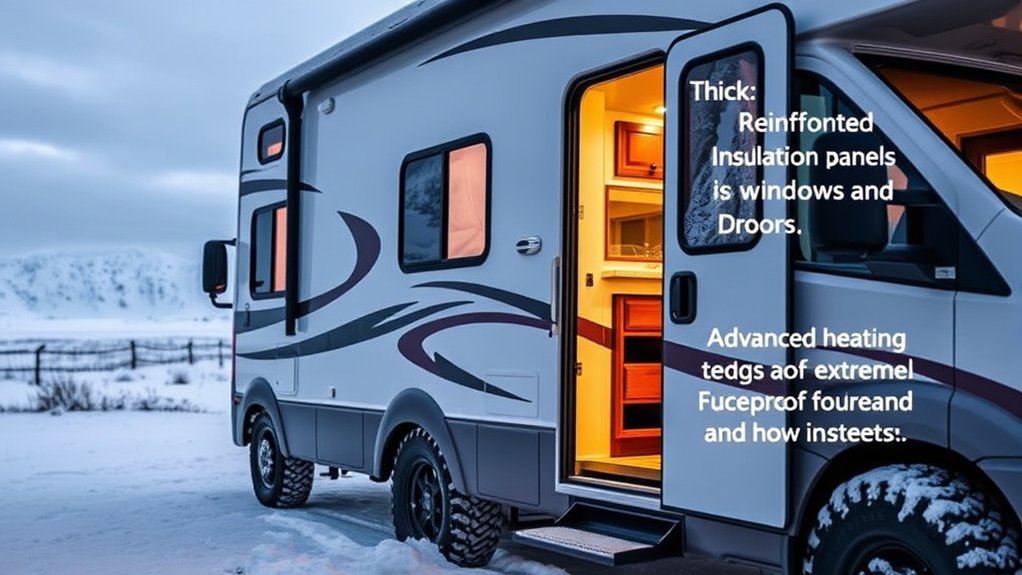
You’ll notice that the insulation in the Winnebago Extreme Weather Package is pretty thorough. It covers the roof, walls, and underbelly with an impressive R30 rating.
They even added foam around the drain pipe exits for some extra protection.
The tanks are designed to stay freeze-free, thanks to hoses connected to the furnace vent in the underbelly. This setup keeps the heat consistent where it counts.
On top of that, the double-pane thermopane windows come filled with gas to help maintain thermal efficiency.
And those sealed panels? They do a great job of keeping cold drafts out.
Insulation Coverage Areas
Where does the Winnebago Extreme Weather Package focus its insulation efforts? It targets critical areas like the walls, roof, and underbelly, adding extra insulation to boost thermal retention.
You’ll find foam insulation wrapped around water and drain pipes, plus the underbelly, to prevent freezing and enhance winter durability.
The package extends insulation to slide-outs and other key sections, helping maintain a stable interior temperature even in harsh weather.
While double-pane windows can be an option, they’re not standard across all models with this package.
Tank Heating Method
How does the Winnebago Extreme Weather Package keep your water tanks from freezing in cold conditions? It uses heated tanks warmed by hoses connected to the furnace vent in the underbelly, guaranteeing consistent warmth. Additionally, 12V heating elements are installed in the tanks to provide extra freeze protection when temperatures drop.
The package also includes insulated and sealed underbelly areas to retain heat around the tanks and plumbing effectively. You’ll find foam insulation at drain exits and tanks positioned in protected compartments, reducing cold exposure further.
The system primarily relies on furnace heat to keep your tanks warm and doesn’t typically include separate tank heater controls, simplifying operation.
Window and Ventilation
Why do dual-pane windows matter in extreme weather conditions? They provide superior insulation by trapping gas between two glass layers, which reduces heat transfer.
In the Winnebago Extreme Weather Package, these windows feature an “insulated” sticker and can be identified by multiple reflections when you shine a flashlight on them. This design helps keep interior temperatures steady and cuts down on energy loss.
Plus, the package seals windows and vents tightly to prevent drafts and heat from escaping. There are special vent covers and insulated hatch covers that further help keep the warmth inside during cold weather.
These window and ventilation upgrades really boost your RV’s ability to handle harsh weather, keeping things comfortable no matter what’s outside.
You’ll also notice better protection against chilly winds and less condensation inside your RV. It’s all about maintaining consistent comfort and improving energy efficiency while you’re on the road.
Are Dual-Pane Windows Included in the Package?
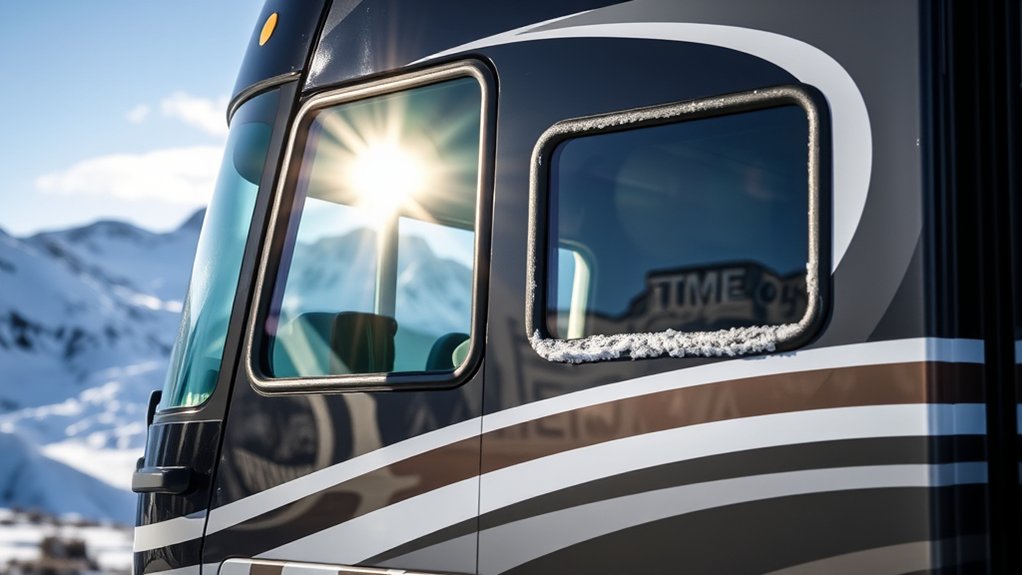
Although dual-pane windows are commonly included in the Winnebago Extreme Weather Package, they aren’t guaranteed on every model. You’ll often find a sticker marked “insulated” on windows that are dual-pane, which enhances insulation for colder climates.
To confirm if your windows are dual-pane, shine a flashlight on them. Two reflections indicate dual-pane, while one means single-pane.
Since inclusion depends on the specific model and configuration, checking the manufacturer’s documentation is also a reliable method.
Choosing dual-pane windows means you can enjoy better temperature control, experience reduced condensation, benefit from enhanced noise reduction, and increase energy efficiency.
Verifying your windows guarantees you’re prepared for extreme weather conditions.
How Does the Package Heat and Protect Holding Tanks?
When temperatures drop near freezing, the Winnebago Extreme Weather Package activates 12V electric heating pads embedded in the holding tanks to prevent ice formation. These heated tanks connect to the RV’s furnace system, which circulates warm air to maintain ideal temperature.
Additionally, the package includes insulation surrounding the tanks and underbelly, substantially reducing heat loss and shielding against cold conditions. Sensors and wiring monitor temperatures, triggering the heating elements as needed to keep tanks from freezing.
In some Winnebago models, heated hoses and extra insulation further protect the tanks during winter camping. This integrated system makes sure your holding tanks stay functional and safeguarded against freezing damage, so you can camp comfortably in colder climates without worrying about frozen plumbing.
How Effective Is the Package at Preventing Freezing?
You’ll find that the Winnebago Extreme Weather Package offers solid insulation and heated tanks, which is great. But when temperatures dip below 15°F, it does have its limits. The plumbing components can still be vulnerable to freezing, especially if the trailer is left unheated for long stretches.
On top of that, the heating system can struggle to keep things consistently warm, so it’s a good idea to take extra precautions when the weather gets really cold.
Freezing Protection Limits
While the Winnebago Extreme Weather Package offers heated tanks and enhanced insulation aimed at preventing freezing, its effectiveness markedly decreases below approximately 15°F. Many owners report water lines freezing at temperatures as high as 26°F, revealing limits in the factory package.
The insulation and heating struggle during extended cold snaps, especially when water lines run along trailer edges or outside the insulated underbelly.
To truly protect your system, additional steps are often necessary.
You might feel frustrated when water lines freeze despite having the package. It’s natural to be concerned about unreliable protection in harsh winter conditions and anxious over potential damage from frozen plumbing.
This can motivate you to invest in extra insulation and modifications.
Understanding these limits helps you plan better for freezing weather.
Plumbing Vulnerabilities
How well does the Winnebago Extreme Weather Package protect your plumbing from freezing? The package includes heated tanks and an insulated underbelly to reduce the risk of freezing, but how well it works really depends on the quality of the installation and the conditions you’re dealing with.
Water lines that run along the trailer edges or outside insulated areas can still be vulnerable. They often freeze when temperatures drop below 15°F. Since the package uses furnace heat to warm the plumbing, pipes that are poorly routed or areas without extra insulation can still freeze.
Also, any gaps or holes near water hookups can compromise the protection. While the package definitely improves resistance to freezing, you should know that exposed or inadequately insulated water lines may still freeze, especially in extreme cold.
Proper maintenance and adding extra insulation might be necessary to get the most out of the package’s plumbing freeze protection.
Heating System Challenges
Just how reliable is the Winnebago Extreme Weather Package’s heating system when it comes to preventing freezing? While it includes heated tanks and enhanced insulation, it doesn’t guarantee full protection against frozen pipes in severe cold. Water lines exposed outside the trailer or in uninsulated spots remain vulnerable.
Many users report freezing issues even at temperatures around 26°F. The system depends on the furnace and heated tanks to warm plumbing, but gaps and external exposure can compromise this.
To truly avoid freezing, you’ll often need extra measures like pipe insulation, duct rerouting, and skirting.
Consider these challenges:
- Unexpected freezing despite factory features
- Vulnerable external water lines
- Reliance on furnace heat that may not reach all areas
- Need for costly aftermarket modifications
Common Limitations and User Complaints With the Package
Although the Winnebago Extreme Weather Package offers enhanced insulation and heated tanks, many users find it falls short in preventing water lines from freezing at temperatures around 26°F. You might still face frozen water pipes and tanks below 15°F, which shows the package’s limited effectiveness in severe cold.
External gaps, uninsulated plumbing sections, and inadequate duct routing often reduce its ability to protect against freezing. You may notice difficulty maintaining consistent interior warmth, especially if your RV sits unused in low temperatures without active heat.
Several owners report that even with the package, additional steps like foam sealing and duct rerouting are necessary. These common limitations can be frustrating if you expect full cold-weather reliability straight from the factory package.
DIY Modifications to Enhance the Extreme Weather Package
You can boost the Extreme Weather Package by adding extra insulation around water pipes and underbelly seams to improve cold protection. It’s a simple way to keep things warmer where it counts.
Also, try extending furnace ducts with PVC pipes. This helps direct warm air to vulnerable spots like plumbing and storage compartments, which often get overlooked.
To top it off, combine these insulation upgrades with supplemental heating options like heat tapes or space heaters.
Together, they’ll guarantee better warmth during those extreme cold conditions.
Insulation Upgrades
When enhancing the Winnebago Extreme Weather Package, upgrading insulation through DIY modifications can really boost cold-weather performance. You can add foam board or bubble wrap insulation to underbelly panels and around water pipes to help prevent freezing. Sealing gaps with foam sealant or weather stripping blocks drafts, making your rig more efficient.
Reflective foil insulation on windows helps keep heat inside, which reduces energy loss. It’s a simple addition that makes a noticeable difference when the temperatures drop.
Consider these upgrades to boost your comfort and protection:
- Add insulation to storage compartments and wheel wells to reduce heat loss
- Seal all openings meticulously to keep cold air out
- Apply thermal blankets on exterior surfaces for extra warmth
- Use foam or bubble wrap underbelly insulation to shield plumbing
These steps improve your rig’s insulation and help it handle cold weather better without needing complicated system changes. It’s all about small tweaks that make your rig cozy and reliable when the weather gets rough.
Heating System Enhancements
Building on insulation upgrades, improving your heating system can really boost your Winnebago’s ability to stay warm in extreme cold. You can extend furnace ducts using PVC pipes to direct warm air right toward water lines and plumbing. This helps reduce the risk of freezing.
Rerouting furnace vents or adding vent covers also helps improve heat circulation in underbelly and slide-out sections. That way, you avoid cold spots.
Wrapping exposed pipes and hoses with heat tape or foam insulation gives extra protection against freezing temperatures.
You can also apply reflective foil insulation or bubble wrap to windows and underbelly panels. This boosts thermal retention beyond factory standards.
These DIY enhancements work hand-in-hand with the Extreme Weather Package, helping you keep a consistent, comfortable interior temperature during harsh winter conditions.
How to Verify If Your Winnebago Has This Package
Although verifying whether your Winnebago includes the Extreme Weather Package might seem complex, several straightforward methods can help you confirm its presence.
First, check the VIN sticker for a polar bear icon, a clear indicator of this package.
Next, inspect your windows for dual-pane labels, which suggest enhanced insulation.
You can also look inside the walls, roof, and underbelly for extra insulation consistent with the package’s features.
Finally, reach out to your dealer or Winnebago’s customer service with your model and serial number for official confirmation. It’s an easy way to get peace of mind and be sure about what your RV includes.
- Spot the polar bear icon on the VIN or sticker
- Notice dual-pane window labels indicating insulation
- Feel the thicker insulation in walls and underbelly
- Get peace of mind by consulting your dealer or manufacturer
Is the Extreme Weather Package Enough for Severe Winter Camping?
How well does the Winnebago Extreme Weather Package hold up in severe winter conditions? While it enhances insulation, heated tanks, and ducted heating, many users report it’s not fully enough for temperatures below 15°F.
Water lines still risk freezing because the package doesn’t heat water hookups or uninsulated plumbing areas directly.
You’ll often need extra modifications like pipe insulation and external skirting to avoid freezing issues. It’s a good start, but if you’re planning on really harsh winter camping, don’t rely on the package alone.
Adding these extras can make a big difference in keeping things running smoothly.
Best Practices for Using the Extreme Weather Package in Cold Weather
To get the most out of the Winnebago Extreme Weather Package during cold weather camping, you’ll need to take proactive steps beyond the built-in features. Regularly inspect insulation, seals, and ductwork to ensure everything functions properly. Use heat tapes or heated hoses on water lines exposed to freezing conditions.
Maintain interior temperatures above 45°F with the furnace or space heaters to protect plumbing. Also, check that heated tanks and underbelly insulation aren’t blocked by snow or debris. These simple checks can make a big difference when the temperature drops.
Feel confident knowing your RV’s defenses are optimized. Avoid the frustration of frozen pipes with simple maintenance. Stay comfortable and warm, no matter how low the temperature drops.
Enjoy peace of mind by following proven manufacturer guidelines. It’s easier than you think to keep your camping experience cozy and trouble-free.
Frequently Asked Questions
Does the Extreme Weather Package Affect the Rv’s Resale Value?
Yes, the Extreme Weather Package can boost your RV’s resale value by enhancing insulation and heating. Buyers often pay more for reliable cold-weather performance, especially in regions demanding winter-ready features. This can really increase your RV’s market appeal.
People want to know their RV can handle tough weather, so having these upgrades makes your vehicle stand out. It’s a smart investment if you plan to sell later on. Plus, it gives peace of mind for anyone looking to travel in colder climates.
Are There Any Warranty Implications With This Package?
If you install aftermarket insulation, your warranty might get voided. You shouldn’t worry about factory-installed Extreme Weather Package features. They’re usually covered.
Still, always check with Winnebago or your dealer before making changes to avoid surprises. It’s better to be safe than sorry!
How Does the Package Impact Fuel Efficiency?
You’ll notice a slight drop in fuel efficiency because the added insulation and heating systems increase energy use. Running the furnace more often in cold weather also raises fuel consumption, reducing your miles per gallon marginally.
It’s pretty normal to see this kind of change. The extra comfort and warmth come with a bit of a trade-off in fuel economy. But for many, the benefits outweigh the small decrease in efficiency.
Can the Package Be Added to Older Winnebago Models?
Yes, you can add the Extreme Weather Package to some older Winnebago models, but compatibility varies. You’ll likely need professional installation and possible custom upgrades.
What Maintenance Is Required for the Heated Components?
Don’t worry, heated components don’t maintain themselves! You’ll need to inspect tanks, hoses, and wiring regularly. Testing heating elements and thermostats is also important.
Make sure to clean connections and flush water systems to prevent buildup. It’s a good idea to schedule professional winterization too. That way, everything keeps working flawlessly.
Conclusion
When you’re parked under icy skies, the Winnebago Extreme Weather Package wraps your RV in a reliable shield of warmth and protection. It comes with insulated walls, heated tanks, and optional dual-pane windows that stand ready against frost’s bite.
For the harshest cold, pairing it with smart DIY tweaks and careful upkeep guarantees your comfort won’t waver. Trust this package as your first line of defense, keeping winter’s chill firmly at bay.