Where Did Winnebago Start – Behind the Brand
You’ll find Winnebago’s roots in Forest City, Iowa, where it started in 1958 making travel trailers focused on lightweight, durable design for easy towing. This early expertise built strong customer loyalty and set a foundation for later success.
By 1966, Winnebago shifted to motorhomes, pioneering innovations like integrated living spaces and fiberglass roofs. These moves redefined the RV industry and shaped Winnebago’s growth and lasting influence. There’s much more behind how these developments took shape.
Winnebago’s Start in Forest City, Iowa

Although many know Winnebago as a leading name in recreational vehicles today, it all began in 1958 in Forest City, Iowa, where the company was founded and set up its headquarters. From the very start, Forest City wasn’t just a location; it was the heart of Winnebago’s operations.
You’ll find that the company’s initial focus was manufacturing travel trailers right in this facility.
Over the decades, as Winnebago grew considerably, Forest City remained central to its corporate and manufacturing activities.
Even as the brand expanded nationwide, the company chose to keep its roots firmly planted in this Iowa city.
Winnebago’s Travel Trailer Production Before Motorhomes

Before Winnebago expanded into motorhomes in 1966, the company built its reputation by manufacturing travel trailers known for their lightweight design and innovative features. You’d find these trailers crafted specifically for recreational use, emphasizing quality, durability, and ease of towing.
Winnebago focused exclusively on travel trailers early on, setting itself apart by creating models that weren’t only practical but also advanced for their time. This foundation helped the company establish a loyal customer base and a strong brand identity.
When you look back, it’s clear that Winnebago’s expertise in travel trailer construction laid the groundwork for its later success in motorhomes. Their commitment to innovation and reliability made them a leader in the recreational vehicle industry even before the 1966 shift.
The 1966 Shift: Introducing the First Winnebago Motorhome
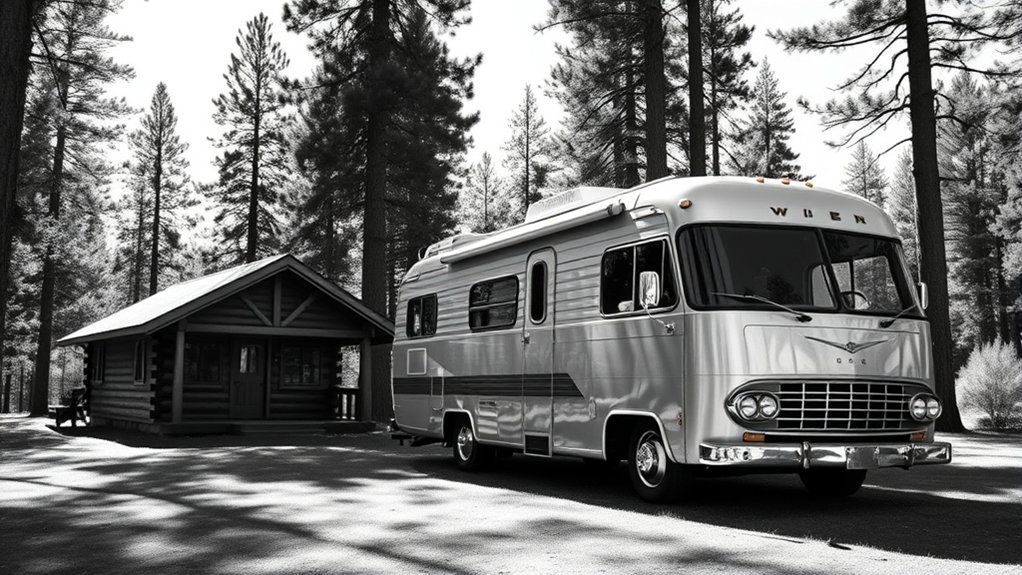
Back in 1966, Winnebago took a bold step by launching its very first motorhome. This wasn’t just any new product — it marked a shift away from travel trailers and into a whole new category of recreational vehicles.
It’s pretty interesting to see how this change helped Winnebago expand its product lineup and paved the way for the company’s future success.
The debut model came packed with innovative design features that really set Winnebago apart from the competition right from the get-go.
Motorhome Debut Impact
When Winnebago introduced its first motorhome in 1966, it reshaped the company’s direction and the entire RV market. You witnessed Winnebago shift from making travel trailers to pioneering motorized recreational vehicles, a bold move that expanded its product line dramatically.
The 1966 model featured innovative design elements that set it apart from competitors, showcasing Winnebago’s commitment to quality and reliability. This debut established Winnebago’s reputation as a leader in motorhome manufacturing, marking a pivotal moment that defined its future.
Transition From Trailers
Although Winnebago had built its reputation on travel trailers, the company took a bold leap in 1966 by introducing its first motorhome. This move signaled a major shift in its product lineup.
You’ll see this change wasn’t just about adding a new vehicle; it redefined Winnebago’s entire market approach. Before ’66, travel trailers were their mainstay.
But moving into motorhomes allowed the company to embrace self-contained recreational vehicles, offering more convenience and freedom to travelers.
This strategic pivot opened doors to an emerging market segment and positioned Winnebago as a pioneer in motorhome manufacturing. By focusing on innovation in motorhome design, they laid the foundation for their enduring industry presence, transforming from a trailer builder to a leader in motorized RVs.
How Winnebago’s Early Innovations Changed Motorhomes
You’ll see how Winnebago’s early milestones reshaped motorhomes by moving from traditional trailers to integrated designs. They didn’t just stick with the usual—they picked innovative chassis and manufacturing techniques that really boosted efficiency and durability.
Because of these changes, they set new industry standards and totally redefined what a motorhome could be.
Early Motorhome Milestones
Because Winnebago introduced its first motorhome model in 1966, it sparked a major shift from traditional trailers to self-contained motorhomes. You can see this change clearly with the 1967 Winnebago D22, which featured a compact, functional design that quickly set industry standards.
Winnebago’s early milestones include pioneering integrated living spaces that combined automotive-style design with assembly line manufacturing. This boosted production efficiency.
You’ll notice their use of fiberglass roofs improved durability, while electric slides enhanced convenience. These were features few competitors offered at the time.
These innovations didn’t just improve motorhomes; they redefined them by focusing on comfort, style, and practicality.
Transition From Trailers
When Winnebago shifted from manufacturing travel trailers to motorhomes in 1966, it revolutionized the RV industry by introducing integrated automotive-style assembly lines that boosted production efficiency. You’d notice this change immediately because the motorhomes offered a more cohesive living experience than trailers could provide.
This shift allowed Winnebago to incorporate technological advancements seamlessly, creating integrated living spaces that felt more like home on wheels. The debut of their first motorhome in 1967 wasn’t just a new product. It marked a clear departure from their trailer roots and showed their commitment to modern motorhome design.
Chassis Innovation Choices
Winnebago’s move from trailers to motorhomes set the stage for another significant shift: the choice of chassis that would define their early models. Initially, Winnebago built motorhomes on Dodge chassis, which was the industry standard back then.
But when Dodge stopped producing motorhome chassis in 1979 due to bankruptcy, Winnebago pivoted to Chevrolet chassis.
You’ll notice this change actually began earlier with the 1975 launch of Chevrolet-based models under the Itasca brand. This signaled a real commitment to innovation.
Choosing Chevrolet chassis wasn’t just about finding a replacement. It enabled greater customization and allowed Winnebago to incorporate technological advances that improved both design and performance.
This shift marked a key innovation moment that fundamentally shaped the capabilities and reputation of Winnebago’s early motorhomes. It really set the tone for what was possible in their designs moving forward.
Meet the Founders and Early Team Behind Winnebago
Although the company started with just 17 employees, the founders John K. Hanson, Excel H. Kolden, and Robert W. Olson set a clear vision for Winnebago. In 1958, they established the brand in Forest City, Iowa, focusing on producing innovative, high-quality travel trailers. Hanson, serving as the first president, steered early product development and growth.
The team’s dedication to craftsmanship and customer satisfaction fueled Winnebago’s initial success.
| Founder | Role |
|---|---|
| John K. Hanson | First President |
| Excel H. Kolden | Co-Founder |
| Robert W. Olson | Co-Founder |
This small, driven team laid the foundation for Winnebago’s reputation as a leader in recreational vehicles.
Winnebago’s Manufacturing Expansion Over Time
From its modest beginnings with just 17 employees crafting travel trailers in Forest City, the company grew steadily by expanding its manufacturing capabilities and product range. You’ll see how Winnebago evolved from simple trailers to a broad lineup of motorhomes and recreational vehicles.
Its manufacturing expansion includes building massive facilities like Big Bertha, which spans eight football fields and has multiple production lines. They also established multiple factories across Iowa and relocated their headquarters to Eden Prairie, Minnesota in 2021.
On top of that, Winnebago invested in automotive-style assembly lines, fiberglass roofing, and acquired facilities like the CC/Winnebago factory for high-line diesel coaches. These strategic moves show how Winnebago scaled up production, embraced innovation, and diversified its manufacturing footprint over time.
The Origins and Impact of the Itasca Brand
When Winnebago Industries launched the Itasca brand in 1975, they aimed to broaden their market reach by introducing a distinctive line of motorhomes. You’ll notice Itasca focused on Type A and Type C models, blending innovative features with Winnebago’s established quality.
Unlike Winnebago’s original use of Dodge chassis, Itasca exclusively used Chevrolet chassis, setting it apart technically and visually. This strategic move wasn’t just about product variety; it strengthened Winnebago’s foothold in the competitive RV market.
By differentiating Itasca, Winnebago could appeal to a broader range of customers while pushing innovation forward.
How Winnebago’s Early Designs Set Industry Standards
Because Winnebago introduced its first motorhome in 1967 with a sleek, aerodynamic design, it set a new benchmark for RV aesthetics that many manufacturers would follow.
Winnebago’s 1967 motorhome debut redefined RV aesthetics with its sleek, aerodynamic design.
You’ll find that Winnebago’s early designs didn’t just look good. They redefined industry standards through innovation and quality. Here’s how:
- They combined travel trailer style with motorhome versatility, creating a new category that influenced future RV designs.
- Their use of automotive-style assembly lines boosted manufacturing efficiency and product consistency, raising the bar for quality.
- They integrated modern amenities and durable construction, setting benchmarks for comfort, luxury, and reliability in motorhomes.
What Winnebago’s Legacy Means for Today’s RV Market
Winnebago’s early innovations didn’t just change the look and function of motorhomes. They laid the groundwork for how RVs are designed and built today. With a 67-year legacy of quality and innovation, Winnebago shifted the industry from travel trailers to motorhomes in 1966, setting new standards for durability and comfort.
When you choose a Winnebago, you benefit from a heritage of craftsmanship and a commitment to customer satisfaction. This legacy continues to shape modern RV expectations.
The brand’s focus on technological advancement and adapting to market trends means you get cutting-edge features and sustainable options.
Winnebago’s legacy drives the RV market forward. It ensures the vehicles you rely on combine tradition with innovation to meet evolving consumer needs.
It’s pretty clear that their influence is still strong in today’s RV world.
Frequently Asked Questions
What Materials Were Primarily Used in Winnebago’s Early Motorhome Interiors?
You’ll find Winnebago’s early motorhome interiors mainly used wood paneling, lightweight plywood, particleboard for cabinetry, and vinyl upholstery. Linoleum flooring and laminated surfaces with metal trim added durability and a warm, home-like feel throughout the space.
It really gave those motorhomes a cozy vibe while keeping things practical. The materials were chosen to balance weight, cost, and comfort, which was pretty smart for the time. Overall, it made the interiors inviting yet functional.
How Did Winnebago Market Its First Motorhomes to Customers?
You’ll find Winnebago marketed its first motorhomes by highlighting innovative design, comfort, and ease of driving through targeted ads, RV show displays, live demonstrations, and free factory tours.
These tours showcased quality craftsmanship and convenience.
It was all about making sure customers saw how practical and enjoyable their motorhomes really were.
What Were the Biggest Challenges Winnebago Faced in Its First Decade?
You’d find Winnebago’s biggest challenges were mastering motorhome manufacturing, securing capital, and competing against established RV brands. They struggled with limited recognition and technology shifts, forcing innovation just to survive and grow in a tough market.
It wasn’t easy breaking into the scene with little name recognition. Plus, the tech changes meant they had to keep adapting quickly. They had to be smart about spending and raising money to keep things moving forward.
Did Winnebago Collaborate With Other Companies for Parts or Technology Initially?
Yes, Winnebago collaborated with companies like General Motors and Dodge for chassis and automotive technology. You’ll see they also sourced parts from various suppliers to build durable, innovative motorhomes.
Their goal was to integrate automotive-grade systems that really hold up on the road. So, working with these established companies helped them achieve that right from the start. It wasn’t just about building a motorhome—it was about making something reliable and advanced.
How Did Winnebago’s Pricing Compare to Competitors in Its Early Years?
You’ll find Winnebago priced about 10-20% lower than luxury competitors in its early years. They offered reliable, quality motorhomes that balanced affordability and value.
This made them especially appealing to first-time buyers and families looking for mid-range options. It was a smart move that helped Winnebago stand out without breaking the bank.
Conclusion
You see, Winnebago’s start in Forest City laid a foundation that reshaped RV travel. Take, for example, the 1966 introduction of their first motorhome. It wasn’t just a vehicle; it sparked a new lifestyle.
This innovation influenced entire industry standards. It shows how early designs can ripple through decades. Understanding Winnebago’s journey helps you appreciate today’s RV market.
Comfort and mobility owe much to those pioneering efforts. It’s pretty amazing when you think about how it all began.