Why Did Winnebago Discontinue The Paseo – The Truth
You’ll find Winnebago discontinued the Paseo because its outdated design lacked off-road capabilities and integrated adventure features like bike racks. It also missed out on the modern tech that today’s buyers expect. The fixed low beds limited both storage and comfort.
Plus, younger consumers started shifting to versatile, rugged vans with customizable layouts. As market trends moved toward larger, adventure-ready models, Paseo’s urban-focused, basic build just couldn’t keep pace. When you understand these shifts, it’s clear how Winnebago’s strategy evolved toward more adaptable RVs.
Why the Paseo Initially Gained Popularity

Although the RV market offers many options, the Winnebago Paseo gained early popularity because of its compact size and maneuverability. This made it ideal for urban driving and parking.
The Winnebago Paseo stood out for its compact size and ease of maneuvering in urban settings.
You’d appreciate its versatile, efficient layout combined with modern amenities, designed to meet the needs of city dwellers and weekend travelers alike.
Its affordability, especially when compared to larger Class B or C motorhomes, drew budget-conscious buyers seeking convenience without sacrificing quality.
You’d also value the Paseo’s reputation for reliability and ease of maintenance, which contributed to its positive reception at launch.
This unique combination of style, practicality, and a lower price point helped the Paseo stand out in a competitive market. It became an attractive choice for those prioritizing urban usability and cost-effectiveness.
How the Paseo’s Design Fell Behind Modern RVs

The Paseo’s early appeal was rooted in practicality and affordability, but over time, its design failed to keep pace with evolving consumer expectations and technological advancements. You’ll notice it lacked modern multimedia systems and updated interior finishes now standard in newer RVs.
Its limited ground clearance and basic chassis made it less versatile for rough terrains compared to contemporary models.
Inside, the Paseo offered a less flexible layout with fewer modular options, reducing space efficiency. Additionally, it missed integrating key technologies like Wi-Fi, lithium batteries, and solar power, features increasingly popular for off-grid use.
Finally, its exterior styling seemed outdated, lacking the aerodynamic, sleek designs that attract today’s buyers.
These design gaps markedly contributed to the Paseo falling behind its competitors. So, while it had its strengths early on, the Paseo just couldn’t keep up as the RV market moved forward.
Missing Adventure Features That Hurt the Paseo
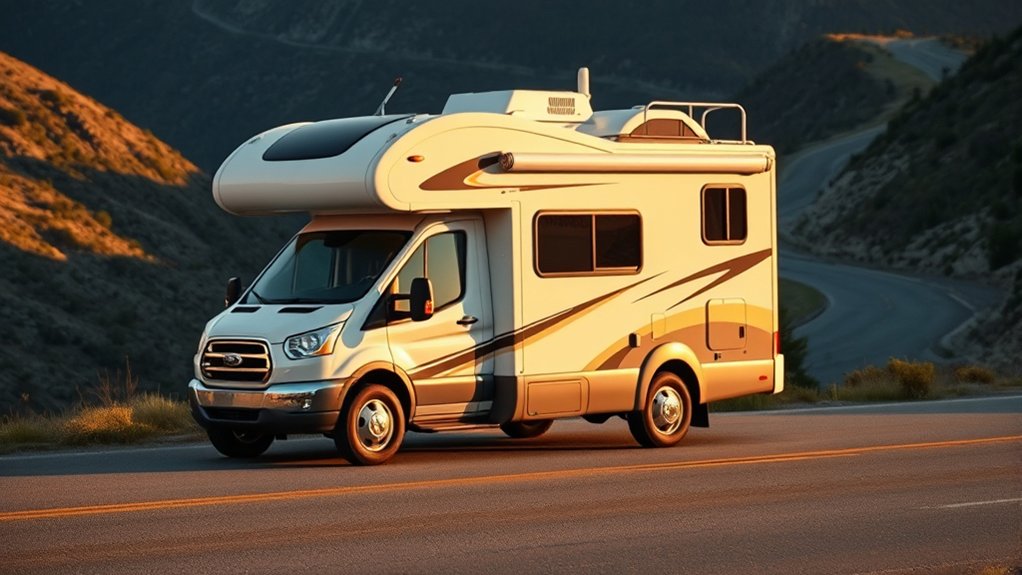
You won’t find integrated bike racks on the Paseo, which is a bit of a letdown for outdoor enthusiasts who like to bring along their gear.
Plus, its fixed, low ground clearance and the absence of 4×4 capabilities mean it’s not great for off-road adventures compared to some of its competitors.
These missing features really held it back in the market and played a big role in Winnebago deciding to discontinue the model.
Lack Of Bike Integration
Since outdoor enthusiasts prioritize convenience and functionality, the Winnebago Paseo’s lack of an integrated bike rack system considerably limited its appeal. You’d expect a vehicle aimed at adventure travelers to offer dedicated bike storage or mounting options.
But the Paseo forced owners to carry bikes externally or find alternative solutions.
This absence reduced its versatility for outdoor sports, particularly cycling. Additionally, the Paseo’s fixed, low ground clearance further restricted its suitability for biking-related activities by limiting access to rougher terrains.
As customer demand increasingly favored models equipped with adventure-specific features like integrated bike racks, the Paseo’s inability to meet these needs directly contributed to its discontinuation.
If you’re looking for an adventure-ready vehicle, the Paseo’s lack of bike integration clearly falls short of current market expectations.
Limited Off-Road Capability
Outdoor enthusiasts who found the Paseo’s lack of bike integration limiting would also notice its shortcomings in off-road capability. The Paseo lacked high ground clearance and four-wheel drive, both essential for traversing rough terrains and unpaved trails.
Its fixed, low-profile design restricted access to off-road environments, making it less suitable for adventure seekers.
Unlike European competitors offering integrated 4×4 systems and enhanced suspension, the Paseo couldn’t meet the increasing demand for versatile, off-road-ready RVs. This absence of specialized features reduced its competitiveness in a market trending toward adventure-oriented vehicles.
Ultimately, these limitations in off-road capability played a significant role in Winnebago’s decision to discontinue the Paseo, as buyers increasingly prioritized models built for exploration beyond paved roads.
How Missing Bike Racks and Off-Road Gear Affected Paseo
You probably noticed that the Paseo didn’t come with built-in bike racks. That made it less attractive to outdoor lovers who need an easy way to carry their gear.
Plus, its off-road abilities were pretty limited, and it didn’t have the specialized equipment that adventure-ready RVs offer.
All of this played a big role in why sales started to drop and why Winnebago eventually decided to discontinue the model.
Lack Of Integrated Bike Racks
Although the Paseo offered a compact and efficient design, it lacked integrated bike racks. That really cut into its appeal for adventure enthusiasts who want secure and convenient bike storage.
Without built-in racks, you’d have to rely on aftermarket solutions, which usually aren’t as secure and can be kind of a hassle.
This oversight limited the Paseo’s attractiveness to a growing group of RV buyers focused on an active, outdoor lifestyle. Integrated bike racks have pretty much become a must-have for adventure-oriented models.
So, not having them felt like a miss in terms of what the market wants.
Because of this, the Paseo missed out on customers looking for both mobility and practical gear transport. This lack probably played a big part in Winnebago’s decision to discontinue the model.
They just weren’t keeping up with evolving consumer needs for integrated bike storage.
Limited Off-Road Capabilities
Because the Paseo lacked integrated bike racks and off-road gear options, it struggled to attract outdoor adventure enthusiasts. You’d find its limited ground clearance and absence of 4×4 capabilities made it unsuitable for rugged terrain, sharply reducing its off-road potential. The vehicle’s design clearly prioritized urban and street use, sidelining needs for off-road versatility.
Without dedicated off-road accessories, the Paseo failed to meet core expectations for outdoor enthusiasts seeking adaptable, adventure-ready vehicles. This shortfall created a perception that the Paseo wasn’t versatile enough, directly impacting its appeal in a market increasingly dominated by RVs built for off-road and outdoor activities.
This lack of versatility and off-road capability diminished its competitiveness. As a result, its market position weakened, contributing markedly to Winnebago’s decision to discontinue the model.
Impact On Adventure Appeal
When evaluating the Paseo’s appeal to adventure seekers, its lack of integrated bike racks and off-road gear considerably limited its functionality for outdoor activities. Without an integrated bike rack system, the Paseo failed to meet the basic transport needs of cyclists and outdoor enthusiasts.
Its fixed low ground clearance and absence of all-terrain tires further restricted off-road capability, making it unsuitable for rugged terrains.
The lack of off-road modifications and dedicated outdoor gear storage diminished versatility, reducing its attractiveness to those seeking multipurpose adventure vehicles. These design shortcomings directly impacted the Paseo’s relevance in the adventure market, contributing to declining consumer interest.
Ultimately, the missing features essential for active lifestyles played a significant role in Winnebago’s decision to discontinue the Paseo.
Why Fixed Low Beds Limited Outdoor Lifestyle Use
While the Paseo’s fixed low beds provided a stable sleeping area, they considerably limited your ability to store larger or multiple pieces of outdoor gear efficiently. This design lowered ground clearance and reduced interior headroom, which impacted off-road capabilities and overall comfort.
Fixed low beds offered stability but limited gear storage, headroom, and off-road performance.
Plus, fixed beds restricted customization options. That meant you couldn’t really adapt the space to fit different gear or lifestyle needs.
Key limitations included:
- Reduced storage flexibility, making it difficult to accommodate bulky or multiple outdoor items.
- Lower ground clearance, which compromised the vehicle’s ability to navigate rough terrain.
- Lack of adjustable or foldable beds, limiting use of the interior for activities like gear prep or lounging.
All of these factors made the Paseo less appealing for active outdoor users who want versatile layouts.
Which Market Shifts Led to Declining Paseo Sales
You’ve probably noticed that the Paseo’s appeal started to fade over time. That’s because its design mainly targeted an older crowd and didn’t include many outdoor features.
Plus, its traditional layout just couldn’t keep up with what the market was looking for — people wanted versatile, off-road-ready RVs. So, it makes sense that sales took a hit since buyers were after more innovative and adaptable options.
Aging Demographic Focus
Although the Paseo initially appealed to the aging baby boomer demographic seeking smaller, affordable Class B vans, shifting market dynamics profoundly impacted its sales.
Winnebago’s move away from this core group, combined with evolving consumer preferences, led to declining demand.
Here’s what you need to know:
Younger buyers like Millennials and Gen Z favored versatile, adventure-ready RVs, which was quite different from the Paseo’s traditional, limited design.
At the same time, Winnebago prioritized larger, feature-rich models targeting broader demographics.
This shift reduced the focus on smaller vans.
Plus, the Paseo’s outdated functionality and aesthetics just didn’t meet the growing demand for innovative, adaptable solutions.
These factors show how the aging demographic’s diminishing influence and shifting market focus directly contributed to the Paseo’s sales decline and eventual discontinuation.
Limited Outdoor Features
Because the Paseo lacked integrated outdoor features like bike racks and versatile living spaces, it struggled to attract adventure and outdoor enthusiasts.
Its fixed, low ground clearance limited its usability on rugged terrain, a segment that saw significant growth.
Data shows consumers increasingly sought vans with off-road capabilities and customizable outdoor amenities, areas where the Paseo fell short.
Market trends indicated a strong preference for vehicles supporting active lifestyles, including modular outdoor living enhancements and storage solutions for gear.
Without these features, the Paseo’s appeal diminished as competitors offered more adaptable, adventure-ready options.
This shift contributed directly to declining sales, as the model didn’t meet evolving consumer demands for outdoor functionality and flexibility, essential in a market moving toward versatile, off-road-capable recreational vehicles.
Traditional Design Constraints
The Paseo’s traditional design, with its fixed low beds and limited off-road capability, just didn’t keep up with changing consumer tastes. You’d notice that as outdoor lovers started wanting more versatile and rugged vehicles, the Paseo’s charm started to fade.
A big part of this was the growing preference for vans like the Winnebago Revel, which offered better ground clearance and were ready for off-road adventures. People also wanted customizable interiors and smart storage solutions for their outdoor gear — things the Paseo simply didn’t have.
Plus, the whole industry was moving toward innovative, multi-purpose layouts. That made basic, city-friendly models like the Paseo seem outdated pretty fast.
All these shifts meant sales took a hit. The Paseo just couldn’t keep up with the lifestyle and practical needs of today’s RV buyers who crave adventure and flexibility.
Why Younger Buyers Rejected the Paseo
When younger buyers evaluate RV options, they look for off-road capabilities and adventure-ready features that the Paseo just doesn’t have. Its traditional design, fixed low beds, and minimal storage don’t really fit what Millennials and Gen Z need. These buyers want tech-savvy, customizable RVs that support outdoor sports and active lifestyles.
But the Paseo misses key things like integrated bike racks and off-road systems. The table below shows how younger buyers’ preferences stack up against what the Paseo offers:
| Feature | Younger Buyers’ Preference | Paseo’s Offering |
|---|---|---|
| Off-road Capability | High (4×4, rugged suspension) | Low (standard road setup) |
| Storage Flexibility | Modular, ample gear space | Limited fixed storage |
| Tech Integration | Smart controls, connectivity | Basic electronics |
| Customization | High, adaptable layouts | Fixed interior design |
| Adventure Features | Bike racks, outdoor showers | None |
How Competitors Left the Paseo Behind With New Trends
As competitors rolled out models featuring modern layouts, off-road capabilities, and integrated amenities, the Paseo quickly fell behind in meeting evolving buyer demands. You’ll notice the key areas where rivals surpassed the Paseo include:
- Versatility: Competitors embraced adaptable floor plans and higher ground clearance, enabling adventure-ready use that the Paseo lacked.
- Innovation: New models integrated outdoor gear storage, advanced tech, and customization options, reflecting current market trends.
- Efficiency and Style: Rivals improved fuel economy and updated aesthetics, making their vans more appealing and practical.
These advancements highlight how the Paseo’s outdated design and limited features couldn’t keep pace with the market shift toward highly adaptable, tech-forward camper vans.
That ultimately caused it to lose ground to more competitive offerings.
How Winnebago Shifted Focus to More Versatile Models
Recognizing that the Paseo couldn’t keep up with growing demands for adaptability and off-road readiness, Winnebago redirected its efforts toward more versatile RV models. You’ll find that the company prioritized campervans and adventure-ready vans like the Travato, which offer greater ground clearance, customizable layouts, and improved off-road capability.
The Paseo’s fixed features limited its appeal to active travelers seeking multifunctional vehicles. By discontinuing the Paseo, Winnebago reallocated resources to design and develop RVs that better match current market demands for flexibility and urban adventure.
This strategic shift reflects data showing consumer preference for adaptable, rugged models that support diverse travel styles. It enables Winnebago to stay competitive and meet evolving customer needs more effectively.
What Paseo’s End Means for Future Winnebago RV Designs
Although the Paseo served a niche market, its discontinuation clearly signals Winnebago’s commitment to developing RVs that better accommodate full-time living and outdoor adventures.
The end of the Paseo marks Winnebago’s shift toward RVs designed for full-time living and adventure.
You can expect future models to shift toward larger, more versatile designs with enhanced features tailored to evolving consumer preferences.
This realignment also targets competition with European-style campervans offering customization and off-road capabilities.
Specifically, you’ll notice these trends in upcoming Winnebago RVs:
- Increased interior living space prioritizing comfort for extended stays.
- Enhanced off-road performance and rugged construction for outdoor exploration.
- Innovative, customizable layouts that respond to diverse lifestyle needs.
Frequently Asked Questions
What Was the Original Price Range of the Winnebago Paseo?
The original price range of the Winnebago Paseo was approximately $80,000 to $100,000. You’ll find that pricing varied based on optional features.
This reflected its compact size and basic amenities compared to higher-end Class B camper vans. So, while it wasn’t the most luxurious option out there, it offered good value for what it included.
Were There Any Special Editions or Unique Trims of the Paseo?
You won’t find any special editions or unique trims of the Paseo. Winnebago offered it as a standard, budget-friendly Class B van. They focused on core features rather than exclusive or limited-edition versions throughout its production.
How Fuel-Efficient Was the Paseo Compared to Other RVS?
You’ll get about 16+ miles per gallon in the Paseo, which is nearly triple the fuel efficiency of larger RVs averaging around 6 mpg. Its compact design and diesel engine make it particularly economical for travel.
That means you can go farther without stopping for gas as often, which is a big plus on long trips. Plus, saving on fuel helps keep your travel costs down. It’s a smart choice if you want something easy on the wallet and the road.
Did Winnebago Offer Any Warranty or Service Plans for the Paseo?
Think of Winnebago’s Paseo warranty like a standard safety net: you’ll get the typical manufacturer coverage common to Class B vans. But there weren’t any exclusive or model-specific warranty or service plans offered directly for the Paseo.
Can Paseo Parts Be Used in Other Winnebago Models?
You can use some Paseo parts in other Winnebago models, especially interior components and mechanical parts from the same generation or chassis.
It’s a good idea to always check compatibility through Winnebago’s parts catalog or by consulting a certified dealer first.
That way, you’ll avoid any issues and make sure the parts fit and work properly.
Conclusion
You’ve seen how the Paseo’s charm quietly faded as newer demands reshaped the RV landscape. Its design, once a strong suit, gradually missed the mark on key adventure features and modern versatility.
While it didn’t vanish abruptly, the Paseo’s retirement reflects Winnebago’s strategic pivot toward models that better match evolving lifestyles and preferences. This subtle shift signals a forward-looking approach, making sure future RVs stay in step with today’s active, dynamic travelers.