Why Did Winnebago Stop Making The Via – The Real Story
Winnebago stopped making the Via because shifting buyer preferences favored larger, more versatile RVs with advanced features like off-road capability and lithium power. The Via’s high production costs, complex design, and limited sales made it less profitable compared to models like the Travato and Revel.
By focusing on streamlined, tech-forward campers, Winnebago aims to boost growth and efficiency. If you want to understand the full reasons behind this strategic shift, there’s more insight to uncover.
Why Winnebago Introduced the Via
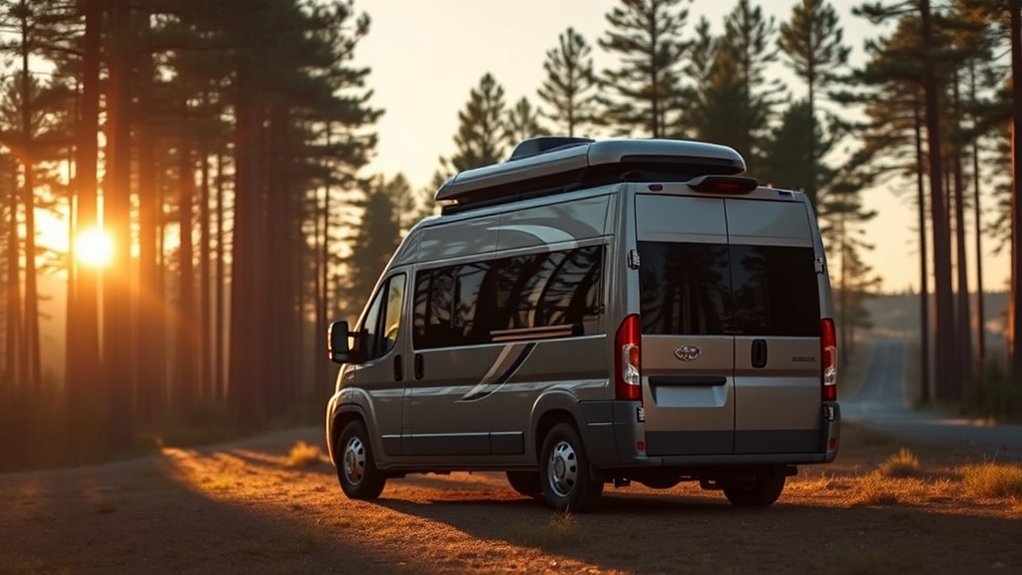
When Winnebago introduced the Via, they aimed to capture the growing compact Class B motorhome market, especially appealing to urban dwellers and active travelers like you. They recognized your need for a versatile, easy-to-drive RV that fits city living and weekend adventures.
By using the Mercedes-Benz Sprinter chassis, Winnebago guaranteed reliability and fuel efficiency, key factors for your travel convenience.
Choosing the Mercedes-Benz Sprinter chassis ensures reliable, fuel-efficient travel that perfectly suits your on-the-go lifestyle.
The modern interior design targeted a younger, tech-savvy demographic seeking comfort without sacrificing style or functionality. Launching the Via allowed Winnebago to respond to the booming “van life” trend, providing accessible luxury camping options that fit your lifestyle.
This strategic move expanded Winnebago’s lineup with premium compact motorhomes designed to meet evolving consumer demands for smaller, adaptable vehicles.
What Made the via Different From Other Winnebago Models
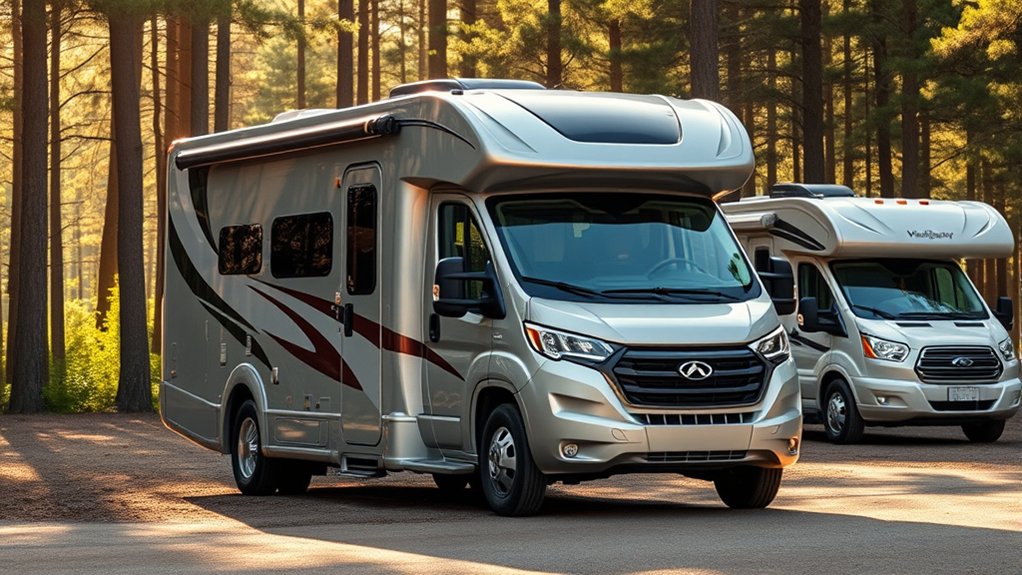
Although Winnebago offers a range of motorhomes, the Via stood out by combining a compact Class A design with luxury features built on a Fiat chassis. This gave you a unique blend of style and maneuverability.
You’d notice its modern interior with high-end finishes, unlike the larger, traditional models.
Its advanced technology and fuel efficiency made it a smart choice for urban and adventure travelers who wanted ease in driving and parking without sacrificing comfort.
The Via’s distinctiveness came from these key features:
- Compact size for easier handling in tight spaces
- Luxury interior with premium materials
- Innovative tech like smart home controls and top-tier appliances
- Built on a fuel-efficient Fiat chassis designed for maneuverability
This combination set the Via apart in Winnebago’s lineup.
How Market Trends Changed RV Buyer Preferences
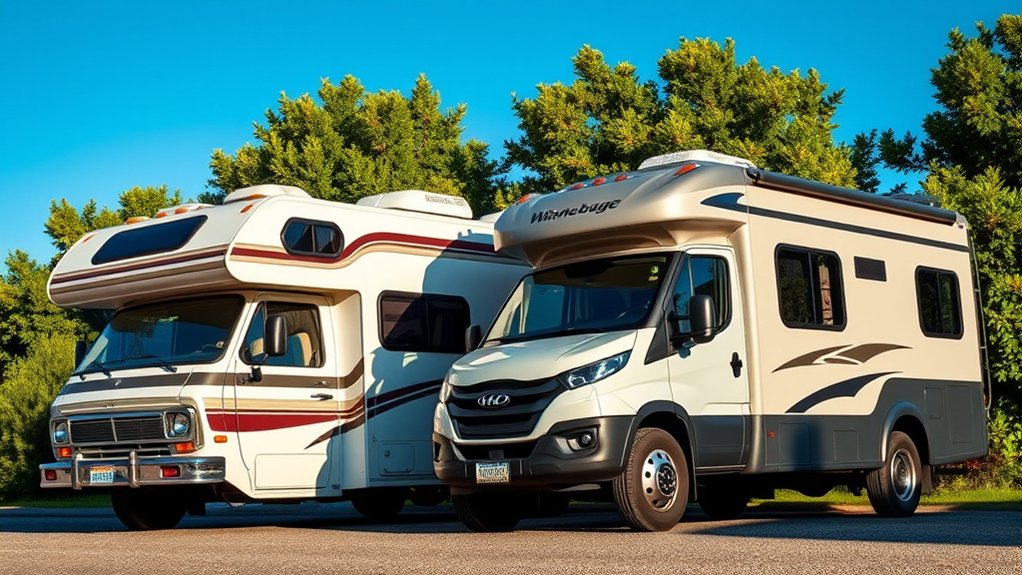
As RV buyer preferences shifted toward larger, more feature-rich models, demand for compact motorhomes like the Winnebago Via declined considerably. You started looking for RVs with advanced amenities and off-grid capabilities, areas where the Via just didn’t keep up.
Online reviews and communities made concerns about smaller RVs more visible, pushing manufacturers to focus on customizable, luxury models. This change made Class B and Class C motorhomes with modern tech way more attractive, which cut into the Via’s market share.
| Trend | Buyer Preference | Impact on Via |
|---|---|---|
| Larger RVs | More space and comfort | Reduced appeal |
| Advanced amenities | High-tech and luxury | Limited in Via |
| Off-grid capability | Self-sufficiency | Not emphasized |
| Online reviews | Transparency and feedback | Highlighted limitations |
| Market shift to Class B/C | Modern features and design | Increased competition |
Why Compact Class B RVs Like the Via Had Trouble Selling
The shift toward larger, more versatile RVs hit compact Class B models like the Winnebago Via hard. You might find the Via’s appeal limited if you’re looking for flexibility and innovation in your RV. Its higher price point, around $150,000, puts it out of reach for many buyers seeking more affordable options.
Plus, the Via’s interior options felt restrictive compared to newer models that offer fresh features and layouts. Meanwhile, the market leaned toward rugged, off-road-capable vans rather than luxury-focused ones.
Here’s why compact Class B RVs like the Via struggled:
- High cost limited buyer accessibility
- Fewer interior configurations reduced personalization
- Shift in buyer preference toward versatility and off-road use
- More innovative models overshadowed luxury-centric designs
How Competition Affected the Via’s Sales
When competitors introduced more innovative and better-equipped models, the Via’s sales took a sharp hit. You’ll notice that brands like Airstream and even Winnebago’s newer models offered features and designs that resonated more with buyers.
Competitors’ innovative models, including Airstream and Winnebago’s newer designs, sharply impacted Via’s sales.
As a result, the Via lost significant market share. Consumer feedback highlighted that the Via’s amenities and style became less appealing compared to rivals delivering modern comforts.
The rise of luxury and lightweight motorhomes further intensified competition, making the Via less distinctive in its class. This evolving landscape forced Winnebago to rethink its strategy, ultimately leading to the Via’s discontinuation.
You can see how increased competition directly impacted sales by overshadowing the Via’s once-competitive edge in a rapidly changing market.
How Winnebago Changed Its Lineup After the Via
After losing ground to more modern competitors, Winnebago shifted its focus to models that better matched evolving customer demands. They discontinued the Via in 2022 to concentrate on higher-margin, feature-rich vans like the Revel and Travato. These models offer advanced systems such as lithium power and all-wheel drive, which the Via lacked.
Winnebago’s lineup now emphasizes versatility and off-grid capabilities, reflecting current market trends. Here’s how Winnebago changed its lineup after the Via:
- Prioritized models with lithium power and all-wheel drive
- Phased out vans missing modern features like side radiators and independent suspension
- Focused on off-grid capable, customizable Class B vans
- Streamlined offerings to improve competitiveness and profitability
This strategic shift aligns with evolving customer expectations and industry trends. It’s all about giving people what they want and staying ahead in the market.
Why Winnebago Prioritized Travato and Revel Over the Via
You’ll notice that Winnebago shifted its focus to the Travato and Revel because these models better matched the changing market demand.
Plus, they made production simpler and more cost-efficient. By streamlining their lineup, Winnebago could really concentrate resources where they saw the most growth potential.
Market Demand Shift
Why did Winnebago shift its focus from the Via to models like the Travato and Revel? Simply put, market demand changed. You’re seeing more adventurers and outdoor enthusiasts who want versatile, off-grid-ready RVs. That’s something the Via’s traditional, urban-friendly design didn’t fully offer.
Winnebago responded to this shift by prioritizing models that match modern preferences. The Travato and Revel come equipped with features like lithium batteries and 4WD, appealing to a broader, adventure-seeking customer base.
Sales data confirmed a clear trend: interest in the Via was declining, while Travato and Revel sales surged.
Key market demand insights include:
- Growing consumer preference for compact, off-grid-capable rigs
- Desire for enhanced adventure and boondocking features
- Declining interest in traditional urban layouts like the Via’s
- Stronger profitability and growth in Travato and Revel segments
Production Efficiency Gains
Alongside shifting market demand, Winnebago sharpened its focus on production efficiency by prioritizing the Travato and Revel models over the Via. You’ll find these models feature more standardized components and chassis options, which simplifies assembly and reduces complexity compared to the Via’s unique design and customization.
By concentrating on Travato and Revel, Winnebago increased shipment volumes and cut costs tied to custom configurations.
The Via’s distinctiveness made it less suited for high-volume manufacturing, slowing production speed and raising logistical challenges. This strategic shift boosted profitability by enabling faster builds with fewer complications.
Model Lineup Simplification
Although the Via offered a unique urban appeal, Winnebago chose to prioritize the Travato and Revel models because they better aligned with evolving market demands. They streamlined their lineup to focus on models with clearer market positioning and stronger sales potential.
By simplifying their offerings, Winnebago reduced manufacturing complexity and cut costs.
This shift enabled them to invest more in profitable, niche segments. The Travato and Revel target adventure seekers and off-grid travelers, which contrasts with the Via’s urban orientation.
Key reasons for this shift include:
- Travato and Revel’s specialized off-road and off-grid features
- Declining sales volume of the Via compared to other models
- Reduced production complexity and associated costs
- Focus on niche markets with higher growth potential
All in all, this strategy helped Winnebago sharpen its competitive edge.
How Production Costs and Profit Margins Influenced the Decision
You’re seeing how rising manufacturing expenses squeezed Winnebago’s profit margins on the Via, making it tougher to justify keeping it in production. It wasn’t easy balancing quality with controlling costs.
When you really think about that cost versus quality challenge, it helps explain why Winnebago decided to shift focus away from the Via.
Rising Manufacturing Expenses
When manufacturing expenses rise sharply, companies like Winnebago have to take a hard look at the financial viability of their products. For the Via, rising costs in materials and labor really pushed production expenses up. You can see how that made it tough to keep the model economically sustainable.
Inflation and supply chain disruptions only added fuel to the fire, driving costs even higher. This squeezed the margin that once made the Via profitable. So, Winnebago had to decide if it was still worth it to keep making the Via given the financial pressure.
Key factors influencing rising manufacturing expenses included:
- Higher raw material prices due to inflation
- Increased labor costs impacting assembly
- Supply chain delays causing inefficiencies
- The cumulative effect reducing cost-effectiveness
In the end, these mounting expenses made it impractical for Winnebago to continue producing the Via.
Declining Profit Margins
Since Winnebago faced rising production costs and increased competition, the profit margins on the Via steadily declined. You’ll find that labor and material expenses squeezed those margins tight, making it harder to keep the Via profitable.
Add to that lower-than-expected sales volume, and continuing production became difficult to justify.
Winnebago shifted focus toward models offering higher margins and more advanced features, where the return on investment looked better. As a result, the Via’s declining profitability made it less financially viable.
When you consider these factors together, it’s clear Winnebago prioritized product lines with stronger profit potential, leading to the decision to discontinue the Via.
This strategic move helped them manage costs and improve overall profitability amid a challenging market.
Cost Versus Quality
The rising production costs behind the Via didn’t just squeeze profit margins. They directly challenged the balance between cost and quality. You can see why Winnebago had to rethink its strategy.
The Via’s lightweight, aerodynamic design demanded expensive materials and intricate labor, pushing expenses higher.
Maintaining quality meant these costs couldn’t be easily cut. That made the model less viable financially. To stay profitable, Winnebago shifted toward larger models that allowed for economies of scale and broader market appeal.
Consider these factors influencing the decision:
- High material and labor costs for Via’s specialized design
- Limited production volume reducing cost efficiency
- Need to streamline manufacturing processes
- Focus on models with better profit potential and wider demand
This cost-versus-quality dilemma sealed the Via’s fate.
What the Via’s End Means for Fans and Winnebago’s Future
Although the Via’s discontinuation has disappointed many fans who appreciated its luxury and innovative design, it also signals Winnebago’s strategic pivot toward other models that better align with evolving market demands.
You’ll notice this move reflects broader industry consolidation and a shift in focus toward more versatile, tech-forward RVs. For you, a Via enthusiast, this means fewer options in the premium Class B segment but also potential innovations in future offerings.
| Aspect | Impact on Fans | Winnebago’s Future Focus |
|---|---|---|
| Luxury Features | Loss of a high-end choice | Emphasis on versatile models |
| Design Innovation | Reduced unique options | Streamlined product lineup |
| Market Trends | Mixed feelings | Adapting to evolving demands |
| Tech Integration | Concern over premium tech | Integration in other models |
| Competitive Edge | Shift in competitive landscape | Focus on growth and efficiency |
Frequently Asked Questions
What Years Was the Winnebago via in Production?
The Winnebago Via was in production from 2013 through 2019. You’ll find it spanned about six years, during which Winnebago updated the model before eventually discontinuing it.
They decided to focus on newer motorhome lines instead. So, while the Via had a good run, it made way for fresh designs and innovations.
Were There Any Special Edition via Models Released?
You won’t find any special edition Via models officially released by Winnebago. They stuck to standard versions, with only some dealer-specific upgrades.
But honestly, these upgrades weren’t enough to shake the tree or stand out markedly in the lineup. So, if you’re hunting for something unique, the Via line keeps it pretty straightforward.
How Fuel-Efficient Was the Winnebago via Compared to Other RVS?
You’ll find the Winnebago Via particularly fuel-efficient, averaging 8-12 MPG. It outperforms many larger Class A and Class C RVs.
Its diesel engine and compact size help you save on fuel during long trips compared to gas-powered models. So, if you’re looking to cut down on fuel costs, the Via is a smart choice.
Can via Owners Still Get Official Parts and Service?
You’re sailing a steady ship. Winnebago still offers official parts and service for Via models.
Some specialized parts might take longer or need aftermarket sources. But authorized centers keep your RV roadworthy and supported.
Did Winnebago Offer Any Trade-In Programs for via Owners?
Winnebago hasn’t offered any formal trade-in programs specifically for Via owners. You might see some dealer offers, but they’re often below market value and tied to NDAs. So, proceed cautiously before accepting.
It’s always a good idea to shop around and compare offers. Don’t feel pressured to jump on the first deal you get. Taking your time can help you find a better value.
Conclusion
You’ve seen the Via’s journey. It was once a bright spark in Winnebago’s lineup, but now it’s like a sunset fading into changing market winds.
As compact Class B RVs lost ground, Winnebago shifted gears. They started steering toward the Travato and Revel for smoother roads ahead.
Though the Via’s chapter closes, its spirit still fuels innovation. It’s a reminder that even endings drive new beginnings in the ever-evolving landscape of adventure on wheels.