Can You Park An RV In Your Driveway – Here’s the Answer
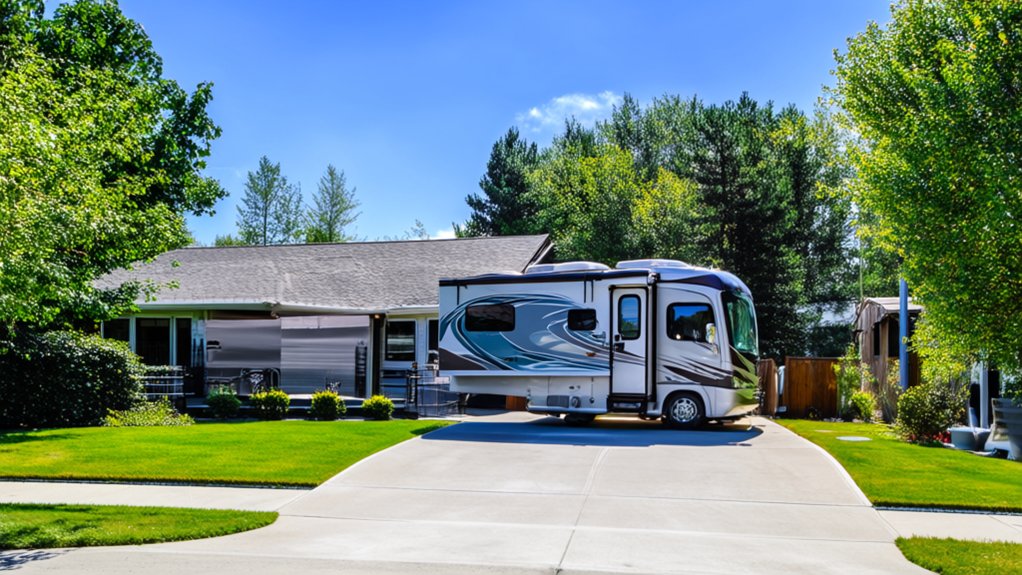
You can park an RV in your driveway if you follow local laws and HOA rules. These often limit parking duration to around 72 hours and may also have size or visibility restrictions.
Make sure your driveway fits your RV safely. Use proper precautions like wheel chocks and keep any necessary permits handy.
Breaking these rules can lead to fines or towing. So, understanding the requirements will help you stay compliant and avoid any issues.
What Local Laws Say About Parking an RV in Your Driveway

How do local laws affect your ability to park an RV in your driveway? Local laws and zoning codes vary widely by city and county, and they directly impact whether you can park an RV on your property.
Many places have specific restrictions, like maximum vehicle height and length, plus limits on how long you can store an RV in your driveway.
If you live in an unincorporated area, county regulations usually apply and might be different from city rules. These enforceable laws often cover off-street parking standards and typically prohibit permanent or long-term vehicle storage.
To stay on the safe side, you should check your local municipal codes and zoning maps carefully. Understanding these rules helps you avoid violations and keeps your RV parking lawful and hassle-free.
How HOA Rules Affect Your RV Parking Options

Although local laws set the baseline for RV parking, your Homeowners Association (HOA) often enforces stricter rules that can substantially limit your options. Many HOAs prohibit outdoor RV storage or restrict driveway parking to just a few consecutive days, usually between two and seven.
You might also have to fully screen your RV behind fences or dense vegetation to keep the neighborhood looking nice. Before parking, some HOAs’ design review committees could ask you to submit site sketches or screening plans for approval.
If you don’t follow these rules, you might get warnings, fines, or even be forced to remove your vehicle. So, it’s really important to review your HOA’s covenants carefully and get approval when needed to avoid any penalties related to RV parking in your driveway.
Why RV Size and Visibility Matter for Driveway Parking
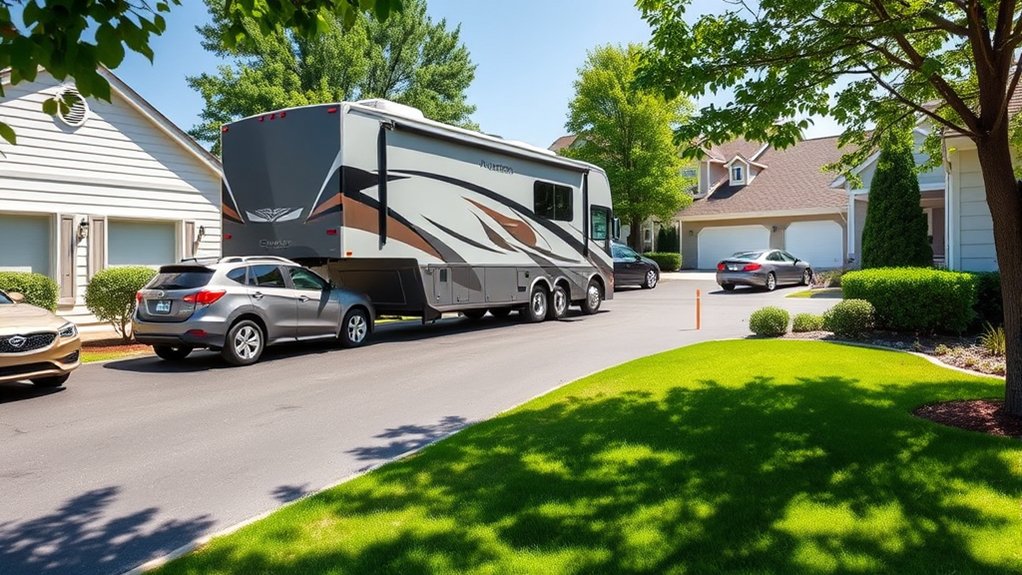
Since larger and taller RVs can substantially impact visibility around your driveway, you need to take their size carefully before parking.
Larger and taller RVs significantly affect driveway visibility, so consider their size carefully before parking.
Taller models, like Class B motorhomes such as the Winnebago Era 70A, often surpass standard vehicle height limits, obstructing sightlines for both drivers and pedestrians. This height can create safety hazards at driveways and sidewalks.
Additionally, larger RVs, especially those exceeding 22 feet or equipped with roof racks, demand special parking considerations.
If you use fences or vegetation to screen your RV, verify they comply with local height restrictions to avoid further visual obstructions.
Visibility concerns influence not only where you can place your RV but also the necessary screening measures. These things are vital for maintaining safety and adhering to parking regulations on your property.
RV Parking Time Limits You Should Know
Beyond considering the size and visibility of your RV when parking in your driveway, you also need to be aware of local parking time limits. Most municipalities limit RV driveway parking to a maximum of 72 hours, after which you must move the vehicle. Some communities enforce stricter restrictions based on the vehicle’s size or appearance.
Typically, RVs can’t remain parked in driveways for more than three consecutive days without relocating or obtaining special permits. Ignoring these limits can lead to fines, citations, or even towing. So, it’s really important to follow the rules.
To avoid penalties, always verify the specific regulations in your city or neighborhood before parking your RV. Staying informed guarantees compliance and prevents unexpected consequences related to extended driveway parking. It’s better to be safe and check first!
Preparing Your Driveway for RV Parking
When preparing your driveway for RV parking, you need to make certain it has a stable, level surface, preferably paved or concrete. This will support the vehicle’s weight securely.
Measure the driveway’s height, width, and length to ensure your RV fits without obstruction. Remove debris, trim overhanging branches, and check for low wires.
Also, confirm local zoning laws and HOA rules permit RV parking. Make sure to note any screening requirements. Installing or upgrading driveway borders can protect your property and assist in parking.
| Task | Details | Purpose |
|---|---|---|
| Surface | Paved or concrete | Support RV weight safely |
| Measurements | Height, width, length | Confirm RV fits |
| Obstruction removal | Debris, branches, wires | Ensure clear access |
| Legal check | Zoning laws, HOA rules | Confirm parking permission |
| Driveway borders | Install/upgrade curbing | Prevent damage, ease parking |
What Happens If You Don’t Follow Parking Rules for RVs?
If you don’t follow parking rules for your RV, you could end up facing some pretty frustrating legal consequences like fines, tickets, or even having your vehicle towed. Local authorities and HOAs don’t mess around—they enforce these regulations strictly, especially in residential neighborhoods.
And it’s not just about the rules themselves. Ignoring them can also upset your neighbors, which might lead to complaints. That can make things worse by escalating enforcement actions and causing tension within your community.
Legal Consequences
Although parking an RV in your driveway may seem convenient, failing to comply with local regulations can result in serious legal consequences. You may face fines, penalties, or even vehicle towing if you violate municipal RV parking rules.
Homeowners association (HOA) regulations often impose additional restrictions. Ignoring these could lead to warnings, fines, or legal action from your community.
Exceeding time limits, such as the common 72-hour parking rule, typically triggers enforcement actions and citations. Repeated violations increase the risk of legal disputes and escalate administrative consequences.
Furthermore, unauthorized camping or overstaying parking duration limits can prompt police warnings or citations for illegal activity. To avoid these outcomes, you must understand and adhere strictly to all applicable parking regulations concerning RVs in your driveway.
It’s really important to stay informed and follow the rules to keep things hassle-free.
Community Complaints
Why do community complaints matter when you don’t follow RV parking rules? When you ignore these rules, neighbors may file complaints, which can lead to HOA fines or enforcement actions.
Repeated violations often escalate to formal citations or legal steps from authorities or HOA management.
Complaints usually lead to inspections that might require you to move or remove your RV entirely from the driveway.
If you keep ignoring the rules, it can really hurt your relationship with neighbors and even cause social disputes.
Plus, not following parking regulations increases the chance your vehicle could get towed or fined by municipal or HOA authorities.
To avoid all these headaches, it’s super important to follow local parking rules.
Also, try to address any community concerns about where you park your RV before they become bigger issues.
When Off-Site Storage Is a Better Choice for RV Parking
When local laws, HOA rules, or size restrictions limit parking options, off-site storage facilities present a practical solution for your RV. These facilities provide secure, designated spaces that comply with legal requirements and prevent neighborhood disputes.
Off-site storage also frees your driveway, enhancing your home’s curb appeal and reducing clutter. Many offer climate-controlled or covered units, protecting your RV from weather damage during extended storage periods.
| Benefit | Description |
|---|---|
| Legal Compliance | Avoids violations of local laws and HOA rules |
| Security | Provides monitored and designated parking |
| Space Efficiency | Frees driveway space, improves aesthetics |
| Protection | Climate-controlled, covered options available |
Avoiding Fines and Staying Compliant With RV Parking Rules
To avoid fines and stay compliant with RV parking rules, you must first verify local municipal and HOA regulations regarding driveway parking. Understanding and adhering to these rules is essential to prevent penalties.
Follow these steps: Confirm parking permissions and time limits, which are usually capped at 72 hours. Keep documentation of any permits or approvals from authorities or your HOA.
Use appropriate safety measures like paved surfaces, wheel chocks, and drip trays. Also, avoid running generators during restricted hours.
Regularly check that your RV’s dimensions comply with driveway clearance limits. It’s a good idea to set reminders to move the vehicle before time limits expire.
Frequently Asked Questions
Can I Park an RV in My Driveway Overnight?
You can park an RV in your driveway overnight only if local laws, zoning regulations, and HOA rules permit it. Always check these regulations carefully to avoid fines or violations before parking your RV overnight.
It’s a good idea to double-check with your city or neighborhood association to be sure. Rules can vary a lot depending on where you live. So, don’t just assume it’s okay—make sure you know for sure before you park.
Do I Need Special Insurance for Driveway RV Parking?
Coincidentally, you might need special insurance for driveway RV parking if your standard policy doesn’t cover storage risks. Always consult your insurer to update coverage for theft, damage, or added accessories to avoid protection gaps.
It’s a good idea to double-check what’s included in your current policy. This way, you won’t be caught off guard if something happens while your RV is parked in the driveway. Just a quick call to your insurance agent can save you a lot of hassle later on.
How Can I Secure My RV When Parked at Home?
You should use high-quality wheel or hitch locks and install security cameras to keep an eye on your RV.
Make sure there’s proper outdoor lighting around the area. It really helps deter any unwanted attention.
Also, secure all doors and windows with robust locks or alarms. It’s better to be safe than sorry.
Don’t forget to keep detailed records of your RV’s make, model, and serial number. This info can be a lifesaver if anything ever happens.
Are There Electrical Hookup Options for RVS in Driveways?
Yes, you can install dedicated outdoor RV electrical hookups in your driveway. Just make sure you use weatherproof, code-compliant outlets. It’s important to hire a licensed electrician to handle the installation.
They will set up a proper circuit breaker and grounding to ensure safe and legal connections. This way, your RV electrical hookup will be both functional and secure. It’s definitely worth the investment for convenience and peace of mind.
Can Driveway RV Parking Affect My Home’s Resale Value?
Yes, driveway RV parking can lower your home’s resale value by diminishing curb appeal and deterring buyers. Some may view it negatively.
Local restrictions and neighborhood norms also influence how it affects marketability. So, it really depends on where you live and who’s looking to buy.
Conclusion
Parking your RV in your driveway isn’t always a free-for-all. It’s a tightrope walk between local laws, HOA rules, and practical considerations like size and visibility.
Ignoring these guidelines can lead to fines or forced removal. That can turn your convenience into a costly headache.
By understanding restrictions and preparing your driveway properly, you’ll keep your RV safe and compliant. When in doubt, off-site storage might be the key to avoiding trouble and keeping peace of mind.