How Much Do RV Park Owners Make – The Real Answer
You can expect to make between $100,000 and $300,000 annually owning an RV park, with profits typically near 30% of revenue and returns ranging from 10% to 30%. It really depends on location, amenities, and how well you manage expenses.
Seasonal fluctuations mean summer months can generate over half your yearly income. So, those busy summer times are a big deal for your bottom line.
Strategic amenities and financing choices also impact earnings. Exploring these factors will give you clearer insights into maximizing your RV park’s profitability.
What Is the Average Income for RV Park Owners?
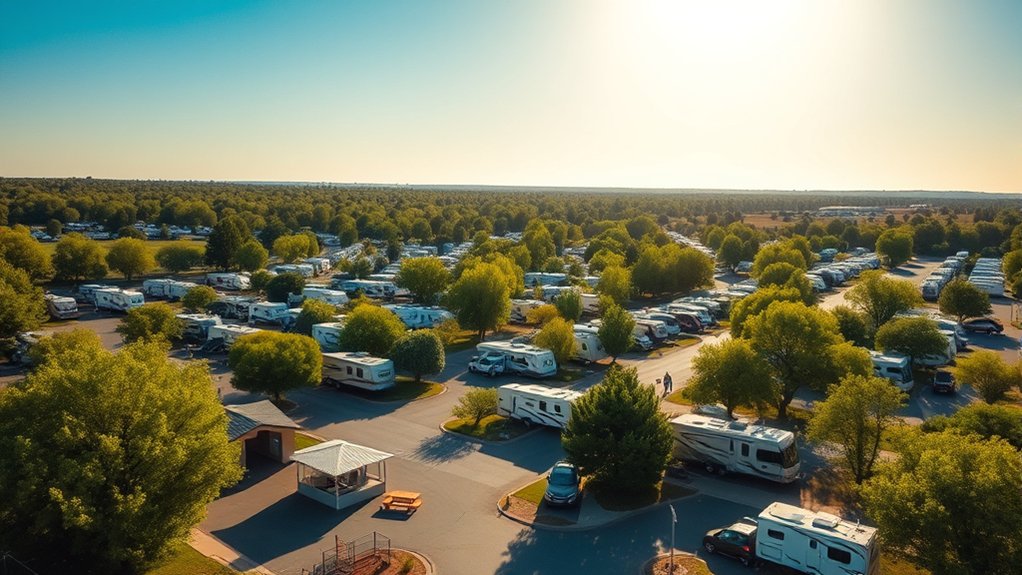
While income varies widely, RV park owners typically earn between $100,000 and $300,000 annually, depending on factors like park size and location.
RV park owners generally earn $100,000 to $300,000 annually, influenced by park size and location.
You can expect profits averaging around 30% of revenue in established parks.
Larger parks with prime locations and extra amenities often push annual revenues beyond $1 million, increasing your earning potential.
Your income also depends heavily on occupancy rates. Higher occupancy directly boosts profits.
Efficient management, targeted marketing, and attracting long-term or seasonal campers play essential roles in maximizing revenue.
Many owners achieve a return on investment ranging from 10% to 30%, with seasonal peaks further enhancing profitability.
Understanding these variables helps you gauge realistic income expectations as an RV park owner.
This way, you can plan operations and growth strategies effectively.
How Initial Investment Components Affect Your Earnings

Your potential earnings as an RV park owner tie directly to the initial investment components you choose. Understanding how these expenses influence revenue is vital for maximizing profits.
1. Land Costs: Higher prices for prime locations near attractions often lead to increased occupancy and revenue.
2. Infrastructure: Investments in sewer, water supply, hookups, and roads impact both initial expenses and guest satisfaction.
This, in turn, affects repeat business.
3. Amenities: Adding pools, playgrounds, or cabins requires extra capital but can justify higher rates.
Plus, it helps diversify your income streams.
4. Renovations: Upgrading existing facilities varies in cost but enhances appeal.
This can boost occupancy and nightly rates.
Financing Options to Help You Buy an RV Park
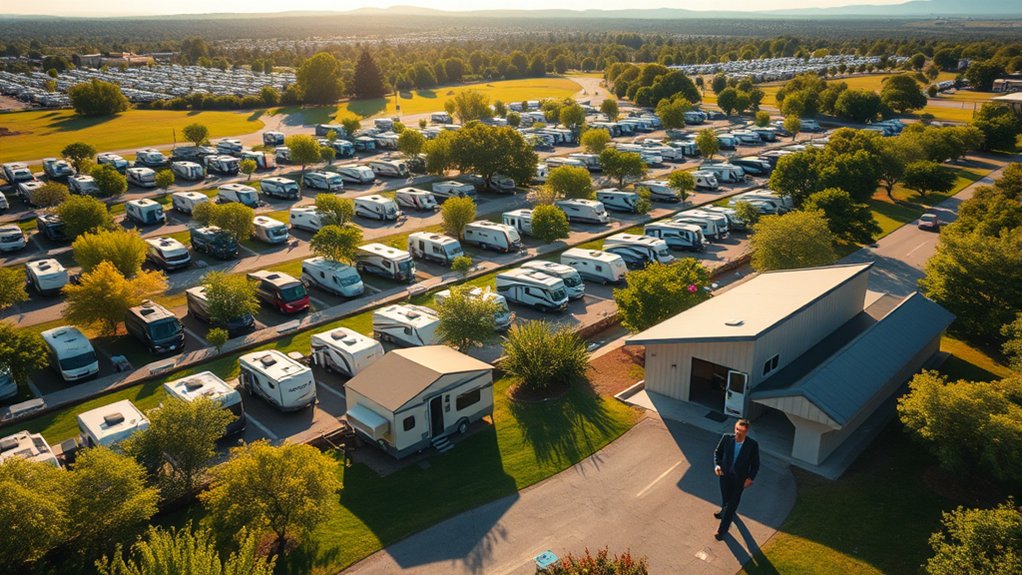
Because purchasing an RV park often involves significant capital, exploring diverse financing options can improve your ability to secure funding. Many buyers utilize seller financing, which frequently requires no credit review or appraisal. This makes it accessible even if your credit isn’t perfect.
Exploring diverse financing options like seller financing can help secure funding despite imperfect credit.
Low-interest seller carry deals can boost profitability when the interest rate is below the property’s cap rate.
Conventional bank loans demand substantial down payments, strong credit, and detailed financial records. SBA loans offer favorable terms but involve lengthy approvals and strict qualifications.
Alternatively, private investors or partnerships provide flexible financing, reducing reliance on traditional lenders.
How Seasonality Affects RV Park Profits
You’ll notice a big jump in revenue during the summer months—that’s when visitor demand is at its highest. This peak season can really boost your income.
But once the off-season rolls around, revenue often falls to just 30-50% of those peak levels. That drop can make it tough to stay profitable.
Peak Season Revenue
How does seasonality impact your RV park’s profitability? Peak season, usually summer, drives 50-70% of your annual revenue, with occupancy hitting 90-100%. This surge means your income during these months can be two to three times higher than off-season earnings.
To maximize profits, you’ll want to focus on monitoring occupancy rates closely to capitalize on full capacity. Implement dynamic pricing to adjust rates based on demand.
Also, plan staffing levels and expenses carefully to handle the increased guest volume.
Don’t forget to leverage peak months to build cash reserves for slower periods. This way, your park stays financially healthy year-round.
Off-Season Challenges
While peak season can generate up to 70% of your RV park’s annual revenue, the off-season often brings notable challenges that impact overall profitability. During these months, occupancy rates can drop by 50% or more, sharply reducing your cash flow.
Despite this decline, fixed expenses like staffing and maintenance remain relatively constant, which strains your margins.
To counterbalance, many owners offer off-season discounts and targeted marketing to attract visitors year round. However, success depends heavily on understanding local climate and demand patterns to plan effectively.
Without precise management, the off-season can erode profits considerably.
That’s why it’s essential to implement strategies that maintain steady income and control costs during slower periods. It’s all about staying proactive and adapting to keep your business healthy all year long.
Managing Seasonal Staffing
Because labor costs can rise by up to 50% during peak summer months, managing seasonal staffing is essential for maintaining your RV park’s profitability. You need to align staffing levels with fluctuating guest volumes to optimize labor expenses and service quality.
Consider these key steps: Hire temporary or part-time workers to handle peak season demand, minimizing off-season labor costs. Schedule staff carefully to maintain high guest satisfaction without overspending during slower months.
Adjust staffing in proportion to revenue, which can be 2-3 times higher in summer compared to off-season. And monitor labor cost percentages closely to balance increased wages against seasonal income spikes.
It’s all about finding that sweet spot between cost and quality.
RV Park Revenue Streams Beyond Campsite Rentals
You can boost your RV park’s income by exploring extra revenue opportunities like laundry facilities, equipment rentals, and food services. These little additions can really add up.
Plus, upgrading your amenities—think pools and pet-friendly areas—often encourages guests to spend more and can even increase how full your park gets.
On top of that, offering premium services such as reserved spots or WiFi upgrades helps create new income streams beyond just campsite rentals. It’s all about giving your guests more options and making their stay better while growing your revenue.
Ancillary Income Opportunities
When you diversify your revenue streams beyond campsite rentals, ancillary income can really boost your RV park’s profitability. Focusing on extra services and products creates multiple revenue channels that work well alongside your main offerings.
Think about these four key ancillary income opportunities:
- Laundry facilities, camp stores, and recreational equipment rentals generate steady income throughout the season.
- On-site services like guided tours, bike rentals, and premium WiFi packages bring in extra fees without much overhead.
- Selling propane, firewood, and food items offers reliable products guests often need and buy.
- Investing in amenities such as swimming pools and dog parks draws more visitors, which can increase how much they spend on extras.
These options help you add value for your guests while growing your bottom line.
Amenity-Based Revenue Growth
How can adding well-chosen amenities boost your RV park’s revenue beyond campsite rentals? Amenities like laundry facilities, camp stores, and recreational activities can increase your income by 20-30%.
Offering high-quality WiFi attracts remote workers who pay premium rates. Family-friendly features such as pools and playgrounds raise occupancy and profits.
On-site services like boat rentals and guided tours diversify your revenue streams. Tailoring amenities, such as luxury cabins or themed zones, can command higher prices.
| Amenity Type | Revenue Impact |
|---|---|
| Laundry & Camp Stores | +20-30% additional revenue |
| WiFi & Internet | Premium rates, attracts remote workers |
| Recreational Services | Boost occupancy, diversify income |
Why Location Makes All the Difference for Your RV Park
Although many factors influence an RV park’s profitability, location stands out as the most critical. Where you position your park directly affects demand, rates, and occupancy.
Consider these location-driven factors:
Proximity to national parks or popular attractions boosts camper volume, increasing revenue potential. Easy access to highways and major roads enhances occupancy rates by simplifying travel logistics. Being near towns or urban centers allows you to charge premium rates due to convenience and local amenities.
Rural or secluded sites may attract niche markets but often need extra marketing to maintain steady bookings. Strategic placement in high-demand, accessible areas maximizes your park’s earning power, making location the foundation for long-term profitability.
Managing RV Park Expenses to Maximize Profit
Because profit margins for RV parks typically hover around 30%, managing expenses like staffing, maintenance, and amenities plays a crucial role in maximizing your earnings. Regularly reviewing supplier contracts and investing in energy-efficient infrastructure, such as solar panels and LED lighting, can reduce costs considerably.
Adjust staffing and maintenance schedules during off-peak seasons to control variable expenses. Proper budgeting ensures expenses align with revenue, supporting sustainable profit growth.
| Expense Category | Cost Management Strategy |
|---|---|
| Staffing | Adjust levels seasonally |
| Utilities | Negotiate contracts, use efficiency |
| Maintenance | Schedule repairs, prioritize upgrades |
Implement these tactics to improve operational efficiency and boost your RV park’s profitability. It’s all about working smarter to get the most out of what you invest.
How Amenities Can Boost Your RV Park Income
You can boost your RV park income by adding key amenities like swimming pools, laundry facilities, and reliable WiFi. These are great for attracting your target campers. Not only do these features increase guest satisfaction, but they also let you charge premium rates and create extra revenue streams.
Plus, if you tailor amenities to specific groups—like families or pet owners—you can make your park even more profitable. It’s all about giving your guests what they want and making their stay memorable.
Key Revenue Amenities
How can key amenities directly impact your RV park’s revenue? They not only increase occupancy but also attract higher-paying guests and extend stays. Focusing on revenue-generating amenities will maximize your park’s profitability.
Consider these four critical areas:
- Recreational Facilities: Pools, playgrounds, and cabins drive higher occupancy and appeal to families willing to pay more.
- Service Amenities: Laundry facilities, camp stores, and rental equipment create additional income streams beyond site fees.
- Infrastructure Upgrades: Reliable WiFi and improved sewage systems enhance guest satisfaction, encouraging longer stays.
- Targeted Features: Pet-friendly zones or family-focused activities differentiate your park, boosting repeat visits and positive reviews.
Investing strategically in these amenities creates a measurable increase in revenue by improving guest experience and attracting diverse, higher-spending clientele.
Attracting Target Campers
Enhancing your RV park with targeted amenities directly attracts specific camper demographics who are willing to pay premium rates. By offering features like pools and playgrounds, you appeal to families. At the same time, high-speed WiFi and full hookups draw remote workers seeking longer stays.
Recreational options such as bike rentals or fishing ponds diversify your revenue and increase camper satisfaction. Luxury upgrades like glamping tents enable premium pricing, which boosts profitability and encourages repeat visits.
| Amenity Type | Target Camper | Income Impact |
|---|---|---|
| Pools & Playgrounds | Families | Higher occupancy |
| WiFi & Full Hookups | Remote workers | Longer stays, premium rates |
| Glamping & Fire Pits | Luxury seekers | Increased nightly rates |
Strategically matching amenities to camper preferences maximizes your park’s income potential. It’s all about giving campers what they want so they keep coming back.
Why Industry Experience Matters for RV Park Success
Because managing an RV park involves complex operational and regulatory challenges, industry experience plays a crucial role in driving success. When you have experience, you can optimize management practices to boost occupancy rates and profitability. You’ll also be able to navigate regulatory requirements, permits, and zoning laws more efficiently.
Industry experience is essential for overcoming operational challenges and maximizing RV park success.
Plus, you can add targeted amenities and services that attract a wider range of campers. Experience helps you forecast expenses accurately, manage maintenance, and set strategic pricing for all seasons.
It also lets you build essential networks with suppliers and other campground operators. These connections foster resilience and growth. Data shows that owners with industry knowledge consistently outperform newcomers by maintaining higher revenue streams and smoother operations.
Without this foundation, you risk costly mistakes and missed opportunities that can undermine your park’s financial health. So, industry experience isn’t just valuable; it’s indispensable for sustainable RV park success.
Franchise and Partnership Opportunities to Grow Your RV Park
When you choose a franchise like KOA, you tap into nearly six decades of industry experience, established marketing channels, and proven operational frameworks. This reduces startup risks and streamlines management by leveraging brand recognition and customer loyalty.
KOA supports you with training, promotional tools, and a thorough network to enhance your RV park’s success. It’s like having a trusted partner by your side every step of the way.
| Feature | Benefit | Impact |
|---|---|---|
| Brand Recognition | Established customer base | Higher occupancy rates |
| Operational Support | Training and management tools | Efficient park operations |
| Marketing Channels | National campaigns and promotions | Increased visibility |
Partnering with KOA accelerates growth and gives you access to resources and expertise to expand your RV park effectively. It’s a smart move if you want to grow faster and with less hassle.
Frequently Asked Questions
How Do Owner Lifestyle Choices Impact Daily RV Park Operations?
Your lifestyle choices directly impact daily RV park operations by influencing response times, maintenance quality, and guest satisfaction. When you’re involved and flexible with hours, you optimize efficiency, prioritize key tasks, and tailor services to meet customer needs.
Being hands-on helps you catch issues early and keep everything running smoothly. Plus, staying adaptable means you can handle unexpected situations without a hitch. It all adds up to a better experience for your guests and a more successful operation overall.
What Are Common Challenges RV Park Owners Face With Guest Management?
You’ll face challenges like managing reservations during peak times, resolving complaints quickly, and balancing diverse guest needs. Maintaining cleanliness is another big one. Plus, preventing staff burnout while keeping occupancy high is always a juggling act.
All of these are super important for getting positive reviews and repeat business. It’s a lot to handle, but staying on top of these can make a huge difference.
How Does Seller Financing Improve RV Park Profitability?
Seller financing improves your RV park profitability by lowering upfront costs and reducing interest expenses with low rates. It also offers flexible terms that work better for you.
This boosts your cash flow and helps you leverage your investment more effectively. Plus, it minimizes financial risk, which is always a good thing.
All of this combined can really accelerate your park’s growth potential. So, it’s a smart strategy to consider if you want to maximize returns.
What Tax Benefits Are Available to RV Park Owners?
You face high expenses but can offset them by deducting property management, maintenance, and improvements.
You’ll also benefit from depreciation, Section 179 expensing, and operational costs deductions. All of these reduce your taxable income and boost your cash flow considerably.
It’s a smart way to keep more of what you earn while managing your RV park effectively.
How Can RV Park Owners Balance Work and Personal Time Effectively?
You can balance work and personal time by delegating tasks to staff, using management software, scheduling regular maintenance, and setting clear boundaries.
Leveraging technology and hiring experienced managers lets you focus on growth while minimizing daily demands.
It’s all about working smarter, not harder, so you have time to enjoy the park yourself.
Conclusion
Owning an RV park is like tending a well-planned garden: your earnings depend on the quality of your initial investment seeds, the timing of your care through seasonal shifts, and the variety of revenue streams you cultivate. By managing expenses efficiently and enhancing amenities, you nurture steady growth.
With experience and smart financing, you can harvest consistent profits. It just goes to show that data-backed decisions and strategic management turn potential into tangible income.