What Zoning Is Required For An RV Park – The Full Story
You’ll need zoning that permits RV parks, typically commercial, recreational, or mixed-use districts. Often, conditional use permits or variances are required if your land isn’t already zoned for such use. Local regulations set strict standards for setbacks, lot sizes, and infrastructure like water and sewer systems.
Environmental rules may affect site selection, especially near wetlands or wildlife areas. Understanding community engagement and rezoning challenges is essential for success. And there’s much more to take into account about compliance and approvals.
What Zoning Types Allow RV Parks
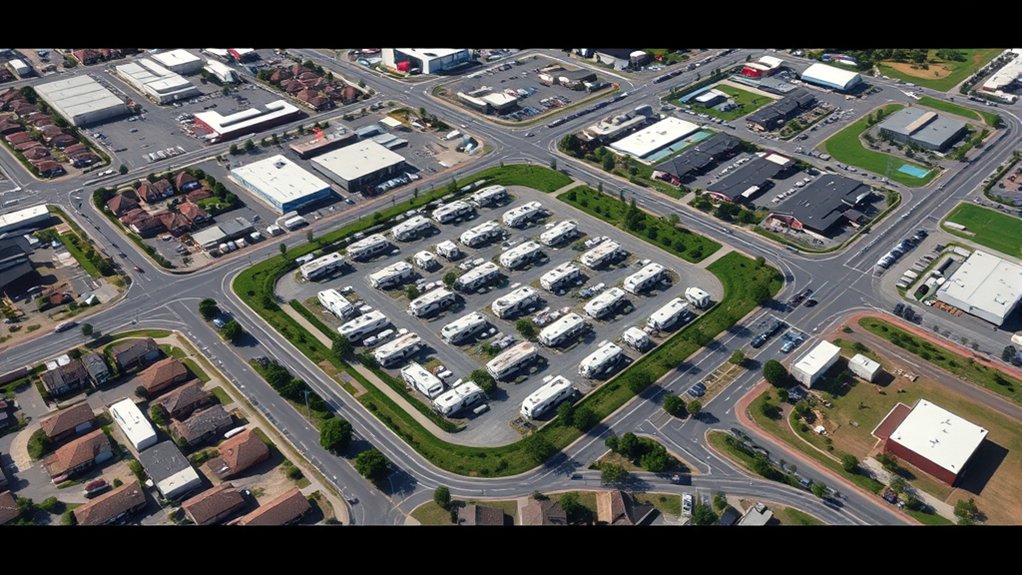
Although zoning regulations vary by municipality, you’ll typically find that RV parks are allowed within commercial, recreational, or mixed-use districts. Commercial zones often permit RV parks as a conditional or outright use, especially if they provide short-term lodging with amenities.
RV parks are generally permitted in commercial, recreational, or mixed-use zones, often with conditions for short-term lodging.
Recreational zoning may allow RV parks too, particularly when classified as campgrounds or recreational facilities. In mixed-use districts, RV parks can fit if they complement other allowed uses.
However, if your site doesn’t fall under these categories, you might need a special use permit or variance to proceed legally.
Since zoning classifications differ locally, you must consult your municipality’s planning department for precise designations and requirements before moving forward with an RV park project. It’s always a good idea to check in early so you know exactly what you’re dealing with.
How to Check Local Zoning Codes for RV Park Use

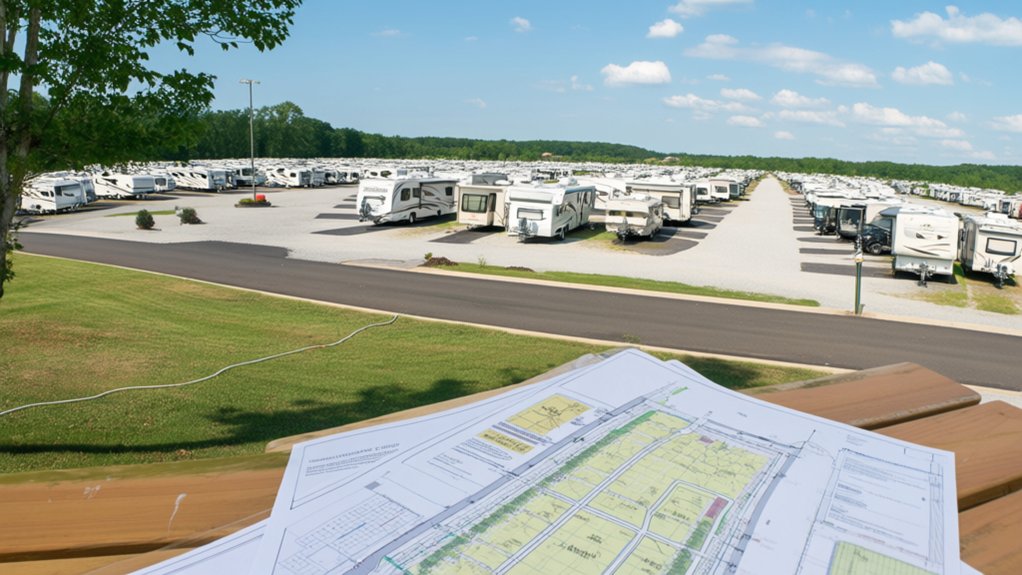
Before you move forward with an RV park project, you need to verify the zoning classification of your land through local planning or zoning offices, or by consulting official GIS maps. This step guarantees your property aligns with permitted uses and helps you avoid costly setbacks.
To effectively check local zoning codes for RV park use, focus on confirming if the land is zoned commercial, recreational, or mixed-use, which are typical for RV parks. You’ll also want to review zoning ordinances for specific restrictions and allowable uses.
Make sure to identify minimum lot size, setback, and density requirements. It’s important to determine if a special use permit or variance is necessary too.
Don’t forget to contact city or county planning departments early on to obtain zoning verification letters.
Thoroughly analyzing these factors will clarify if your project meets local regulatory frameworks. Taking these steps upfront can save you time and money as you move forward.
When and Why Conditional Use Permits Are Needed
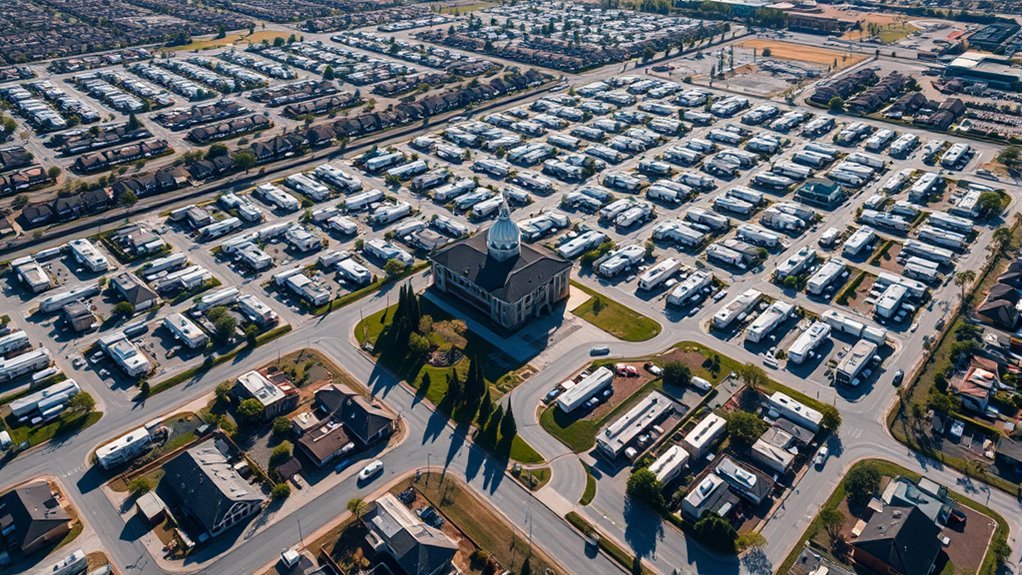
You’ll need a conditional use permit when your RV park’s location or design doesn’t fully line up with local zoning rules. But don’t worry—if your project can meet certain specific standards, you might still get approval.
This usually comes into play if you need exceptions, like setback variances or a higher site density than normally allowed.
To secure the permit, you’ll have to submit detailed plans and show that your park won’t negatively impact the community or environment.
Conditional Use Permit Overview
When an RV park’s intended use doesn’t fit neatly within existing zoning classifications, you’ll need to obtain a conditional use permit to secure official approval for a special exception. This permit involves a formal application process with public hearings, which allows community feedback and potential conditions.
Local authorities assess various factors before granting approval.
You’ll typically need this permit if your RV park exceeds size limits set by zoning regulations, includes non-standard amenities not usually allowed, or is situated in zones with restrictive land use policies. It also applies if your project raises concerns about traffic, noise, or environmental impact.
Basically, it’s about making sure your RV park aligns with community standards while allowing some flexibility in land use. Understanding these regulatory steps helps ensure your RV park operates legally and fits well with local planning objectives.
When Permits Are Required
Although zoning regulations vary widely, obtaining permits is essential to guarantee your RV park complies with local land use, health, and safety standards before construction begins. You’ll need a conditional use permit when your proposed RV park doesn’t fit the existing zoning classification but can be approved with specific conditions.
The process requires submitting detailed site plans, attending public hearings, and proving your project won’t substantially impact the community. Authorities may demand environmental assessments or mitigation measures, especially in sensitive areas.
You must address concerns about traffic, noise, and environmental effects to secure approval.
Being thorough and responsive during this process ensures legal compliance and community acceptance. It also helps prevent costly delays or denials in developing your RV park.
How Environmental Regulations Impact RV Park Zoning
You’ll want to take a close look at wetland protection rules because they often limit development in these sensitive areas to help prevent ecological damage.
On top of that, wildlife habitat restrictions can affect where you’re able to set up an RV park. Usually, this means you’ll need to conduct detailed studies to show that your project won’t have much impact.
Getting a good handle on these regulations early on can make it a lot easier to manage permit requirements and avoid expensive redesigns down the line.
Wetland Protection Rules
Since wetland protection rules play an essential role in RV park zoning, you must conduct thorough environmental impact assessments to identify potential effects on protected wetlands. These regulations strictly control development near wetlands, requiring permits and mitigation plans approved by environmental authorities.
You’ll need to secure authorization from agencies like the U.S. Army Corps of Engineers before proceeding.
Setback distances, typically 50 to 300 feet, must be respected to maintain habitat and water quality. These constraints directly influence your site selection, design, and permitting timeline.
Key considerations include:
- Conducting detailed wetland delineations early
- Securing necessary environmental permits
- Designing to maintain mandated setbacks
- Preparing mitigation strategies for unavoidable impacts
- Factoring regulations into project timelines and costs
Wildlife Habitat Restrictions
Beyond wetlands, wildlife habitat restrictions play a big role in shaping RV park zoning decisions. You’ll face strict limits when developing near protected habitats. This means environmental impact assessments and mitigation strategies are usually required.
Local ordinances often prohibit RV parks in conservation zones to protect endangered species. Plus, compliance with regulations like the Endangered Species Act can add more rules about land use, noise, lighting, and water runoff. Knowing these rules is super important to avoid delays or legal headaches.
| Regulation Aspect | Description |
|---|---|
| Protected Areas | Critical nesting sites, conservation zones |
| Required Assessments | Environmental impact reviews |
| Land Use Restrictions | Limits on clearing, noise, lighting |
| Federal Compliance | Endangered Species Act enforcement |
| Mitigation Measures | Habitat preservation, runoff control |
How Zoning Setbacks, Lot Sizes, and Density Shape Site Design
Although zoning regulations vary, understanding how setbacks, lot sizes, and density limits interact is essential for effective RV park site design. These elements dictate the layout, safety, and capacity of your park, guaranteeing compliance and harmonious integration with the surrounding community.
When planning your site, consider that setbacks typically range from 10 to 30 feet, maintaining privacy and safety between sites and property lines. Minimum lot sizes often fall between 1,000 and 3,000 square feet, depending on local rules.
Density limits, usually 10 to 15 RVs per acre, cap your park’s capacity.
Balancing setbacks and lot sizes optimizes space without violating codes. Adherence to these parameters minimizes conflicts with neighbors and ensures a functional, compliant layout.
You’ll want to analyze these factors carefully to design a safe, efficient RV park.
Infrastructure Requirements Imposed by Zoning Codes
Zoning codes impose specific infrastructure requirements to guarantee RV parks operate safely and efficiently while meeting community standards. You must verify roads are 20-24 feet wide, well-maintained, and equipped with proper drainage and clear signage to facilitate safe traffic flow.
Your park must include potable water connections, electrical hookups (50/30/20 amp), and sewer systems compliant with local health regulations.
Drainage infrastructure should incorporate stormwater retention ponds, French drains, or permeable surfaces to manage runoff and prevent flooding effectively.
Additionally, zoning often mandates high-speed Wi-Fi via multiple access points or satellite systems to meet guest expectations.
Don’t overlook ADA compliance; accessible pathways and facilities are required to ensure inclusivity and legal adherence.
Meeting these infrastructure criteria is essential for zoning approval and operational success. So, make sure you cover all these bases to keep everything running smoothly and within the rules.
How to Rezone Land for an RV Park
You’ll start the rezoning process by submitting a detailed application. This usually includes site plans and environmental assessments that you need to provide to your local planning authorities.
It’s a good idea to engage the community through public hearings too, because addressing their concerns can be really important for getting approval.
Also, coordinating early with officials and putting together a clear business case that highlights the benefits of your RV park can make the whole process go a lot more smoothly.
Taking these steps helps everyone understand your project better and can speed things up.
Rezoning Application Process
The rezoning application process for establishing an RV park requires submitting thorough site plans, environmental assessments, and applicable fees to your local planning department. You’ll need to demonstrate compliance with zoning regulations and potentially secure conditional use permits or variances.
Expect to engage with public hearings where you must address community concerns.
The process varies by jurisdiction and can take several months. Key steps include preparing detailed site and environmental reports, submitting all required documentation and fees, attending public hearings and responding to feedback, and demonstrating adherence to local land use rules.
You’ll also need to obtain necessary permits or variances if zoning doesn’t permit RV parks. Approach the process methodically to guarantee regulatory compliance and increase your chances of approval.
It might seem like a lot, but taking it step-by-step makes it manageable.
Community Engagement Strategies
Although rezoning land for an RV park involves regulatory complexities, engaging the community early can substantially influence the outcome. You should hold public meetings and informational sessions to address concerns and build support. Collaborate with local officials to align your proposal with community priorities.
Present clear plans that include environmental and traffic impact mitigation to increase approval chances. Emphasizing economic benefits like job creation and tourism growth will further persuade stakeholders. Maintain transparency and involve community members throughout the process to reduce opposition.
| Strategy | Purpose |
|---|---|
| Public Meetings | Address concerns, build community trust |
| Clear Impact Mitigation | Demonstrate environmental responsibility |
| Collaboration with Officials | Incorporate feedback, foster positive relations |
| Economic Benefit Highlight | Persuade through job and tourism gains |
Challenges in Getting Zoning Approval for RV Parks
When seeking zoning approval for RV parks, you’ll often face significant hurdles stemming from community opposition and regulatory complexities. Managing these challenges requires a clear understanding of local land use laws and community dynamics.
You’ll encounter community opposition fueled by concerns over traffic, noise, and environmental impact.
The rezoning processes can be lengthy and usually involve public hearings and conditional use permits. There are strict zoning restrictions that limit RV parks to designated areas.
On top of that, mandatory environmental assessments are required to guarantee compliance with regulations.
Bureaucratic delays are common because of complex infrastructure and zoning requirements. Each element demands thorough preparation and adherence to legal standards.
Understanding these challenges early helps you anticipate potential roadblocks and align your application with what regulators expect, improving your chances for approval.
Tips for Working With Planning Departments and Community Stakeholders
Because zoning approval for RV parks involves multiple regulatory layers and community interests, you should start by establishing early communication with local planning departments. This helps you understand specific zoning requirements and anticipate potential hurdles.
Prepare detailed site plans and environmental assessments to address community concerns and streamline permit approvals.
Engage community stakeholders through public meetings and informational sessions to build support and mitigate opposition.
Collaborate with zoning experts or legal counsel to navigate complex codes and secure necessary variances or conditional use permits.
Maintain transparency and responsiveness throughout the process, fostering positive relationships with officials and residents.
How Zoning Affects Your RV Park’s Operational Flexibility
Since zoning designations set clear boundaries on permitted activities and structures, they directly shape how you can operate your RV park. Your park’s operational flexibility hinges on these regulations, influencing expansion, services, and guest accommodations. You’ll often need variances or conditional use permits to extend beyond basic zoning limits.
Key zoning factors affecting your RV park include allowable length of stays, which impacts long-term rentals. There are also restrictions on the number of RV units and site density. Plus, permissions for commercial amenities like retail or dump stations come into play.
You’ll want to keep in mind limitations on overnight use and site layout configurations. And of course, there are compliance requirements for local zoning codes and permit conditions.
Understanding these elements helps you plan strategically, so your park can adapt while meeting regulatory standards efficiently.
Frequently Asked Questions
What Insurance Is Required for an RV Park Operation?
You’ll need general liability insurance with at least $1 million coverage. Property insurance is also important to protect your structures and equipment.
If you’re using vehicles, commercial auto insurance is a must. Plus, pollution liability insurance is necessary to meet regulatory and lender requirements for your RV park operation.
It might seem like a lot, but having the right coverage helps keep your business safe and compliant.
How Do Seasonal Regulations Affect RV Park Usage?
Imagine quiet RV sites blanketed by snow. Seasonal regulations limit your park’s operations, restricting overnight stays and amenities.
You have to adjust pricing, comply with permits, and follow local rules. This helps you align usage with off-peak restrictions precisely.
It can be a bit tricky, but staying on top of these rules keeps everything running smoothly.
What Are Common Financing Options for Developing an RV Park?
You’ll typically secure financing for an RV park through bank loans, SBA loans with favorable terms, or private investors seeking returns.
Consider construction loans, grants, or crowdfunding too. Just make sure you meet all eligibility and regulatory requirements.
It’s a good idea to explore all options and see what fits your project best. Financing can be flexible if you know where to look!
How Do RV Park Zoning Rules Differ Between States?
You’ll find RV park zoning rules differ by state, involving varying commercial or recreational classifications, conditional use permits, environmental regulations, and infrastructure standards.
Each jurisdiction sets unique requirements for lot sizes, spacing, and public approval processes. So, it really depends on where you’re looking to set up or visit an RV park. The differences can be pretty significant from one place to another.
What Marketing Strategies Work Best for Attracting RV Park Guests?
You’ll plant seeds of visibility by optimizing your website for local SEO, watering growth through targeted social media ads, and harvesting bookings via RV-specific platforms. Incentives and engaging content cultivate guest loyalty and boost your park’s reputation.
Think of it like gardening: each strategy helps your RV park grow in a different way. When you focus on local SEO, you’re making it easier for nearby travelers to find you.
Social media ads let you reach the right audience with the right message. And RV-specific platforms connect you directly to people ready to book.
Offering incentives and sharing engaging content keeps guests coming back and telling others about their great experience. It’s all about building a community around your park.
Conclusion
Charting the zoning maze for your RV park is like plotting a course through a complex map. You need precision and foresight. By understanding local codes, environmental rules, and conditional permits, you guarantee your vision fits seamlessly within regulatory boundaries.
Remember, zoning isn’t just red tape. It shapes your park’s future by guiding how you design, operate, and grow.
Approach planning departments and stakeholders with clarity. You’ll transform challenges into a well-charted success.