How To Design An RV Park – Full Guide
To design an RV park, start by selecting land that meets zoning and setback requirements with enough acreage for 10-15 sites per acre. Plan site layouts with 20×50 ft back-in or 20×70 ft pull-through spaces, ensuring roads are 22-24 ft wide with proper turn radii.
Incorporate sustainable utilities, green spaces, and scalable infrastructure. Position amenities and traffic flow to maximize guest comfort and privacy.
Keep future growth in mind so your park adapts smoothly as demand changes. Explore these essentials for a successful design.
Selecting Land and Understanding Site Dimensions for RV Parks

When selecting land for your RV park, you’ll need to carefully consider site dimensions and layout to maximize both capacity and comfort. Typically, small RV parks host 10 to 15 RVs per acre, but if you prioritize extra space, expect closer to 5 to 10 per acre.
Choosing the right site dimensions ensures your RV park balances capacity with guest comfort effectively.
Standard back-in RV sites measure about 20 feet wide by 50 to 60 feet deep. Pull-through sites extend longer, around 20 feet wide by 70 to 100 feet long.
Your internal roads should be at least 22 to 24 feet wide for two-way traffic. With turn radii of 40 feet or more to handle large RVs.
Also, factor in natural land features and slopes, as these will influence how many sites fit and the overall layout’s practicality.
Navigating Zoning, Setbacks, and Design Regulations
Although selecting the right land is essential, complying with zoning, setbacks, and design regulations guarantees your RV park operates smoothly and safely.
Most areas require a minimum lot size of 10 to 15 acres, with setbacks of 10 to 25 feet from property lines and 2 to 6 feet from roads. You’ll need at least 3 to 5 feet clearance between slide-outs and neighboring sites to ensure safety.
Local codes mandate road widths of 22 to 24 feet for two-way traffic and turning radii between 40 and 50 feet to accommodate large RVs.
Buffer zones of 50 to 100 feet protect wetlands and floodplains, which affects your layout and capacity.
Design rules also specify site dimensions, typically 20 to 30 feet wide by 50 to 70 feet deep, with a 1 to 2 percent slope for drainage and slide-out clearance.
Following these regulations helps you avoid costly redesigns and legal issues. It might seem like a lot, but paying attention to these details early on can save you headaches down the road.
Designing RV Site Layouts: Pull-Through and Back-In Options
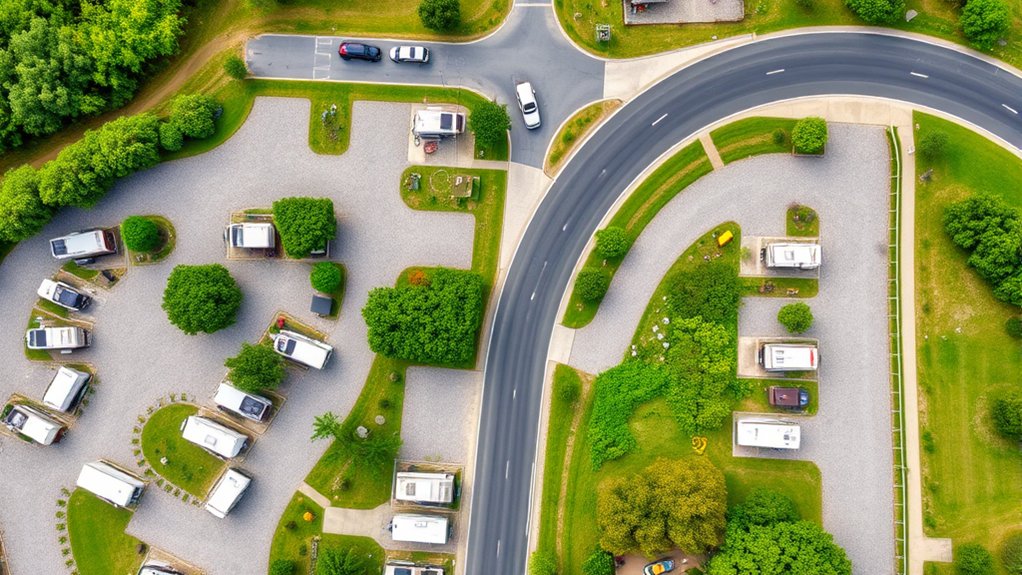
Selecting between pull-through and back-in RV site layouts considerably influences your park’s functionality and guest experience.
Pull-through sites, typically 20 feet wide by 70 feet long, offer easy arrivals and departures, especially for large rigs, as guests don’t need to reverse. Including a center island between opposing sites improves traffic flow but requires more space.
Back-in sites, around 20 feet wide by 50-60 feet deep, demand guests reverse their RVs. Yet they’re more space-efficient and allow staggered layouts to boost privacy.
Your choice affects site size, layout complexity, and traffic patterns.
If convenience and accommodating large vehicles are priorities, pull-through sites work best. For maximizing land use and enhancing privacy, back-in sites serve you well.
Balance these factors carefully to optimize your RV park’s design.
Balancing Site Density With Guest Comfort and Privacy
Balancing site density with guest comfort and privacy requires careful planning to avoid overcrowding while maximizing your park’s capacity. Typically, small RV parks accommodate 10 to 15 sites per acre, which strikes a good balance.
You should allocate about 30×60 feet per site to allow room for slide-outs and outdoor living space, which boosts comfort.
Consider staggered or cluster layouts to make the most of your land while preserving privacy between neighbors. Incorporate adequate site setbacks and maintain proper road widths to prevent congestion.
Using natural barriers like trees or shrubs between sites further enhances privacy and creates a relaxing atmosphere.
Designing Roads and Traffic Flow in Your RV Park
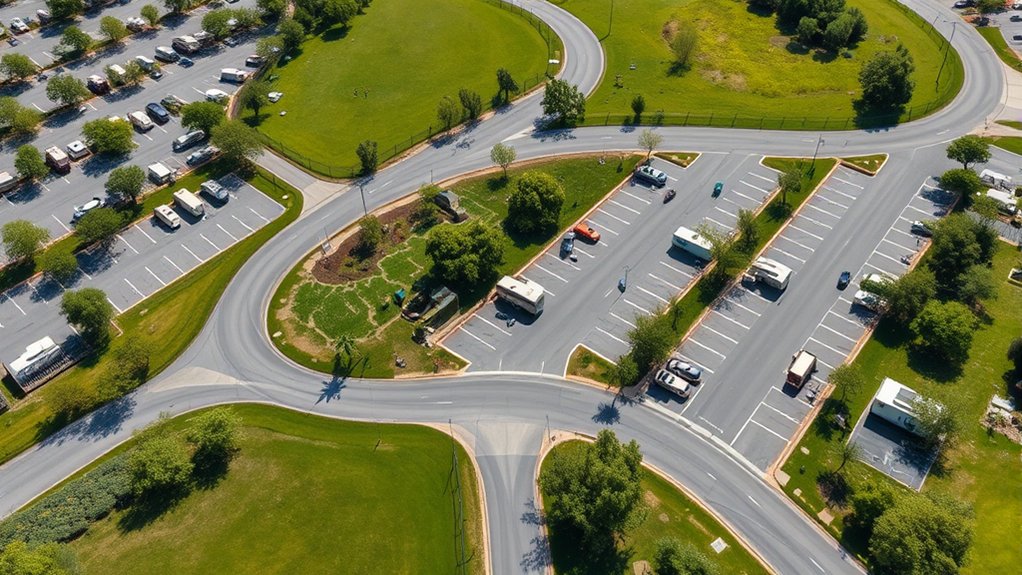
When designing roads and traffic flow in your RV park, you’ll want to prioritize safety and ease of navigation for large vehicles. Design roads with a minimum width of 22 to 24 feet to allow smooth two-way traffic. Incorporate turning radii of at least 40 to 50 feet at entries and turnarounds to accommodate big rigs comfortably.
Use angled pull-through sites that are 70 to 100 feet long for easier parking and exiting. Make sure there are clear sightlines and signage to prevent accidents and help with navigation. At dead-ends and intersections, keep views unobstructed and turns wide for safe maneuvering.
| Design Element | Recommendation |
|---|---|
| Road Width | 22–24 feet (two-way traffic) |
| Turning Radius | 40–50 feet (entries/turnarounds) |
| Pull-Through Site | 70–100 feet (angled) |
| Sightlines & Signage | Clear and unobstructed |
Placing Amenities to Boost RV Park Guest Experience
You’ll want to place amenities strategically near high-traffic areas like the park entrance or central loop. This way, they’re easy for guests to reach without any hassle.
It’s also a good idea to keep restrooms, laundry, and recreational spots within a short walk from most RV sites. That little bit of convenience can really boost guest satisfaction.
Plus, thoughtful placement doesn’t just make things accessible—it also helps balance guest privacy and comfort throughout the park.
Strategic Amenity Locations
Although placing amenities might seem straightforward, strategic locations can really boost your RV park guests’ experience. Thoughtful placement makes things more convenient, comfortable, and even encourages socializing. It’s a great way to make your park stand out.
Here’s how to position your amenities effectively:
- Put high-traffic facilities like restrooms, laundry, and the camp store near the entrance. This makes them easy to find and keeps guest flow smooth.
- Place recreational spots such as playgrounds, pools, and picnic areas in the center. This encourages social interaction and helps everyone enjoy themselves more.
- Keep quiet, private sites away from noisy amenities and main roads. That way, guests can relax and have their privacy.
- Connect sites and amenities with well-lit, accessible pathways. It’s important for safety and makes getting around easier.
Also, add green buffers around amenities to reduce noise and create a peaceful vibe. When you choose amenity locations strategically, it directly improves guest satisfaction and how usable your park is.
Accessible Facility Placement
Strategically placing amenities goes beyond just convenience. It shapes how guests experience your park every day. You should locate restrooms, showers, and laundry near the entrance and main gathering spots for easy access.
Playgrounds and picnic areas belong within walking distance of RV sites to maximize enjoyment. Keep busy zones like camp stores away from quiet sites to preserve tranquility. Clear pathways and signage will help guests navigate safely and encourage amenity use.
Use landscaping and visual cues to create a welcoming, cohesive environment.
| Amenity Type | Ideal Placement |
|---|---|
| Restrooms & Showers | Near entrance/main gathering areas |
| Playgrounds & Picnic | Close to RV sites |
| Camp Stores | Away from quiet residential sites |
| Pathways & Signage | Connect all amenities clearly |
Incorporating Sustainability and Operational Efficiency
When designing an RV park, incorporating sustainability and operational efficiency not only reduces environmental impact but also lowers long-term costs. You can create a park that’s eco-friendly and economical by focusing on smart resource use and durable infrastructure.
Consider these key strategies:
- Use permeable surfaces and native, low-water plants to cut runoff and water consumption.
- Install energy-efficient lighting, solar panels, and LED fixtures to reduce electricity use.
- Optimize utility placement to minimize rerouting, save materials, and simplify maintenance.
- Implement rainwater harvesting and greywater recycling systems to conserve water and reduce external dependence.
Choosing durable, low-maintenance materials further enhances efficiency by lowering upkeep needs. These steps ensure your RV park operates sustainably and smoothly. It’s a win-win for both the environment and your bottom line.
Planning for Future Expansion and Flexible Growth
Balancing sustainability and efficiency sets a solid foundation, but you’ll want to plan your RV park with future growth in mind. Start by leaving open green spaces and flexible road corridors to easily add new sites or amenities without major reconstruction.
Plan your RV park with green spaces and flexible roads for easy, sustainable future expansion.
Design your utility systems like water, sewer, and electrical with extra capacity and accessible routes to simplify future upgrades.
Position roads and entry points so they naturally extend into new loops or zones as your park expands. Use scalable features like modular amenities and adaptable site sizes to meet changing guest needs and market trends.
Finally, anticipate land use shifts by including buffer zones or green areas that can convert into additional sites or facilities.
This way, your park remains flexible and ready for sustainable growth. Planning ahead makes all the difference when your RV park starts to grow and evolve.
Frequently Asked Questions
What Insurance Policies Are Essential for RV Park Owners?
You need general liability, property, and workers’ compensation insurance to protect your RV park from damages, injuries, and employee claims.
Also, consider pollution liability. It’s a good idea to consult an expert who can help customize coverage for the specific risks you face.
That way, you’ll have the right protection in place without paying for unnecessary extras.
How Do I Market My RV Park to Attract Guests?
You should create a professional website with online booking. Use social media for engaging content. Optimize local SEO to help people find you easily.
Run targeted ads to reach the right audience. Partner with local attractions to attract guests interested in outdoor experiences and convenience.
These steps will make your RV park stand out and draw in more visitors. Just keep things simple and focus on what guests really want.
What Are the Best Practices for Managing RV Park Staff?
You should hire skilled staff and cross-train them in multiple roles. Providing ongoing training helps keep everyone sharp and ready for whatever comes their way.
Scheduling efficiently for peak times is key to avoiding burnout and keeping things running smoothly. Plus, using technology tools can really streamline coordination. This way, you ensure smooth operations and excellent guest experiences at your RV park.
How Can I Handle Seasonal Fluctuations in Guest Occupancy?
Imagine quiet sites in winter, then bustling crowds in summer. You’ll manage this by analyzing occupancy trends, adjusting staffing, and offering seasonal promotions.
Diversify your amenities and create flexible rates. This way, you keep guests happy and your park profitable year-round.
What Technology Tools Help Streamline RV Park Operations?
You’ll benefit from campground management software for reservations, digital POS systems for sales, and online booking platforms for easy guest access.
Automated utilities monitoring helps boost efficiency, while data analytics tools let you optimize occupancy, revenue, and guest satisfaction.
These tools work together to make managing your RV park smoother and more effective. It’s all about saving time and improving the experience for both you and your guests.
Conclusion
By thoughtfully balancing site density with guest comfort, you’ll create a welcoming RV park that keeps visitors coming back. For example, Whispering Pines RV Resort reduced site density slightly to add green buffers between spots, boosting privacy and satisfaction.
Remember, careful planning from land selection to future expansion ensures your park runs smoothly and grows sustainably. Keep these practical design tips in mind to build an efficient, enjoyable RV park that stands the test of time.