How Much Does A Winnebago Weigh – Here’s the Math
To know how much your Winnebago weighs, start with its dry weight. This is the base manufacturer’s weight without fluids or cargo, usually 10,000-12,000 lbs for Class C models.
Then, check the GVWR on the label. It’s the max fully loaded weight including passengers, water, and fuel. Subtract dry weight from GVWR to find your cargo capacity.
Properly calculating this helps you tow safely and avoid overload. If you want to master load management and towing safety, keep exploring these key insights.
Understanding Winnebago Dry Weight
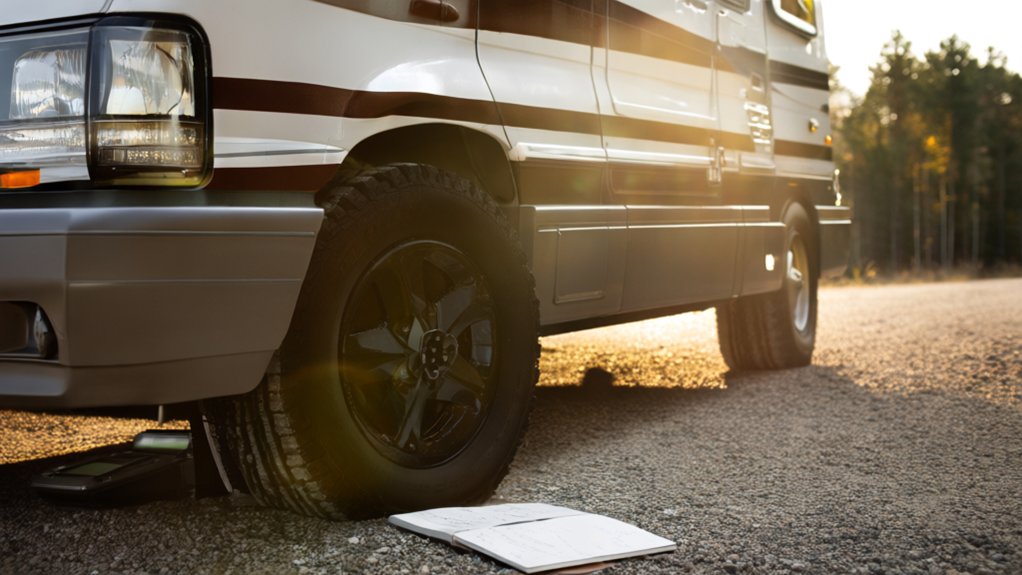
Although it might seem straightforward, understanding your Winnebago’s dry weight is essential before hitting the road. Dry weight, also called Unloaded Vehicle Weight (UVW), is the manufacturer’s weight without water, fuel, propane, or cargo. You’ll find this number on your RV’s specifications label, giving you a baseline for how much your Winnebago weighs empty.
Keep in mind, dry weight excludes personal belongings, options, and fluids, which can add significant weight. For example, many Class C models weigh between 10,000 and 12,000 pounds dry, depending on features.
Knowing this weight helps you plan safely. It makes it easier to calculate the total loaded weight and ensure your tow vehicle can handle the journey. Don’t overlook this key figure when preparing for your trip. It really can make a difference in how smoothly everything goes.
Winnebago GVWR and Cargo Capacity Explained

When you’re preparing your Winnebago for the road, understanding the Gross Vehicle Weight Rating (GVWR) is essential for safe travel. GVWR represents the maximum safe weight your fully loaded RV can weigh, including passengers, cargo, water, and fuel.
Winnebago models vary widely, with GVWRs from about 11,000 lbs for smaller Class C units up to over 20,000 lbs for larger fifth-wheel or toy hauler models.
To figure out how much extra gear and supplies you can safely carry, check out the Cargo Carrying Capacity (CCC). This number comes from subtracting your Winnebago’s dry weight from its GVWR.
You’ll find the GVWR on the certification label near the driver’s door or frame.
Knowing these figures helps you avoid overloads, stay safe, and comply with legal weight limits on the road. It’s a simple step that makes a big difference when you’re hitting the highway.
How to Calculate Loaded Weight for Your Winnebago

To accurately calculate the loaded weight of your Winnebago, you need to start with the Gross Vehicle Weight Rating (GVWR) found on the manufacturer’s label.
Begin by locating the Gross Vehicle Weight Rating (GVWR) on your Winnebago’s manufacturer label.
Next, add the weight of water, propane, batteries, and any extra accessories to the dry weight.
Keep in mind that a full 40-gallon water tank adds about 333 pounds, while propane weighs roughly 4.2 pounds per gallon.
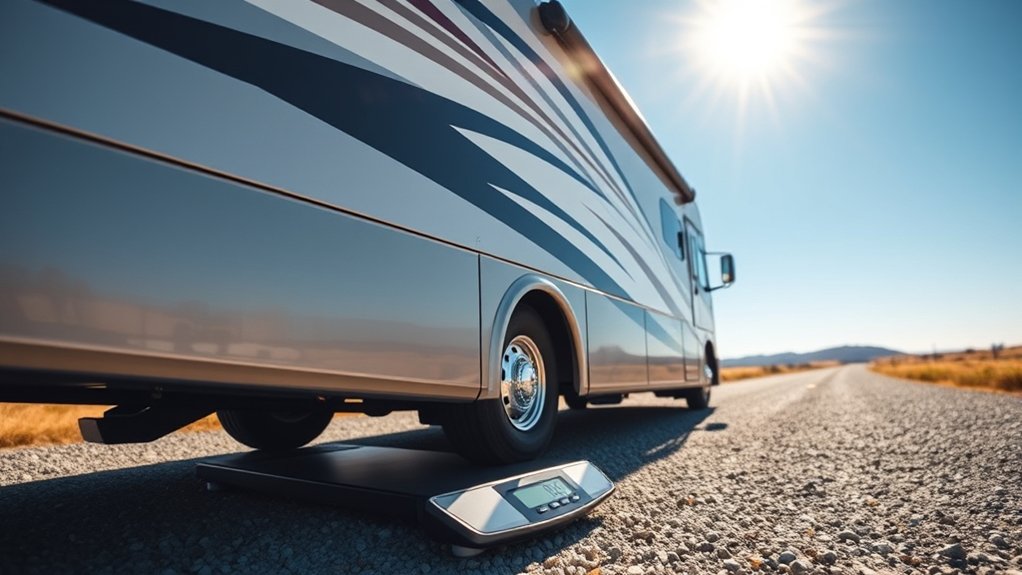
For the most precise measurement, use a certified truck scale to weigh your fully loaded RV, including passengers and cargo.
Once you have this total loaded weight, subtract the dry weight to determine how much cargo, water, and other items you’ve added.
This method helps you stay within safe limits and avoid overloading your Winnebago.
It’s a simple way to make sure your trip is both safe and enjoyable.
How Tongue Weight Impacts Safe Winnebago Towing
Understanding tongue weight is essential for safe Winnebago towing because it directly affects your trailer’s stability and your vehicle’s handling.
Tongue weight should be about 10-15% of the total trailer weight to maintain control.
If it’s too light, your Winnebago may sway. If it’s too heavy, steering and braking suffer.
So, you need to distribute cargo carefully to keep tongue weight within the recommended range.
Also, avoid exceeding your hitch’s maximum tongue weight to prevent damage.
It’s a good idea to regularly measure tongue weight using a scale to guarantee safety.
That way, you’ll have peace of mind on the road.
Tips for Accurately Weighing and Managing Your Winnebago Load
Accurately weighing your Winnebago is essential for safe travels, so you should use a certified truck or CAT scale to get the most precise measurement. Make certain to weigh it fully loaded with water, fuel, propane, and gear to capture the maximum weight.
Weigh each axle separately to avoid exceeding the Gross Axle Weight Rating (GAWR) and to spot any uneven weight distribution.
Distribute heavy items low and centered to maintain stability and keep tongue weight within the ideal 10-15% range of the trailer’s weight.
After loading or making modifications, re-weigh your Winnebago regularly to confirm you remain within the Gross Vehicle Weight Rating (GVWR).
Following these tips helps ensure safer towing and a smoother driving experience.
Frequently Asked Questions
What Is the Average Fuel Consumption of a Winnebago?
You can expect a Winnebago’s average fuel consumption to range between 6 and 12 mpg, depending on the model and engine type. Smaller campervans get better mileage, while larger motorhomes use more fuel.
It really comes down to what you’re driving and how you use it. So, keep that in mind when planning your trips!
How Often Should I Perform Maintenance on My Winnebago?
Think of maintenance like clockwork. You should perform it every 10,000 to 15,000 miles or at least once a year.
Don’t forget seasonal checks and pre-trip inspections. These help keep your Winnebago running smoothly and safely.
Staying on top of these will save you headaches down the road. It’s all about keeping things in good shape so you can enjoy your travels worry-free.
Can I Customize the Interior Weight Distribution of a Winnebago?
Yes, you can customize your Winnebago’s interior weight distribution by placing heavier items low and centered. This helps keep the balance stable and makes driving safer.
You can also rearrange features and add storage compartments to better organize your space. It’s a good idea to regularly weigh your Winnebago to ensure everything stays balanced.
Doing this guarantees safe handling and towing performance. It’s all about making your ride smoother and more secure.
What Are Common Weight-Related Safety Issues With Older Winnebagos?
Picture your Winnebago swaying dangerously on a curve. Older models often suffer from worn suspension, weakened frames, and outdated brakes.
You risk instability, axle failure, and poor handling if you overload or ignore proper weight distribution.
It’s important to keep these issues in mind to stay safe on the road.
How Does Weather Affect the Weight and Handling of a Winnebago?
You’ll notice rain or snow adds weight from moisture buildup, affecting stability. Heat can shift weight distribution slightly.
Wet or icy roads make handling tricky, so always adjust your driving to maintain control and safety in changing weather.
Just take it slow and stay aware, and your Winnebago will handle whatever the weather throws at you.
Conclusion
So, now you know your Winnebago’s weight dance isn’t just guesswork. It’s a math party with dry weight, GVWR, and tongue weight all crashing in. Ignore it, and you might just turn your leisurely road trip into an unplanned rollercoaster ride.
Keep those numbers in check, or you’ll be the star of “Winnebago Woes: The Overloaded Edition.” Stay smart, weigh right, and enjoy the ride without turning your home on wheels into a runaway freight train!