How Much Does An RV Park Cost – By the Numbers
You can expect to pay between $20 and $100+ per night at RV parks, largely depending on location, amenities, and season. Popular tourist areas and peak times push prices higher, sometimes doubling rates.
Monthly stays range from $400 to $950, with discounts for longer bookings or memberships. Utilities and extra fees can add $5 to $15 daily.
Understanding these factors helps you optimize costs and find the best value for your RV stay. More detailed insights follow.
Key Factors Driving RV Park Costs

Although RV park costs vary widely, several key factors consistently influence the price you’ll pay per night. Location plays a significant role; parks in popular tourist spots typically charge between $50 and $100 per night.
RV park prices vary, with location being key—tourist hotspots usually range from $50 to $100 per night.
Amenities like pools, laundry, and full hookups can add $10 to $30 to the base rate.
Seasonal demand also impacts pricing. You can expect a 20-30% increase during peak seasons in high-traffic areas.
If you plan longer stays, weekly or monthly discounts of 10-30% usually apply, which helps reduce your nightly cost.
Additionally, the size and type of your RV matter. Larger or specialty RV sites often come at a premium compared to standard sites.
Understanding these variables helps you anticipate the nightly rate more accurately.
Choosing the Best RV Park for Your Budget and Needs

When selecting an RV park, you should balance your budget with the amenities and services that matter most to you. Costs range from $20 nightly at budget parks to $180+ at luxury resorts. Monthly rates from $400 to $950 reflect location and amenities.
Prioritize essentials like hookups, Wi-Fi, and recreational facilities based on your needs. Budget-friendly options typically have fewer amenities and are situated in less tourist-heavy areas. Premium parks offer more comforts at higher costs.
To optimize spending, calculate total expenses including nightly or monthly rates plus utilities and access fees. This analytical approach guarantees you pick an RV park that fits your financial constraints without compromising on the features critical for your stay.
Comparing Daily and Monthly RV Park Rates by Location

You’ll notice that daily RV park rates can vary quite a bit. In remote areas, you might find spots for as low as $20, but in popular, high-demand locations, prices can climb over $100.
When it comes to monthly rates, they typically fall somewhere between $400 and $2,000, again depending on where you’re staying.
Now, here’s something to keep in mind: many parks offer seasonal discounts ranging from 10% to 30%. These deals often make longer, monthly stays more affordable compared to paying the daily rate every night.
Daily Versus Monthly Pricing
Since daily RV park rates generally range from $20 to $70 depending on location and amenities, understanding how these compare to monthly rates is essential for budgeting.
Monthly rates typically vary from $200 to over $1,000, often providing a 10-30% discount in popular tourist areas like Las Vegas or coastal regions.
If you plan to stay several weeks or months, opting for a monthly rate can lower your effective nightly cost considerably.
However, in less busy or remote parks where daily rates hover around $20-$30, monthly discounts may be minimal or nonexistent.
Keep in mind, some parks require a minimum stay to access monthly pricing, so you’ll need to factor that into your overall cost analysis.
That way, you can figure out if monthly rates truly offer savings over daily fees.
Location-Based Rate Differences
How much you pay at an RV park depends heavily on location, with daily rates ranging from as low as $20 in remote areas to $100 or more in popular tourist destinations like Yellowstone.
Coastal and scenic parks usually have higher rates because they’re in demand. Monthly rates vary quite a bit too, from $440 in less busy areas to over $4,000 at luxury spots like the Las Vegas Motorcoach Resort.
Regional differences matter as well. Urban and tourist-heavy zones tend to cost more than rural parks.
| Location Type | Daily Rate Range | Monthly Rate Range |
|---|---|---|
| Remote Areas | $20 – $40 | $440 – $900 |
| Popular Tourist Spots | $50 – $100 | $1,200 – $3,000 |
| Coastal/Scenic Parks | $60 – $75 | $1,000 – $2,500 |
| Luxury Resorts | $90 – $120 | $3,000 – $4,500 |
Seasonal Rate Variations
When do RV park rates fluctuate the most? They peak during high-demand seasons, with nightly prices jumping 20-50% compared to off-peak periods.
In tourist hotspots like Yellowstone or Myrtle Beach, daily rates often double from about $50 off-season to $100 during peak months. Off-season, you’ll find daily rates dipping below $50.
Monthly stays become considerably cheaper with discounts of 10-30%. These longer-term rates help offset the higher daily costs in peak times, making extended stays more affordable.
Seasonal fluctuations are particularly stark in popular locations, so timing your visit can really impact your budget.
Understanding these patterns lets you plan smarter, maximizing value whether you choose daily or monthly bookings.
How Amenities Affect RV Park Prices
Although base rates for RV parks may start around $20 per night, the range widens considerably as amenities increase. Parks with basic hookups and minimal facilities typically charge between $20 and $40 per night.
Base rates for RV parks start near $20 but increase with added amenities and facilities.
When amenities like pools, hot tubs, and recreational facilities come into play, prices rise to $30 to $60 per night. Luxury features such as clubhouses, gyms, and organized activities often add $10 to $20 or more to nightly rates.
Monthly costs also reflect amenity access, with conveniences like laundry, Wi-Fi, and pet-friendly areas pushing fees up by $100 or more.
Plus, parks boasting premium elements like scenic views or exclusive lake and beach access frequently exceed $50 per night. This really shows the direct connection between amenity quality and RV park pricing.
How Seasonality Changes RV Park Pricing
You’ll notice RV park prices tend to surge during peak seasons like summer and holidays. In popular spots, rates can often double.
On the flip side, off-peak prices usually drop anywhere from 10% to 30%. Plus, many parks offer discounts if you stay longer during the shoulder seasons.
Knowing these seasonal demand patterns can really help you plan trips that maximize your savings.
Peak Season Price Surges
Since demand spikes during peak travel months, RV park prices can surge by 10% to 30% compared to off-peak rates. Popular destinations like national parks and beaches often add seasonal surcharges because of the higher demand.
During peak season, longer stays usually come with higher nightly rates and fewer discount options, which drives up your total cost.
Parks in busy areas often require advanced reservations and charge premium fees to make the most of the demand. Summer months see the biggest price hikes thanks to the influx of tourists.
Knowing these seasonal pricing patterns helps you anticipate costs better and plan your budget accordingly.
If you keep an eye on regional trends and booking rules, you can navigate peak pricing more smoothly. That way, you avoid any surprise surges when reserving your RV spot.
Planning ahead really pays off during these busy times!
Off-Peak Discounts Offered
When peak season drives RV park prices up by 10% to 30%, off-peak periods offer a notable counterbalance.
During winter or late fall, you can expect rates to drop by 10% to 30% compared to summer.
Many parks, especially in high-demand areas like national parks and beach destinations, offer monthly rates up to 20% cheaper in these off-peak times.
These discounts aren’t just marketing. They encourage longer stays when demand wanes.
So, if you plan extended trips, off-season pricing can substantially reduce your overall costs.
The price variability due to seasonality is more pronounced in popular locations.
This makes off-peak discounts a smart opportunity for budget-conscious travelers aiming to maximize value without sacrificing location quality.
Seasonal Demand Impact
Although RV park prices vary throughout the year, peak travel seasons like summer and holidays consistently drive rates up because of surging demand. You’ll often see nightly rates double or even triple in popular destinations during these times.
Seasonal pricing models reflect these fluctuations, with summer rates considerably higher than winter months.
Off-peak seasons usually offer discounts ranging from 10% to 30%, making stays more affordable when demand drops.
If you plan longer stays during peak periods, expect premiums or increased monthly rates, especially for reserved spots.
Understanding these seasonal demand impacts helps you anticipate costs accurately and choose the most suitable booking times based on your budget and travel preferences.
Budget-Friendly RV Park Options to Consider
While budget-friendly RV parks typically charge between $20 and $30 per night, you can often find weekly rates ranging from $230 to $310. This makes extended stays more affordable.
Parks like Road Runner and Desert Eagle require refundable deposits but offer military discounts and extended stay options. These features help reduce overall costs.
Membership-based parks such as Thousand Trails provide discounted or free stays. Seasonal promotions at places like Boulder Beach Campground also help lower expenses.
These economical parks often limit amenities, typically providing basic water and dump stations without hookups. This setup suits budget-conscious travelers just fine.
Location greatly influences price. Remote or less popular areas generally have the lowest rates.
Common Extras and Fees That Add to RV Park Costs
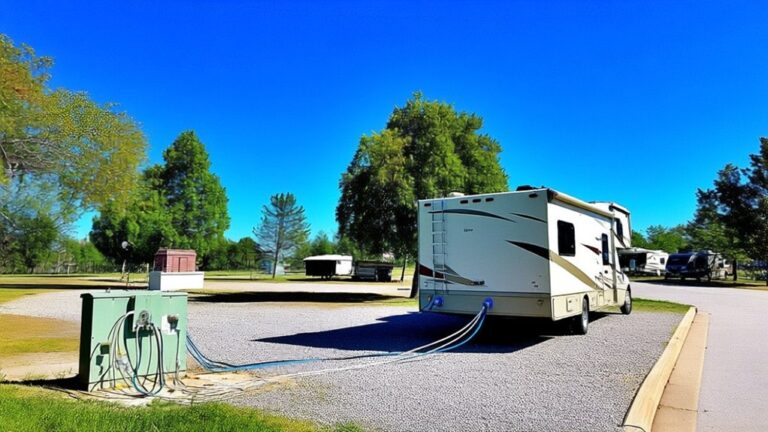
Because many RV parks separate base rates from additional services, you’ll want to budget for common extras that can considerably increase your stay’s cost. Utilities such as electricity, water, and sewer typically add $5 to $15 daily, pushing overall expenses beyond the advertised rate.
Many RV parks charge extra for utilities, adding $5 to $15 daily beyond the base rate.
If you’re traveling with pets, expect a one-time fee or deposit between $25 and $50.
Amenities like cable TV, Wi-Fi, and recreational access often come with extra charges, so check availability and costs upfront.
Additionally, early check-in or late departure requests may incur additional fees, impacting your budget.
Some parks require refundable deposits for site reservations, generally ranging from $25 to $100.
Factoring these extras into your cost analysis will give you a clearer picture of the true expense of your RV park stay.
Discounts for Long-Term RV Park Stays and Memberships
If you plan to stay at an RV park for a month or longer, you can often secure discounts ranging from 10% to 30%. These long-term rates usually require minimum stays of 30 to 60 days.
Membership programs like Thousand Trails provide even more substantial savings, with nightly rates sometimes dropping to $50 or less.
Seasonal or annual memberships can reduce costs further, occasionally bringing nightly fees below $20.
Booking extended stays in advance or during off-peak seasons can yield extra discounts.
By taking advantage of these options, you can considerably lower your overall RV park expenses.
Looking at all these variables helps you optimize your budget when planning extended RV travel. It’s a smart way to make sure you get the best value for your long-term accommodation.
Frequently Asked Questions
How Do RV Park Costs Compare to Campground Fees?
You’ll pay considerably more at RV parks, $20 to $70 nightly and $400 to $950 monthly, compared to campgrounds’ $10 to $30 nightly and $100 to $300 monthly.
This difference reflects the additional amenities and services that RV parks offer. So, if you’re looking for more comfort and convenience, RV parks might be worth the extra cost.
But if you’re on a tighter budget or prefer a more rustic experience, campgrounds can be a great option. It really depends on what you want from your stay.
Are RV Park Rates Negotiable on Arrival?
Yes, you can often negotiate RV park rates on arrival, especially at smaller parks or during off-peak seasons. Offering longer stays or upfront payments increases your chances of securing discounts or package deals with added amenities.
It’s definitely worth asking! Sometimes the staff have flexibility and want to fill spots, so a friendly chat can go a long way. Just be polite and open about what you’re looking for, and you might be surprised by the savings.
What Payment Methods Do RV Parks Typically Accept?
RV resorts readily receive Visa, MasterCard, and American Express. You’ll often use cash or checks, especially for longer stays.
Increasingly, digital dollars like PayPal, Venmo, Apple Pay, and Google Pay provide payment precision and convenience. It’s becoming easier to pay however you want these days!
Can I Book RV Park Stays Last Minute Without Extra Charges?
You can book last-minute RV park stays, but expect higher rates or extra fees during peak times. Flexible cancellation policies vary, so call ahead or check online to confirm availability and avoid unexpected charges.
It’s always a good idea to ask about any additional costs before you book. That way, you won’t be surprised when you arrive. Planning a bit ahead can save you money, but if you’re flexible, last-minute bookings are definitely possible.
Do RV Parks Offer Loyalty Rewards or Referral Bonuses?
You might think loyalty rewards are rare, but many RV parks actually offer them, including discounts and referral bonuses. These programs often provide perks like free nights or exclusive amenities.
It really depends on the park, but these rewards can boost your travel value quite a bit. So, it’s definitely worth asking about loyalty programs when you book your stay.
Conclusion
Think of choosing an RV park like plotting a course on a map. Every factor—location, amenities, seasonality—acts as a waypoint shaping your journey’s cost. By analyzing rates and fees, you can navigate toward budget-friendly options without sacrificing comfort.
Just like a skilled traveler adjusts their route based on terrain, you can optimize expenses by leveraging discounts and staying flexible. With data in hand, you’re set to camp smart and save more on every stop.