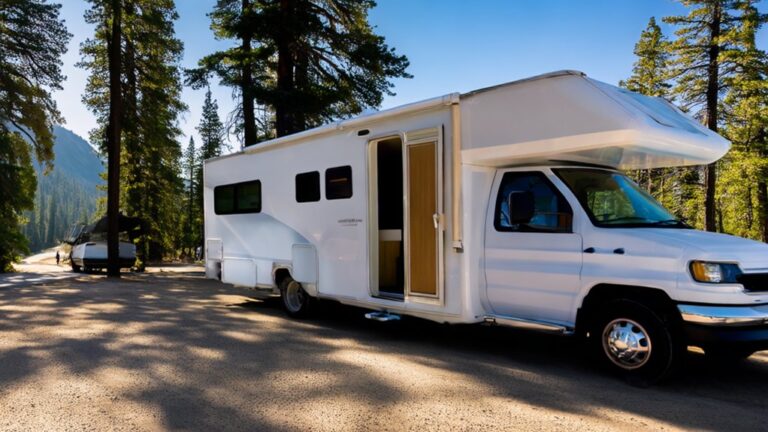
How Tall Is A Winnebago – Quick Facts
You need to know your Winnebago’s exact height, usually between 10 and 12 feet depending on the model. For example, the Minnie Winnie is about 10’11” and the Forza is near 12’2”. Don’t forget to include roof gear like air conditioners or satellite dishes, which add extra inches.
Always measure carefully and post the height inside for quick reference. Knowing this helps you avoid low-clearance collisions and plan safe routes. There’s plenty more to learn about protecting your RV and steering through tricky roads safely.
How Knowing Your Winnebago Height Prevents Accidents
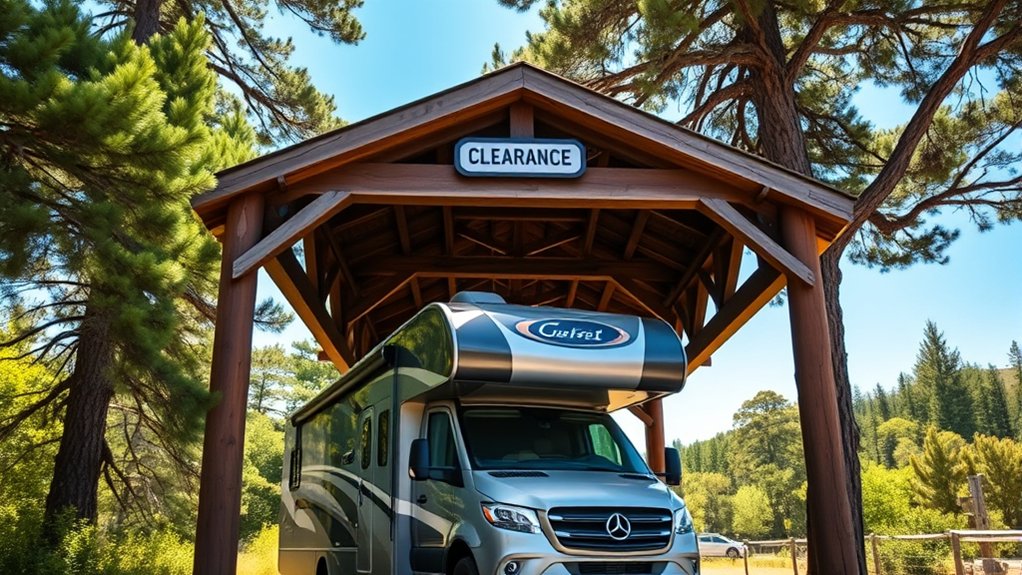
If you want to avoid costly collisions, knowing the exact height of your Winnebago is essential. When you measure your RV’s height, don’t forget to include any roof-mounted equipment like air conditioners or antennas.
This accurate measurement helps you steer clear of low-clearance overpasses, tunnels, and bridges that could cause serious damage.
Once you know your Winnebago’s height, post it on your dashboard for quick reference. Keep an eye out for local clearance signs while planning your route.
Display your Winnebago’s height on the dashboard and watch for clearance signs during your trip planning.
Since added equipment can change your vehicle’s height, regularly verify it before hitting the road.
How Tall Are Different Winnebago Models?

You’ll find that Winnebago models vary in height, usually ranging from about 9 to 11 feet depending on the model and any optional equipment you might have, like roof accessories.
It’s important to keep in mind that these add-ons can increase your RV’s overall height. So, using simple tools to measure your specific setup can really help you avoid any surprises when you’re out on the road.
Standard Model Heights
How tall are different Winnebago models, and what should you expect when comparing their heights? Generally, Winnebago Class C models vary from 10 to 12 feet tall, depending on the specific model.
For example, the Winnebago Minnie Winnie stands around 10 feet 11 inches, making it more compact.
The Winnebago View measures approximately 11 feet 4 inches, offering a bit more headroom.
If you’re looking at the Winnebago Forza, expect it to be taller at about 12 feet 2 inches.
Knowing these standard heights helps you plan for garage clearance or low bridges.
Keep in mind, these figures reflect the base models without any roof-mounted additions, so your Winnebago’s actual height might differ slightly based on features.
It’s always good to double-check your specific model before you hit the road!
Optional Equipment Impact
Because optional equipment can add several inches to your Winnebago’s height, it’s important to take these additions into account when planning your travels. Roof-mounted gear like satellite dishes, antennas, and larger AC units can markedly increase your vehicle’s clearance needs.
Factory upgrades and custom rooftop storage can push the height beyond published specs, so always verify your specific model’s total height with all options installed. This way, you avoid any low-clearance surprises on your route.
| Winnebago Model | Standard Height (ft) | Height w/ Optional Equipment (ft) |
|---|---|---|
| Minnie Winnie | 10.5 | 11.0 |
| Vista | 10.8 | 11.3 |
| Forza | 12.5 | 13.0 |
| Navion | 9.9 | 10.4 |
Knowing your exact height helps keep your travels smooth and stress-free.
Measurement Tips And Tools
After considering how optional equipment affects your Winnebago’s height, it’s time to focus on accurately measuring your vehicle. Most Winnebago models stand between 11 and 13 feet tall, but rooftop additions like AC units or solar panels can add extra inches.
To get a precise measurement, park your Winnebago on a level surface. Then place a long, straight 2×4 board across the highest point, usually the roof or any mounted equipment. Use a level to make sure it’s accurate.
Measure from the ground to the top of the board, and don’t forget to add about one foot for safety clearance. Confirming your exact height before travel helps you avoid low-clearance obstacles and keeps your journey safe and smooth.
How Optional Roof Equipment Affects Winnebago Height

When you add factory options or aftermarket roof gear, your Winnebago’s height can increase noticeably. So, it’s really important to measure your vehicle with all the accessories installed to get an accurate height.
That way, you can avoid clearance issues and stay safe on the road.
Impact Of Factory Options
Although the base height listed in Winnebago brochures gives you a good starting point, factory-installed roof options like air conditioners, satellite dishes, or antennas can add several inches to your vehicle’s total height. These additions mean the actual clearance you need might be taller than what the brochure states.
When planning trips, you’ll want to factor in these extras to avoid any low-clearance surprises.
| Roof Option | Typical Height Addition | Notes |
|---|---|---|
| Air Conditioner | 6–8 inches | Common and significant |
| Satellite Dish | 4–6 inches | Often retractable |
| Antenna | 2–4 inches | Usually minimal but adds up |
Knowing these impacts helps you travel safely and confidently. Just keep them in mind before you hit the road!
Measuring With Accessories
Factory-installed options like air conditioners or antennas already add height to your Winnebago. But the real height can change even more once you factor in optional roof accessories you might add yourself. Items like satellite dishes, roof fans, or aftermarket antennas often increase your vehicle’s overall height beyond the brochure’s standard measurements.
Since brochures reflect only the basic setup, any additional equipment can add several inches, affecting your total height. To avoid surprises, it’s a good idea to measure your Winnebago after installing these extras. This way, you’ll know the exact height and be prepared for any clearance challenges.
Clearance And Safety Risks
Because optional roof equipment like satellite dishes, antennas, and additional AC units can add significant height to your Winnebago, you need to factor these extras into your clearance planning. Brochures usually state the height based on standard features, but your installed options might add one to two feet. That can cause unexpected clearance issues.
Before you hit the road, measure your Winnebago’s total height—including all roof gear—to avoid damage or accidents.
Keep these safety tips in mind:
Always verify clearance heights of tunnels, bridges, and parking garages.
Consider installing roof guards to protect equipment from branches and obstacles.
Regularly inspect your roof setup to ensure nothing shifts or adds unexpected height.
Planning ahead keeps your travels safe and stress-free.
Measuring Your Winnebago’s Actual Height
When you measure your Winnebago’s height, make certain you do it at its highest point, usually the roof, using a level surface, a long straightedge, and a tape measure. Include all standard roof features like the air conditioner and vents.
But remember, optional roof-mounted equipment can add extra height.
It’s best to measure your vehicle when it’s empty because weight can slightly lower the ride height.
Once you get the exact number, add an extra foot for safety clearance when planning trips under bridges or tunnels.
Always double-check your actual height before heading into low-clearance areas, especially if you’ve added modifications.
This simple step keeps you safe and ensures smooth travels with your Winnebago every time.
Handling Low Clearances and Roadside Hazards With Your Winnebago
Although you might already know your Winnebago’s height, handling low clearances and roadside hazards requires extra caution every time you hit the road. Always measure your Winnebago at its highest point, including roof-mounted equipment, to avoid surprises.
When driving, stay alert to clearance signs and vegetation that could damage your roof. It’s better to be safe than sorry, right?
Here are key tips to keep in mind:
- Use a long 2×4 and a level on flat ground to get an accurate height measurement.
- Install protective guards to shield your roof from branches and roadside hazards.
- Drive closer to the road center on narrow or tree-lined roads to reduce risk.
Planning Routes Around Winnebago Height Restrictions
To avoid unexpected delays or damage, you’ll want to verify your Winnebago’s exact height, including any roof-mounted gear, before plotting your route. Low-clearance signs usually mark 12 feet 10 inches, but actual clearances can vary.
Use tools like Google Earth or route planners to confirm your path’s clearance. Posting your Winnebago’s height on your dashboard also helps avoid surprises.
Remember, roadside vegetation and obstacles can lower clearances, so choosing wider roads is smart.
| Tip | Description | Tool/Action |
|---|---|---|
| Verify Height | Include roof-mounted equipment | Measure with tape or manual |
| Check Clearance Signs | Note signs often at 12’10” | Observe local signage |
| Use Route Planning Tools | Confirm clearances in advance | Google Earth, dedicated apps |
| Display Height | Post height on dashboard for awareness | Dashboard sign or sticker |
Frequently Asked Questions
What Is the Average Height of a Winnebago Trailer?
You’ll find the average height of a Winnebago trailer is about 11 to 12 feet, depending on the model and roof options.
Always check your specific model’s height before hitting the road to avoid surprises. It’s better to be safe than sorry!
Do Winnebago Heights Differ Between Model Years?
Yes, Winnebago heights vary year to year. You’ll notice changes due to added roof equipment, aerodynamic tweaks, and safety updates.
How Does Payload Affect the Height of a Winnebago?
Payload won’t directly change your Winnebago’s height, but heavy loads can compress the suspension, which might slightly lower the clearance.
If you add rooftop gear, that can increase the height. It’s a good idea to distribute weight evenly to keep your ride steady and safe.
Just remember, how you pack matters as much as what you pack!
Are There Height Restrictions for Parking a Winnebago Overnight?
Yes, you’ll find some parking spots welcoming while others block your Winnebago’s height. Always check overnight restrictions. Your rig’s roof gear might push you over limits, so measure carefully to avoid surprise hassles.
It’s a good idea to be aware of the height limits before you park. That way, you won’t run into any unexpected problems when settling in for the night. Just a little extra checking can save you a lot of trouble!
Can Weather Conditions Change the Measured Height of a Winnebago?
Yes, weather can change your Winnebago’s measured height. Snow, rain pooling, or wind-shifted antennas can add inches.
It’s a good idea to always measure under typical conditions before traveling. This way, you avoid surprises and make sure you clear all height restrictions safely.
Conclusion
Knowing your Winnebago’s height is like having a trusty compass on your adventure. It helps you navigate safely through low bridges and tight spots.
By understanding your rig’s exact measurements, you avoid unexpected bumps and keep your journey smooth. So, take a moment to measure and plan.
Respect your Winnebago’s height. That way, every road you travel becomes a path of confidence and freedom, letting your adventure truly soar.