

How Wide Is A Winnebago – Guide
Most Winnebago RVs are between 8 and 8.5 feet wide, but the actual width varies by model, chassis, and features like slide-outs. Remember, mirrors and awnings extend beyond the main body and affect maneuverability and parking. Accurate measurements omit these attachments, helping you stay compliant with legal width limits.
Knowing your Winnebago’s exact width ensures safe driving, parking, and storage. Keep exploring to discover how these factors influence your travel and storage choices. It’s pretty important to get these details right so you can enjoy your trips without any surprises.
How Wide Is a Winnebago? Typical Width Ranges
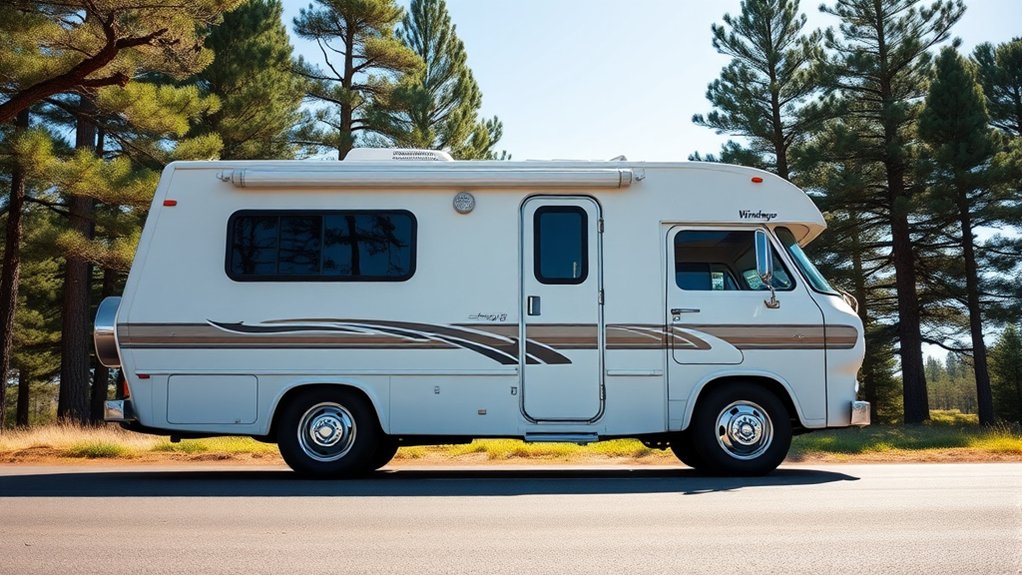
Although the exact width can vary by model and year, most Winnebago RVs measure between 8 and 8.5 feet wide, making them spacious yet manageable on the road.
You’ll find that typical widths range from about 96 to 102 inches, with models like the Winnebago Adventurer clocking in around 8 feet 5.5 inches.
Keep in mind, older models often come a bit narrower, reflecting design changes over time.
When you consider the width, it usually excludes add-ons like awnings or mirrors, so the main coach itself fits within these dimensions.
Knowing this helps you anticipate how your Winnebago will handle tight spots and parking, ensuring a comfortable driving experience without surprises related to size.
It’s always good to be prepared!
How Mirrors and Awnings Affect Winnebago Width

When you measure your Winnebago’s width, the numbers usually don’t include mirrors or awnings. But these attachments can add significant bulk.
Side mirrors often extend beyond the coach’s frame and are designed to fold or adjust. This helps you fit into tighter spaces or comply with regulations.
Awnings, meanwhile, can greatly increase your vehicle’s width when extended. They’re considered attachments and generally allowed to exceed official width limits. Still, you’ll want to retract them when navigating narrow roads or parking spots.
Knowing how much these accessories add to your Winnebago’s overall width is vital, especially for legal and safety reasons. Staying aware of their impact helps you avoid surprises on the road.
Plus, it keeps your travels smooth and hassle-free.
How to Measure Your Winnebago’s Width Accurately

Understanding how mirrors and awnings impact your Winnebago’s width helps you appreciate why measuring just the main body is important. To get an accurate width, use a tape measure and stretch it straight and level across the widest part of your Winnebago’s main body.
Avoid including mirrors, awnings, or slide-outs, as these extend beyond the base width. For consistency, measure around the middle or lower sections where your RV is typically widest.
Record your measurement carefully in inches or centimeters, depending on your needs or local rules. This precise approach ensures you understand your Winnebago’s actual width, which is crucial for parking, storage, and navigating tight spaces safely.
Taking the time to measure correctly helps you avoid surprises on the road. It’s a simple step that makes a big difference when you’re out there driving or setting up your RV.
Comparing Winnebago Widths Across Models and Classes
Since Winnebago offers a wide range of models and classes, comparing their widths helps you choose the right fit for your needs. Most motorhomes fall between 8 and 8.5 feet wide, with the 2001 Adventurer measuring about 8 feet 5.5 inches, excluding mirrors and attachments.
Travel trailers like the Micro Minnie are narrower, around 7 feet wide, maximizing compact interior space.
You’ll also notice that chassis type and model year affect width. Older models on the P-30 chassis tend to be slimmer, often aligning better with legal limits.
Keep in mind, awnings and mirrors can extend beyond the main body but are usually removable, so they might temporarily increase your overall width.
Understanding these differences guarantees you pick a Winnebago that fits your travel and storage needs perfectly.
Winnebago Width Limits for Registration and Travel
When you’re registering or traveling with a Winnebago, it’s really important to understand its width because legal limits can vary depending on where you are.
Most models are about 8 feet 5.5 inches wide. That measurement doesn’t include mirrors or awnings, which can add a few extra inches.
So, it’s a good idea to check how wide your specific model is compared to local rules.
That way, you can make sure you’re following the law and avoid any surprises while on the road.
Winnebago Width Measurements
How wide is a Winnebago, really? Typically, a Winnebago coach measures about 8 feet 5.5 inches (101.5 inches) wide, excluding mirrors and attachments. This width refers to the body itself, leaving out side mirrors and retractable awnings, which can add to the overall size.
The exact width varies depending on the model year, chassis type, and features like slide-outs or awnings. For example, older chassis like the P-30 tend to be narrower and more likely to fall within legal width limits in various regions.
In places like New Zealand, where the maximum allowable RV width is 98.5 inches, you might need to remove awnings or other extensions to comply.
Knowing these measurements helps you plan your travels and ensures your Winnebago fits within regulations.
Registration Width Restrictions
Although Winnebago coaches are designed with comfort and style in mind, their width often poses challenges for registration and travel in regions with strict size limits.
For example, in New Zealand, the maximum allowable RV width for registration is 98.5 inches, while many Winnebago models range from 101.5 inches to over 104 inches, depending on the chassis. This means you might have to remove or avoid installing items like awnings to meet legal requirements.
Keep in mind, advertised widths usually exclude mirrors and retractable attachments, which can push the total width beyond limits.
Older models on the P-30 chassis often fall below the restriction, but newer, wider chassis like the P-32 may exceed it. So, you’ll want to measure carefully and verify exact dimensions before registering your Winnebago.
Travel Width Compliance
Because Winnebago coaches often exceed standard travel width limits, it’s essential to understand how their dimensions affect your ability to register and drive them legally. Most Winnebagos measure about 101.5 inches wide, excluding mirrors and awnings. These removable features can push your width beyond legal limits.
For example, in New Zealand, the max allowed width is 98.5 inches, so you may need to remove awnings before travel. Older models on the P-30 chassis tend to be narrower, often under 98 inches, making compliance easier.
| Model Type | Typical Width (inches) | Travel Compliance Notes |
|---|---|---|
| Newer Winnebagos | 101.5 | Often exceed legal limits |
| Older P-30 Models | <98 | Usually meet travel width rules |
| Removable Features | Varies | Must be removed for compliance |
How to Adjust Your Winnebago to Meet Width Restrictions
When you need to meet width restrictions with your Winnebago, adjusting or removing exterior components like awnings can make a significant difference. Retracting or detaching awnings helps reduce your vehicle’s overall width, keeping it within legal limits.
Since width measurements usually exclude mirrors and attachments, make sure these are properly folded or removed if local regulations require it.
Your coach’s base width is typically around 8 feet 5.5 inches, but it’s a good idea to confirm your model’s exact specs to avoid surprises.
In places like New Zealand, where the maximum width is 98.5 inches, removing wide accessories is often necessary.
Don’t hesitate to contact your Winnebago dealer or manufacturer. They can provide precise chassis width details and advise on modifications to guarantee you meet specific width restrictions safely and legally.
Why Width Matters When Driving and Parking Your Winnebago
When you’re driving a Winnebago, its width really plays a big role in how smoothly you can navigate tight roads and sharp turns. It’s not just about the main body—you’ve got to think about the mirrors and awnings too, since they add to the overall width.
Finding a parking spot that fits your rig comfortably means paying close attention to all these dimensions. Once you get the hang of how wide your Winnebago really is, driving and parking become a lot less stressful.
It’s all about understanding those width challenges so you can stay safe and avoid any parking hassles.
Maneuverability Challenges
Although your Winnebago’s width typically ranges from 8 to 8.5 feet, that measurement plays a crucial role in how easily you can drive and park it. Wider models demand extra caution, especially when steering through narrow roads or making sharp turns, as their larger turning radius can limit maneuverability.
Attachments like awnings or side mirrors often expand your vehicle’s effective width, so you need to be mindful of clearance. If you have an older, narrower Winnebago, you’ll find it easier to handle in tight urban environments.
Knowing your exact width helps you avoid obstacles and stay compliant with road regulations. Being aware of these challenges guarantees you can confidently manage your Winnebago, even in tricky driving situations.
Parking Space Requirements
Since parking your Winnebago requires careful planning, understanding its width is essential to avoid tight squeezes or unsafe maneuvers. Most models measure about 8 to 8.5 feet wide, which means you need adequate space to park comfortably.
Narrower versions, around 96 inches wide, fit better in standard parking spots typically 9 to 10 feet wide, making parking less stressful. Remember to factor in side mirrors and awnings, as they extend beyond the main body and can catch you off guard.
Larger models on wider chassis might even require two parking spaces, so always check the dimensions before choosing a spot.
Knowing your Winnebago’s width helps you pick suitable spaces, ensuring safety and legality while parking and driving. It’s a simple step that makes all the difference.
Best Storage Unit Sizes for Winnebago Widths
Because a typical Winnebago measures about 8 feet 5.5 inches wide, choosing the right storage unit size is essential to guarantee easy parking and access. You’ll want to pick a unit that comfortably fits your RV’s width and any attachments, like mirrors or awnings.
A typical Winnebago is about 8 feet 5.5 inches wide, so choose a storage unit that fits comfortably.
For most models around 8 to 8.5 feet wide, a 10×15 unit works well, offering space for extra gear. Larger Class A Winnebagos often need 10×20 or 10×25 units to ensure ample room.
Consider these tips when selecting storage:
- Leave 1-2 feet of clearance on each side for ventilation and maneuverability
- Measure your Winnebago’s full width, including side attachments
- Opt for a slightly larger unit to avoid tight squeezes
- Make certain easy access to avoid daily hassle when parking or retrieving your RV
Finding Secure Storage Options for Your Winnebago
When securing storage for your Winnebago, you’ll want to prioritize facilities that combine convenience with robust protection. Look for onsite management, digital gate controls, and 24/7 security cameras to keep your investment safe.
Remember to leave 1-2 feet of space around your Winnebago for ventilation and easy access.
Here’s a quick comparison of storage options:
| Location | Average Monthly Cost | Security Features |
|---|---|---|
| Dallas | $110 | Digital gates, cameras |
| Tampa | $248 | Onsite management, cameras |
| Generic | Varies | 24/7 surveillance, gated |
Use online size calculators and read customer reviews to find the best storage that fits your Winnebago’s dimensions and security needs.
Frequently Asked Questions
What Is the Average Length of a Winnebago?
You’ll find the average length of a Winnebago ranges between 26 and 30 feet, but sizes vary widely depending on the model. Some are compact. Others stretch up to 45 feet for spacious, luxurious travel.
How Much Does a Winnebago Typically Weigh?
A Winnebago typically weighs between 2,500 and 30,000 pounds, depending on its model and class. You’ll find smaller B-class models lighter, while large Class A motorhomes can be considerably heavier. So, always check before towing.
It’s important to know the weight because it affects how you handle the vehicle. Plus, it can impact your towing capacity and fuel efficiency. Just keep that in mind when you’re planning your trip!
What Are the Common Floor Plans Available in Winnebago Models?
You’ll find open-concept layouts, dedicated bedrooms, and flexible sleeping spaces like Murphy beds or bunk beds. You can choose compact designs or spacious models with slide-outs.
All of them come updated with modern kitchens, workspaces, and ample storage.
There’s really something for everyone, whether you want a cozy setup or more room to spread out.
How Fuel-Efficient Are Winnebago Motorhomes?
You’ll find Winnebago fuel efficiency varies. Diesel models get around 15-20 MPG. Gas-powered ones average 8-12 MPG.
Smaller Class B’s usually exceed 15 MPG. Your driving habits and load weight also impact overall fuel economy quite a bit. So, it really depends on how and where you drive.
What Maintenance Is Required for Winnebago Exteriors?
You don’t need to worry about Winnebago exterior maintenance if you love leaks and rust! Seriously, inspect seals, clean regularly, and lubricate moving parts.
Also, make sure to reseal windows and the roof every few years to keep your rig looking sharp and dry. It’s not hard, just a little effort goes a long way.
Conclusion
Managing the width of your Winnebago is like balancing freedom and caution. You want room to roam but need to fit snugly on the road and in storage. While its size might feel imposing, understanding mirrors, awnings, and legal limits puts you in control.
With accurate measurements and smart adjustments, your Winnebago becomes not just a vehicle, but a well-sized adventure companion. It’s ready for any parking spot or travel route you choose.


