What Is A Park Model RV – What to Know
A park model RV is a compact, lightweight unit under 400 sq ft, designed for seasonal or semi-permanent living with full residential-style amenities and energy-efficient features. It’s built to ANSI recreational standards, so you get a comfortable and durable space.
This type of RV is ideal for vacationers, retirees, or outdoor workers who want a cozy spot without going too big. Unlike mobile homes, park model RVs are mostly stationary and come with specific zoning rules and site requirements.
If you’re looking to pick the right model or want to understand the legal and placement factors, keep exploring your options. There’s a lot to consider, but it’s worth it to find the perfect fit for your needs.
What Is a Park Model RV and How Is It Constructed?
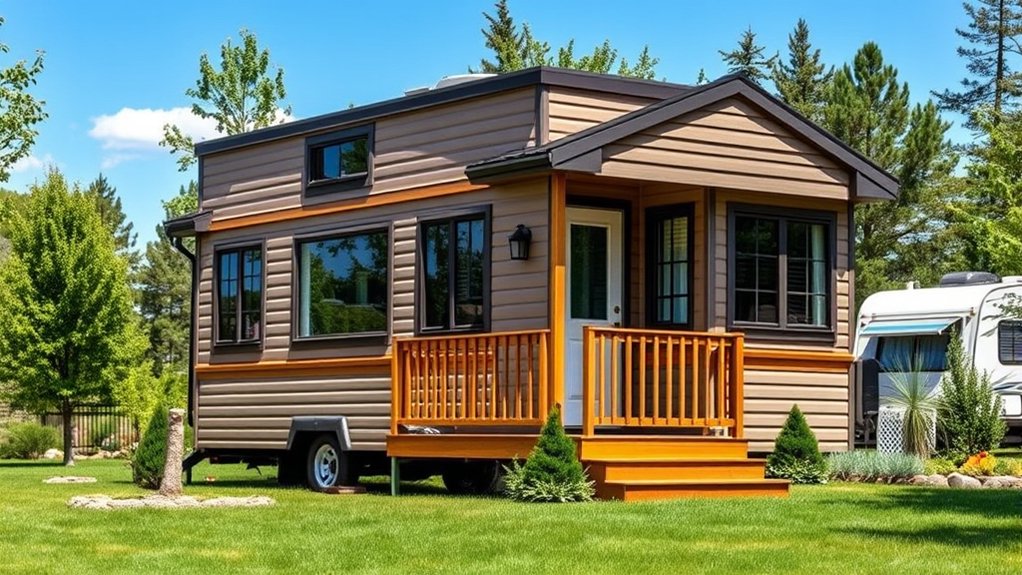
What exactly makes a Park Model RV different from other recreational vehicles? You’ll find that it’s designed primarily for long-term seasonal use, typically staying under 400 square feet.
Unlike standard RVs, it’s built to ANSI A119.5 standards, which focus on recreational park trailers rather than mobile homes.
Its construction features a lightweight, stick-built frame paired with residential-style siding and roofing. This gives you enhanced insulation and durability for year-round comfort.
Inside, you’ll enjoy full-sized appliances and distinct living spaces like bedrooms or lofts, along with heating and cooling systems.
Although towable, Park Models are mostly stationary, placed in RV parks or private lots, and intended as semi-permanent or seasonal residences.
They’re not really meant for frequent travel. This unique build blends mobility with residential comfort.
How Park Model RVs Differ From Mobile Homes and Destination Trailers
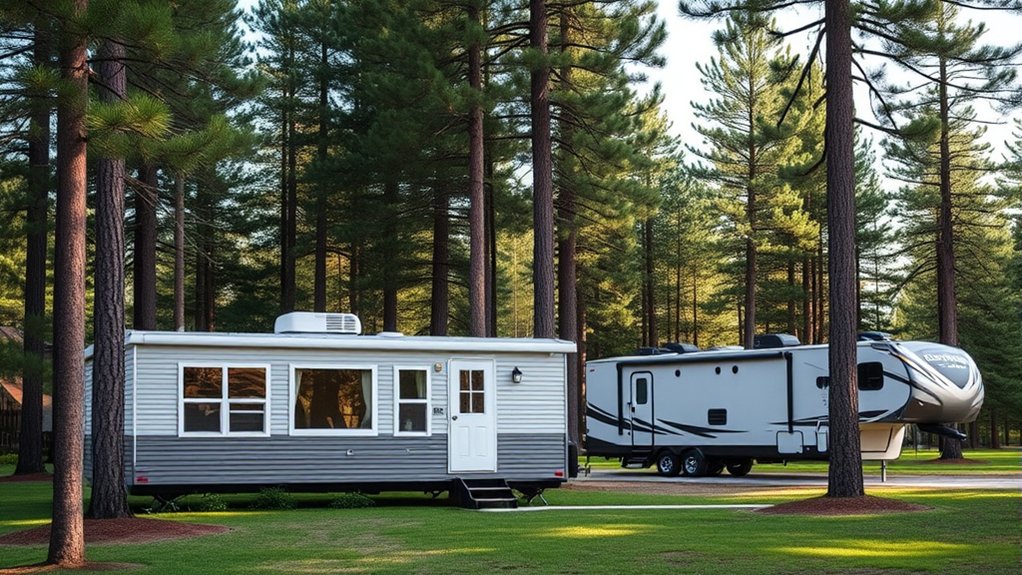
Although Park Model RVs share some similarities with mobile homes and destination trailers, they differ a lot in design, purpose, and regulations. Park models follow ANSI A119.5 RV standards, which limit their size to 400 square feet. They mainly focus on seasonal or recreational use.
Mobile homes, on the other hand, are built to HUD manufactured housing standards. They’re typically larger than 400 square feet and intended for full-time residence.
Destination trailers also follow RV standards but are usually wider and designed for frequent towing and mobility.
Park models tend to be stationary or semi-permanent, unlike destination trailers, which are meant for regular travel. Mobile homes are often permanently installed.
These differences affect classification, legal status, and tax implications. For example, park models are considered temporary units, while mobile homes are classified as permanent residences.
Key Features and Amenities of Park Model RVs
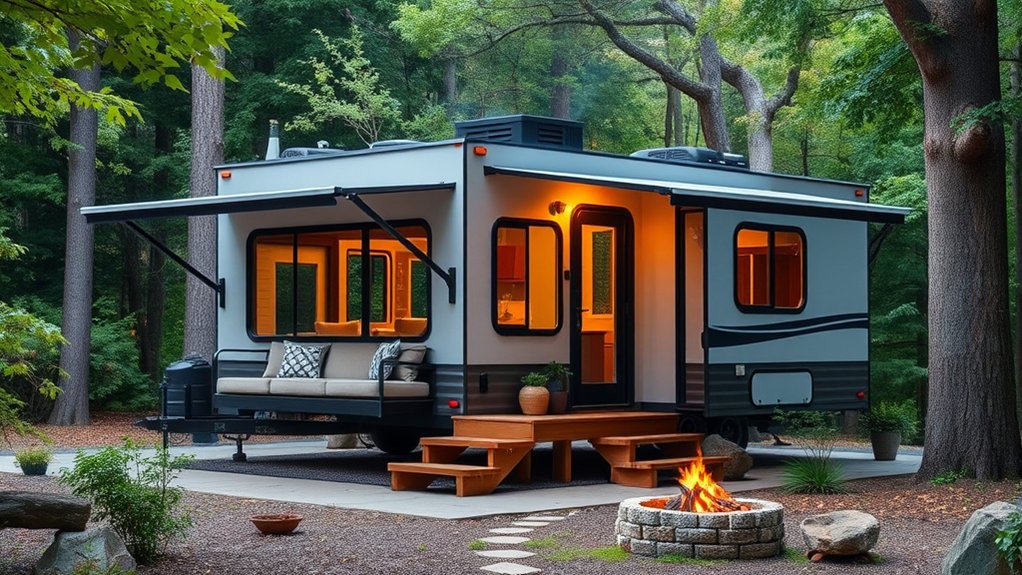
You’ll find that Park Model RVs come equipped with full-sized appliances like refrigerators and stoves, making cooking feel just like home.
Plus, climate control systems—including heating and air conditioning—keep your space comfortable no matter the season.
All these features come together to create a living environment that’s both practical and inviting.
Home-Like Interior Features
Because park model RVs are designed to offer more than just basic shelter, their interiors feature full-sized appliances like refrigerators, stoves, and microwaves that let you cook comfortably at home. You’ll find separate bedrooms, lofts, and spacious bathrooms with showers, creating functional living spaces.
Residential-style furniture and ample storage help maximize comfort and organization. Attractive finishes and customizable layouts ensure a cozy, home-like atmosphere tailored to your needs.
| Feature | Description | Benefit |
|---|---|---|
| Separate Bedrooms | Private sleeping areas | Enhanced privacy |
| Residential Furniture | Comfortable, stylish seating | Home-like comfort |
| Spacious Bathrooms | Showers and storage | Increased convenience |
| Ample Storage | Cabinets and closets | Organized living space |
Appliances And Climate Control
How do park model RVs maintain comfort and convenience throughout the year? They come equipped with full-sized appliances like refrigerators, stoves, and microwaves, giving you a true home-cooking experience. These microwaves and other appliances often vent outside, which improves safety and reduces indoor humidity.
For climate control, many models feature mini-split heat pumps or traditional HVAC units to keep temperatures comfortable in all seasons. Enhanced insulation and heating options help retain warmth during colder months.
Plus, advanced systems such as tankless water heaters and energy-efficient climate controls boost both sustainability and convenience.
With these features, you can enjoy a comfortable, well-equipped living space no matter the weather. It really makes park model RVs excellent for year-round use.
Who Uses Park Model RVs: And Why?
Who typically chooses park model RVs, and what makes them so appealing? Many retirees opt for these RVs as affordable, low-maintenance homes. They use them either seasonally or year-round, often parking in RV communities or on private land.
Vacationers and seasonal campers pick them for extended stays. They appreciate the home-like amenities that make their time away more comfortable.
Farmers and outdoor workers use park models as convenient temporary housing near job sites during busy seasons like harvest.
Rental property owners see park models as smart income sources. They lease them as short-term vacation rentals or guest houses.
Outdoor enthusiasts, such as hunters and anglers, rely on park models as cozy base camps for their activities.
If you value comfort, convenience, and versatility, park model RVs offer an ideal solution for diverse needs. They really fit a wide range of lifestyles and purposes.
Pros and Cons of Owning a Park Model RV
Owning a park model RV gives you a compact, comfortable living space equipped with full-sized appliances and residential amenities. It’s perfect for extended seasonal stays. You’ll appreciate its affordability and flexibility compared to traditional housing, along with customizable options that suit your lifestyle.
A park model RV offers compact, comfortable living with full amenities—ideal for affordable, flexible seasonal stays.
However, the limited size, capped at 400 square feet, can feel restrictive for long-term living. Also, these RVs usually lack full-time residential zoning and financing because they’re intended for seasonal or recreational use.
Their lightweight design makes them easy to move but can compromise durability under constant heavy use.
Ultimately, a park model RV offers a practical, cost-effective alternative for seasonal living. But you’ll need to weigh the trade-offs in space, durability, and legal use restrictions before deciding.
How to Choose the Right Park Model RV for Your Needs
First, think about the size and layout that will work best for your lifestyle, keeping in mind the 400-square-foot limit. It’s important to picture how you’ll actually live in the space.
Next, consider where you plan to place your park model RV. Different spots have different rules about mobility and placement, so knowing these ahead of time can save you headaches later.
Size and Layout
How do you determine the right size and layout for your park model RV? Since these RVs max out at 400 square feet, you need to balance space with your lifestyle. Think about how you’ll use it—seasonal trips, full-time living, or guest stays. This will guide your layout choice.
Options range from open floor plans to multi-room designs featuring bedrooms and lofts. Consider these factors to find the best fit: your intended use and how much living space you require.
Also think about storage needs and how the layout supports them.
Don’t forget local zoning restrictions that could impact the size and structure. There’s also the trade-off between easier transport with smaller models and added amenities with larger layouts.
Choosing wisely helps you enjoy comfort without compromising practicality or compliance.
Mobility and Placement
Where you place your park model RV and how often you plan to move it are key factors in choosing the right one for your needs. Most modern park models are designed for semi-permanent placement rather than frequent towing. So, if mobility is a priority, look for models specifically built for easier transport.
You’ll need a level, paved, or prepared site with proper hookups, whether in an RV park, campground, or private land.
Consider features like attached porches or decks that affect outdoor living and placement options.
Also, check local zoning laws and regulations to verify your chosen location complies with restrictions.
Frequently Asked Questions
Can I Finance a Park Model RV Like a Traditional Home?
You usually can’t finance a Park Model RV like a traditional home because lenders classify it as personal property.
However, some loans or mortgages might apply if it’s permanently affixed and meets specific criteria. So, it’s a good idea to check with lenders to see what options they offer.
Are Park Model RVS Allowed in All Campgrounds or Parks?
No, park model RVs aren’t allowed in all campgrounds or parks. You’ll need to check each location’s rules, as size limits, permits, and zoning restrictions can vary.
Always confirm with management before planning your stay. It’s better to be safe than sorry!
How Do Insurance Policies for Park Model RVS Work?
Insurance for park model RVs typically treats them as recreational rigs, requiring specialized coverage. You’ll want to watch what’s covered, from structure to stuff, since policies vary widely. This can impact your premiums, protection, and peace of mind.
What Maintenance Is Unique to Park Model RVS?
You’ll need to regularly inspect roofs, maintain composite siding, and service residential appliances.
Be sure to check insulation and mini splits often. Also, clean decks and awnings to keep everything looking good.
Don’t forget to winterize plumbing and systems to protect your park model RV seasonally. It’s all about keeping things in great shape year-round.
Can I Customize the Interior Layout of a Park Model RV?
You can definitely customize your park model RV’s interior layout. Manufacturers offer options like lofts, extra rooms, and flexible walls. This lets you tailor floor plans, cabinetry, and finishes to match your lifestyle and preferences.
It’s pretty cool because you get to make the space truly your own. Whether you want more room to relax or need extra storage, there are plenty of ways to adjust things. Just let the builders know what you’re thinking, and they’ll help bring your ideas to life.
Conclusion
Owning a park model RV offers a unique blend of comfort and mobility. It’s perfect for those seeking a cozy retreat. Did you know over 80% of park model owners use them as seasonal homes?
This really shows that they’re more than just recreational vehicles. By understanding their features and how they differ from mobile homes, you can confidently choose the right model for your lifestyle. That way, your investment becomes both practical and enjoyable.