

Where Are Winnebago RVs Made – Origin Story
You’ll find Winnebago RVs built primarily at their massive Forest City, Iowa facility, where skilled craftsmanship meets cutting-edge technology. Since 1958, this hub has grown into a high-tech, one-million-square-foot operation blending traditional woodworking with automation and digital design.
It’s not just about building RVs. It’s about durability, quality, and innovation rooted in a vibrant community. If you explore further, you’ll uncover how this legacy shapes Winnebago’s future in outdoor adventures and beyond.
Winnebago RV Manufacturing Locations Today
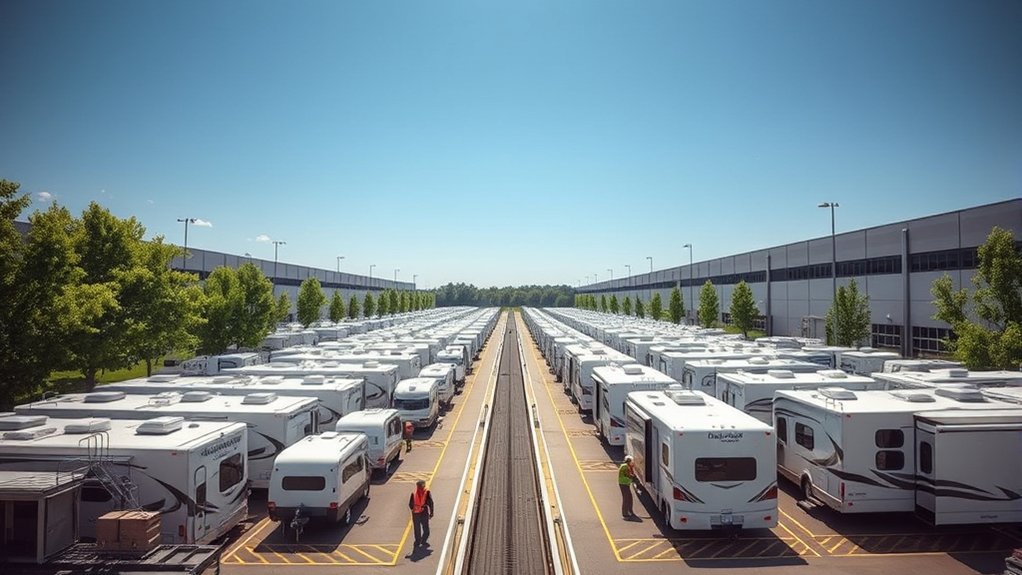
Although Winnebago RVs are known nationwide, most of their production happens at the bustling main facility in Forest City, Iowa. When you step into this large, busy plant, you’ll see a well-oiled operation where a significant portion of Winnebago’s recreational vehicles come to life.
Winnebago’s heart beats strongest at its lively Forest City, Iowa plant, crafting most of their iconic RVs.
The company has invested heavily in expanding this facility, boosting both its capacity and workforce to meet growing demand.
Beyond Forest City, Winnebago runs additional production and service centers scattered across the United States. These locations work together strategically, so you get efficient service and quicker delivery throughout the North American market.
This network guarantees that Winnebago maintains quality while keeping up with the fast pace of today’s RV industry.
How Forest City Became Winnebago’s Production Hub

When Winnebago chose Forest City, Iowa, as its main manufacturing site in the 1960s, it tapped into a community rich with skilled labor and perfectly positioned in the heart of the U.S. market. This location allowed Winnebago to efficiently serve customers nationwide while leveraging a dedicated workforce.
Over time, the Forest City facility has grown into a sprawling complex exceeding one million square feet, showcasing innovation and quality in RV production.
| Feature | Details |
|---|---|
| Location | Forest City, Iowa |
| Facility Size | Over 1 million sq. ft. |
| Workforce | Skilled labor pool |
| Recent Expansion | 17-acre marine manufacturing addition |
You’ll find that Forest City isn’t just a factory. It’s Winnebago’s beating heart of craftsmanship and growth.
History of Winnebago’s Forest City Factory

Since its founding in 1958, Winnebago’s Forest City factory has stood as the cornerstone of the company’s manufacturing efforts. Nestled in Forest City, Iowa, this sprawling facility covers multiple acres and employs thousands, buzzing with activity year-round.
You’ll find it’s more than just a production site; it’s where innovation takes shape, with assembly lines, quality control, and development all under one roof.
Over the decades, the factory has grown to meet demand, expanding its footprint and integrating advanced technologies to support new RV models.
When you think about Winnebago’s legacy, this factory really embodies their commitment to excellence and progress. It anchors the company’s identity and ensures that each RV rolling out reflects decades of expertise and dedication.
Winnebago’s Manufacturing Process and Craftsmanship
At Winnebago’s Forest City plant, they blend advanced technology with skilled craftsmanship to build every RV. From framing to finishing, experienced technicians make sure each detail meets high standards. They don’t cut corners.
Plus, there are rigorous quality control checks throughout the process. That way, you end up with a reliable, well-crafted vehicle every time. It’s all about making sure you get the best.
Factory Operations Overview
Although many RV manufacturers outsource various stages of production, Winnebago keeps most of its operations under one roof at their expansive Forest City, Iowa facility. Here, you’ll find advanced assembly lines seamlessly integrated with skilled craftsmen, ensuring each RV is built with precision and care.
The factory handles everything from initial design and construction to rigorous quality checks before any vehicle leaves the floor. Winnebago’s investment in modernizing this plant means increased capacity and improved efficiency, so you benefit from both innovation and reliability.
This all-encompassing approach allows the company to maintain tight control over every stage of manufacturing, emphasizing attention to detail and durability. When you see a Winnebago RV, you’re witnessing a well-orchestrated operation rooted in expertise and cutting-edge technology.
Skilled Craftsmanship Techniques
When you step inside a Winnebago RV, you immediately notice the blend of traditional craftsmanship and modern precision that defines their manufacturing process. Skilled technicians use a mix of time-honored techniques and advanced automation to create interiors that are both durable and beautiful.
You’ll appreciate how detailed woodworking and cabinetry showcase expert handcrafting. Upholstery methods provide comfort and long-lasting quality.
Plus, custom-built components bring unique functionality and style. Hand-finished touches add a refined, personalized feel.
This approach reflects decades of experience, making sure each RV stands out for its reliability and aesthetic appeal. Winnebago’s skilled craftsmanship techniques make every journey inside their vehicles a testament to quality and thoughtful design.
Quality Control Measures
The skillful craftsmanship behind every Winnebago RV doesn’t end with assembly. It’s reinforced by rigorous quality control measures that keep standards consistently high. You’ll notice detailed inspections at every production stage, from frame assembly to final finishes.
Winnebago employs advanced testing to verify durability, safety, and functionality before each RV leaves the factory. Skilled technicians meticulously hand-finish components, making sure the brand’s reputation for excellence stays intact. Continuous improvement initiatives help address potential issues and maintain consistency across all units.
Here’s a quick overview of their quality control focus:
| Stage | Inspection Type | Purpose |
|---|---|---|
| Frame Assembly | Structural Check | Confirm frame integrity |
| Component Testing | Durability & Safety | Verify long-term reliability |
| Hand Finishing | Visual & Functional | Maintain premium appearance |
| Final Inspection | Exhaustive Review | Confirm overall quality |
Distinctive Design Features and Build Quality of Winnebago RVs
Because Winnebago RVs combine durable materials with meticulous craftsmanship, you can expect a level of build quality that stands up to the demands of the road. Their distinctive design features aren’t just about looks. They’re crafted for real-world functionality and lasting performance.
When you choose a Winnebago, you benefit from precision woodworking that delivers seamless, sturdy interiors. The fiberglass exteriors are designed for durability and sleek style. Plus, the functional layouts maximize space and comfort.
Every rig goes through rigorous testing to make sure it meets strict quality standards. These elements come together to create RVs that are both visually appealing and highly practical.
You’ll notice the attention to detail in every corner. It makes your travel experience more enjoyable and dependable. Winnebago truly balances innovation with craftsmanship in every model.
How Technology Powers Winnebago RV Production
Although craftsmanship remains at Winnebago’s core, technology plays an essential role in powering their RV production. You’ll find automated assembly lines and robotics boosting precision and speeding up manufacturing.
Digital tools like CAD and 3D modeling help tailor each RV design efficiently. Advanced testing facilities verify safety and performance, guaranteeing you get a reliable vehicle.
This tech-savvy approach also lets Winnebago respond quickly to market demands with scalable production.
| Technology Aspect | Purpose |
|---|---|
| Automated Assembly | Enhances precision and efficiency |
| CAD & Digital Modeling | Streamlines design and customization |
| Robotics & Automation | Improves quality control |
| Testing & Diagnostics | Ensures safety and performance |
This fusion of tech and tradition delivers the quality you expect.
Sustainability Efforts in Winnebago RV Manufacturing
As Winnebago continues to innovate, it’s embracing sustainability at every step of RV manufacturing. You’ll notice their commitment to eco-friendly practices aimed at reducing environmental impact.
Here’s how they’re making a difference:
Here’s how they’re driving positive change through thoughtful, eco-friendly innovation in RV manufacturing
- Using lightweight, recyclable materials to improve fuel efficiency and minimize waste.
- Investing in energy-efficient facilities that cut down on carbon emissions.
- Exploring renewable energy sources like solar power to sustainably run manufacturing plants.
- Designing RVs with environmentally conscious principles, staying ahead of green industry trends.
It’s pretty clear they’re serious about making RVs that are better for the planet. And honestly, it’s refreshing to see a company putting this much thought into sustainability while still focusing on innovation.
Winnebago RV Product Features and Benefits
When you step inside a Winnebago RV, you’ll immediately notice the blend of innovative design and practical features crafted to enhance your travel experience. You’ll find advanced digital control systems that simplify managing your RV’s functions, along with energy-efficient appliances that keep your trips eco-friendly and cost-effective.
The interiors showcase high craftsmanship and smart use of space, offering customizable options to fit your unique travel needs. Durable materials and modern amenities ensure comfort and reliability no matter where the road takes you.
Whether you’re after traditional style or contemporary convenience, Winnebago’s thoughtful design and robust build quality deliver an unparalleled blend of longevity, comfort, and functionality. It all comes together to make every journey more enjoyable and hassle-free.
Winnebago’s Expansion Into the Marine Market
You’ll find that Winnebago’s acquisition of Chris-Craft marks an exciting leap into the marine market. It’s a great mix of rich brand legacy and expert craftsmanship.
They’re expanding the Sarasota, Florida plant to boost production and create hundreds of new jobs. This really shows their serious commitment to growth.
But this move isn’t just about boats. It’s about broadening your outdoor lifestyle options with quality and innovation.
Chris-Craft Acquisition Details
Although Winnebago is best known for its iconic RVs, the company has boldly expanded into the marine market by acquiring Chris-Craft, a legendary boat manufacturer with roots dating back to 1874. This strategic move lets you experience craftsmanship and innovation in both land and water adventures.
Here’s what the Chris-Craft acquisition means for you:
- Winnebago leverages Chris-Craft’s century-old reputation for quality boats.
- It expands the Sarasota, Florida plant, adding 250 skilled employees.
- The acquisition fits Winnebago’s plan to diversify within the outdoor lifestyle sector.
- Multi eight-figure investments will support new models and modernized manufacturing.
This acquisition opens fresh waters for Winnebago, blending tradition with innovation for your outdoor lifestyle.
Marine Market Growth Plans
Building on the Chris-Craft acquisition, Winnebago is set to grow its marine market presence considerably. You’ll see them investing heavily in the historic boatmaker’s Sarasota facility, pumping multiple eight-figure sums into expanding production capacity. This means adding 250 new employees and boosting output without changing Chris-Craft’s existing lineup of 18 models.
Winnebago isn’t rushing to introduce new boats; instead, they’re focusing on scaling quality manufacturing and meeting growing demand.
This strategic move fits perfectly with their broader plan to diversify within the outdoor lifestyle sector. They’re opening fresh revenue streams beyond RVs.
Brand Legacy and Craftsmanship
Since Winnebago Industries has spent nearly 150 years perfecting craftsmanship and reliability in recreational vehicles, it’s no surprise they’re bringing that same dedication to the marine market through Chris-Craft.
When you explore Winnebago’s brand legacy and craftsmanship, you’ll see how their expertise translates seamlessly. They leverage decades of experience in durable, innovative manufacturing.
Their investment in the Sarasota, Florida facility boosts production quality for Chris-Craft boats.
They also expand their skilled workforce, ensuring every product meets high standards.
Plus, they merge traditional boatbuilding artistry with modern manufacturing techniques. It’s a blend of old and new that really sets them apart.
The Chris-Craft Acquisition’s Impact on Winnebago’s Future
When you look at Winnebago’s recent acquisition of Chris-Craft, it’s clear this move doesn’t just expand their product lineup. It actually signals a bold step into the marine industry.
By leveraging Winnebago’s capital and resources, Chris-Craft is set to accelerate growth, especially by expanding manufacturing capacity at its Sarasota plant.
Winnebago plans to invest multiple eight-figure sums to boost production and grow the workforce. This will enhance efficiency and innovation.
It’s a strategic move that opens new revenue streams and broadens Winnebago’s outdoor lifestyle portfolio, strengthening its market position.
For you, this means Winnebago isn’t just committed to quality RVs. They’re evolving into a diversified leader in recreational experiences, blending land and water adventures for years to come.
Frequently Asked Questions
What Inspired the Name “Winnebago”?
You’ll find the name “Winnebago” inspired by the Ho-Chunk tribe, symbolizing adventure and connection to nature. It reflects the brand’s spirit of exploration, linking you to a rich Native American heritage and outdoor lifestyle.
It’s pretty cool how a name can carry so much meaning, right? It’s all about embracing the spirit of adventure and the great outdoors. That’s what Winnebago stands for.
Who Founded Winnebago and When?
Back in 1958, before smartphones ruled, Earl and Maye Riemersma founded Winnebago Industries. They combined vision and grit, launching a brand that’d redefine travel with innovative, quality recreational vehicles.
You’d love exploring them even today. It’s pretty cool how their idea still drives adventure for so many people.
How Did Winnebago Influence RV Culture in America?
You see, Winnebago transformed RV culture by making motorhomes affordable, reliable, and comfortable. They sparked adventure, inspired outdoor lifestyles, and popularized RV travel.
This made it accessible and exciting for everyday Americans like you and me.
What Were Winnebago’s First RV Models?
You’ll find Winnebago’s first RV models were the Mini and the Brave, both introduced in the 1970s. They combined innovative designs with comfort and durability, setting the stage for Winnebago’s lasting impact on family travel and adventure.
These early models really made a mark. They showed people that RVs could be both practical and fun. It was the start of something big for Winnebago and RV enthusiasts everywhere.
How Has Winnebago’s Brand Logo Evolved Over Time?
Imagine a Victorian-era telegram announcing Winnebago’s logo evolution: you’ll see it shift from vintage Americana emblems to sleek, bold fonts and a modern “W” symbol.
It embraces minimalism and clarity to keep pace with today’s trends. The change really shows how the brand has grown over time.
It’s pretty cool to see how something as simple as a logo tells a story about style and identity through the years.
Conclusion
When you choose a Winnebago RV, you’re stepping into a legacy built with precision and passion. It’s like a well-tuned engine driving you toward adventure. From Forest City’s skilled hands to innovative design and sustainable practices, every detail fuels your journey with reliability and comfort.
Whether on the road or water, Winnebago’s craftsmanship guarantees you’re not just traveling. You’re embracing a lifestyle where quality and innovation steer the way.


