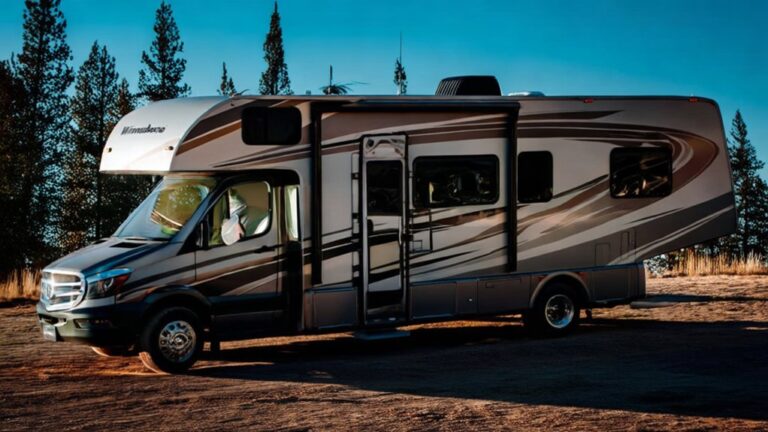
When Was Winnebago Founded – A Quick History
Winnebago was founded on February 12, 1958, in Forest City, Iowa. It was originally named Modernistic Industries by John K. Hanson, who wanted to create affordable travel trailers.
In 1960, the company rebranded to Winnebago Industries to reflect its regional roots. Around this time, it also shifted its focus toward motorhomes. By introducing innovative, cost-effective designs, Winnebago made RV travel accessible for many people.
Over the years, the company expanded its product line and became an American icon. You’ll discover how Winnebago transformed the RV industry and culture.
When and Where Was Winnebago Founded?
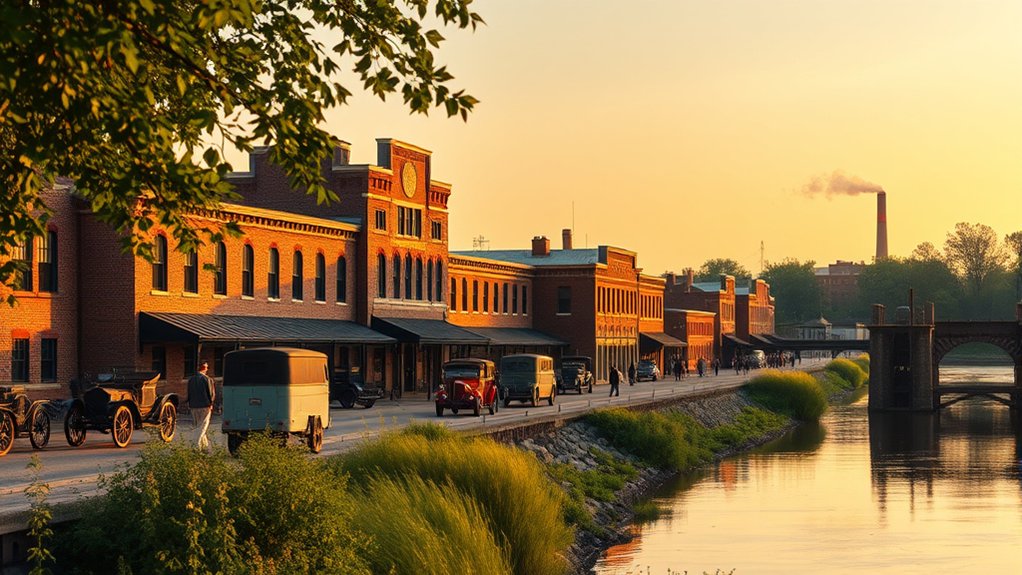
Although you might know Winnebago for its iconic motorhomes today, the company actually started on February 12, 1958, in Forest City, Iowa. It was founded by John K. Hanson and originally operated under the name Modernistic Industries.
Winnebago began as Modernistic Industries in 1958, founded by John K. Hanson in Forest City, Iowa.
At first, the company focused on building travel trailers before later shifting its attention to motorhomes.
In 1960, the company rebranded as Winnebago Industries, choosing the name to reflect its local heritage, inspired by Iowa’s Winnebago County. The headquarters remained in Forest City, where manufacturing continues to this day.
This strong connection to its roots has been a consistent part of Winnebago’s identity since its inception. It anchors the company firmly in the Midwest while evolving its product offerings to meet changing market demands.
Who Was John K. Hanson and His Role in Founding Winnebago?
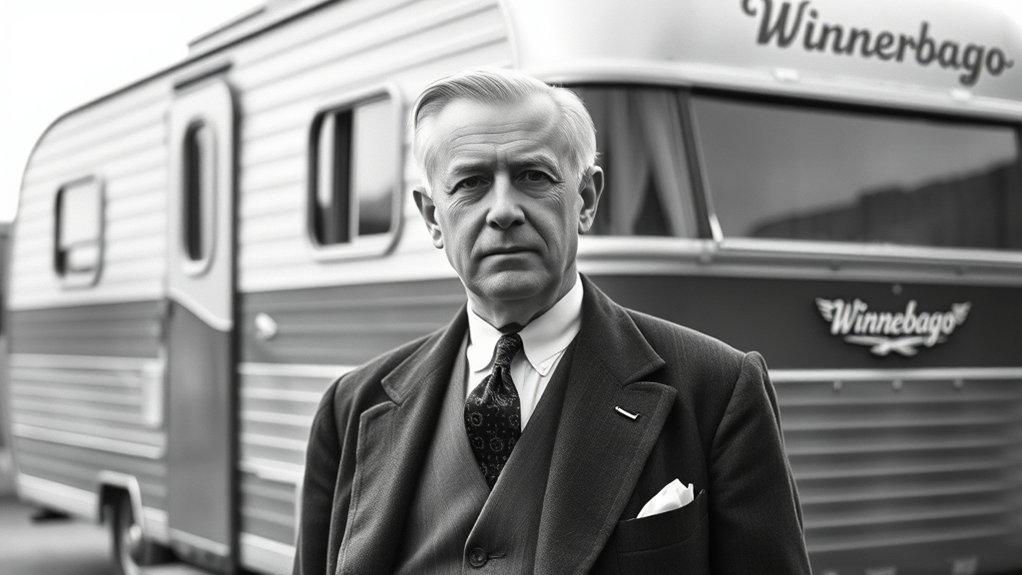
You’ll want to understand how John K. Hanson’s vision and leadership shaped the foundation of Winnebago. It all started with Modernistic Industries, where he took the helm and steered the company through some pretty tough economic challenges.
Along the way, he pushed for important innovations that really set the stage.
His role was absolutely key in transforming what began as a local startup into a lasting leader in the RV industry. Without his guidance, Winnebago mightn’t have become the name we know today.
Early Life and Vision
When John K. Hanson founded the company that would become Winnebago Industries on February 12, 1958, he set out to bring economic growth to Forest City, Iowa, amid an economic downturn. You’ll find his early vision focused on creating affordable, innovative recreational vehicles that could transform American road trips.
Hanson started by partnering with a California travel trailer manufacturer to build RVs locally, soon taking full ownership.
His goal wasn’t just business success; it was about revitalizing a struggling town through manufacturing jobs.
Initially operating as Modernistic Industries, he renamed it Winnebago Industries in 1960 to reflect a broader ambition.
Understanding Hanson’s early life and vision helps you grasp the foundation of a company that reshaped RV culture with practical innovation and community impact.
Founding Modernistic Industries
Since the economic downturn threatened Forest City, Iowa’s stability in the late 1950s, John K. Hanson took decisive action by founding Modernistic Industries on February 12, 1958.
You’d learn he initially partnered with a California travel trailer company to produce RVs locally, aiming to boost the area’s economy.
Soon after, Hanson assumed full ownership and rebranded the company. By 1960, he renamed it Winnebago Industries, honoring Winnebago County, Iowa.
Hanson’s role was pivotal in setting the company’s direction toward manufacturing affordable, innovative recreational vehicles.
His leadership during this formative period laid a solid foundation for what Winnebago would become, focusing on quality and accessibility without sacrificing ingenuity.
You can see his vision clearly in the company’s early evolution.
Leadership and Innovations
How did John K. Hanson shape Winnebago Industries? You should know he founded the company on February 12, 1958, in Forest City, Iowa, initially calling it Modernistic Industries.
During tough economic times, Hanson pushed forward with a clear vision: making motorhomes affordable for middle-class families.
You’ll appreciate how he introduced innovative production techniques and materials that lowered costs and improved quality.
By 1960, he renamed the company Winnebago Industries, signaling a new era.
Under Hanson’s leadership, Winnebago didn’t just build recreational vehicles; it became a symbol of mobility and innovation.
His role was pivotal in popularizing motorhomes, turning them into accessible lifestyle choices rather than luxury items.
Winnebago’s Original Name: Modernistic Industries and Early Products

Although you may know the company as Winnebago today, it originally started as Modernistic Industries in 1958. It was founded by John K. Hanson in Forest City, Iowa.
Winnebago began as Modernistic Industries in 1958, founded by John K. Hanson in Forest City, Iowa.
At the beginning, the company focused on making a 15-foot towable travel trailer priced at $895.
The goal was to offer affordable and innovative recreational vehicles for middle-class families. Hanson quickly bought out the original investors, which set the stage for future changes.
The early products were practical, blending functionality with cost-effectiveness to meet what consumers needed.
This initial phase under the Modernistic Industries name laid the foundation for the company’s growth and innovation in the RV market. It emphasized accessibility and quality in its designs before moving on to the name we all recognize today.
Why Did Winnebago Change Its Name in 1960?
After establishing itself as Modernistic Industries and gaining a foothold in the RV market, the company took a strategic step in 1960 by changing its name to Winnebago. This change better reflected its connection to Iowa’s Winnebago County and honored the local region.
By adopting the Winnebago name, the company aimed to create a strong regional brand identity that stood out in the growing recreational vehicle industry.
The rebranding also coincided with a shift toward manufacturing self-contained motorhomes, signaling a new corporate identity. This name change helped establish a recognizable brand that would become synonymous with motorhomes nationwide.
It enhanced market recognition and distinguished the company from competitors during a period of industry expansion.
How Winnebago Made RVs More Affordable and Accessible
Because Winnebago embraced innovative manufacturing techniques in the 1960s, it was able to lower production costs and make motorhomes affordable for middle-class families. You can see this impact in several ways:
- The Thermo-Panel sidewall improved durability while cutting material costs.
- Automotive-style assembly lines increased production efficiency.
- The Winnebago Brave, launched in 1966, offered an affordable, self-contained motorhome option.
- Prices were roughly half that of competitors, broadening access to RV ownership.
These efforts made RV travel more accessible, transforming it from a luxury into a popular leisure activity.
Key Early Innovations That Boosted Winnebago’s Success
Winnebago’s success in making motorhomes affordable stemmed from a series of early innovations that redefined the RV industry. You’ll notice their introduction of the Thermo-Panel sidewall in the early 1960s made RVs lighter, stronger, and more durable, improving overall performance.
When they launched the F-17 model in 1966, they set a new standard by offering it at roughly half the price of competitors. This move made motorhome travel accessible to middle-class families. Pretty impressive, right?
You’ll also find that Winnebago’s focus on cost-effective manufacturing techniques played an essential role in their growth. Plus, their use of lightweight materials and innovative chassis designs enhanced fuel efficiency and vehicle longevity.
All of these factors laid the foundation for the brand’s enduring success in the motorhome market. It’s clear their early innovations really made a difference.
Winnebago’s Market Growth and Expansion in the 1970s
In the 1970s, Winnebago really grew by expanding its lineup. They added larger Class A motorhomes as well as smaller Class C models to cater to different customer needs. It was a smart move that helped them reach more people.
You’ll also find out about some key product innovations during this time. For instance, they started using lightweight materials and introduced new interior designs. These updates kept the brand competitive in a growing market.
All these changes worked together to boost Winnebago’s market presence. As a result, they appealed to a broader range of RV enthusiasts and continued to grow steadily.
Product Innovations Introduced
As the 1970s unfolded, Winnebago introduced several groundbreaking product innovations that reshaped the recreational vehicle market. You’d notice how these advancements set new standards in the industry.
The Minnie Winnie debuted as a smaller, fuel-efficient motorhome built on a Dodge B-series van chassis, appealing to practical travelers. Winnebago pioneered Thermo-Panel sidewall construction, reducing weight while enhancing durability.
They also expanded their lineup with larger Class A motorhomes, strengthening their market presence.
The company became the first RV manufacturer to produce 100,000 motorhomes, demonstrating rapid growth. These innovations not only improved vehicle functionality but also reinforced Winnebago’s reputation as an industry leader during this transformative decade.
Expansion of Model Lineup
Building on their innovative product developments, Winnebago broadened their model lineup throughout the 1970s to meet a wider range of customer preferences and budgets. They introduced larger Class A motorhomes alongside smaller Class C models, expanding choices for various travel needs.
The launch of the Minnie Winnie in 1973 gave you an accessible option combining comfort and affordability. Around the same time, the Winnebago Brave became an icon, embodying the spirit of American road trips.
Winnebago also developed new floorplans and features that enhanced traveler comfort and vehicle functionality.
This decade marked a significant growth phase, cementing Winnebago’s reputation as a leading RV manufacturer with diverse models designed to fit different lifestyles and budgets. You could find a Winnebago suited for almost any recreational vehicle enthusiast.
How Winnebago Expanded Its Product Line Over Time
Though Winnebago started by producing towable trailers, it quickly expanded into self-contained motorhomes by 1966, marking a significant shift in its product strategy.
Over time, you’ll see how the company broadened its product line to meet diverse customer demands:
In the 1970s and 1980s, Winnebago introduced Class A and Class C motorhomes, catering to varying preferences.
The 1980s saw the launch of fuel-efficient vans like the Lesharo, Phasar, and Centauri.
To capture luxury and niche markets, Winnebago developed models such as the Vectra and Micro Mini.
More recently, the company added camper vans like the Travato and explored electric prototypes like the eRV2.
This strategic expansion allowed Winnebago to evolve from a trailer producer to a versatile RV manufacturer.
Winnebago’s Lasting Impact on the American RV Industry
You’ll see how Winnebago’s innovative production methods and lightweight materials set new industry standards that changed motorhome manufacturing forever.
The brand didn’t just build vehicles; it became a symbol of American freedom and adventure. So, let’s dive in and explore the key milestones and cultural legacy that really cemented Winnebago’s lasting impact on the RV world.
Industry Innovation Milestones
Five key innovations by Winnebago have profoundly shaped the American RV industry, setting standards in construction, affordability, and efficiency. You’ll find these milestones essential in understanding their impact.
In the 1960s, Winnebago introduced the Thermo-Panel sidewall, a lightweight, durable material that transformed RV construction. The 1966 launch of their first motorhome offered models at about half the price of competitors, dramatically improving affordability.
By 1977, Winnebago became the first manufacturer to produce 100,000 motorhomes, establishing a new industry benchmark.
Fuel-efficient models like the Minnie Winnie in 1973 and luxury Class B motorhomes on Mercedes-Benz Sprinter chassis in 2005 pushed efficiency and comfort forward.
These innovations highlight how Winnebago consistently set high standards in the RV market. It’s clear they’ve played a huge role in shaping what we expect from motorhomes today.
Cultural Influence and Legacy
Because Winnebago has become synonymous with motorhomes, its cultural influence extends far beyond manufacturing. When you think of American mobility and leisure, Winnebago often comes to mind as a symbol of freedom and adventure.
You’ve likely seen Winnebago featured in music videos, TV shows, and even political campaigns. That just shows how deeply it’s rooted in pop culture and broader societal stories.
This brand evokes nostalgia and the open-road spirit, connecting generations through shared travel experiences. It’s pretty amazing how something as simple as a vehicle can create that kind of bond.
By shaping the identity of the American RV industry, Winnebago has fostered a strong community around exploration and independence.
Its legacy isn’t just about vehicles. It’s about embedding a lifestyle and cultural symbol that continues to influence how you and many others experience road travel.
In many ways, Winnebago represents more than just a motorhome — it’s a way of life.
Why Winnebago Remains an Icon of American Road Culture
Although many brands have come and gone, Winnebago has remained a defining symbol of American road culture for over sixty years. You’ll recognize it as a representation of freedom, adventure, and mobility.
Here’s why Winnebago continues to hold this iconic status:
- Its iconic design and widespread presence have made the brand synonymous with the term “motorhome.”
- It played a key role in popularizing RV travel, shaping the modern American leisure lifestyle and open-road concept.
- Affordable, innovative models made RV ownership accessible to middle-class families, integrating Winnebago into social history.
- Its cultural significance is reinforced by appearances in pop culture, media, and political campaigns.
These factors guarantee Winnebago remains a core part of American road culture.
Frequently Asked Questions
What Materials Are Used in Winnebago Motorhome Construction?
Winnebago motorhomes use lightweight Thermo-Panel sidewalls, aluminum, composite panels, and foam core insulation. They also feature a steel chassis and moisture-resistant interior materials.
These choices boost durability, energy efficiency, safety, and make maintenance easier for your RV experience. It’s all about giving you a reliable and comfortable ride on the road.
How Does Winnebago Ensure Quality Control Today?
You know what they say, “Measure twice, cut once.” Winnebago uses advanced tech, rigorous testing, real-time tracking, and audits by their Quality Assurance team to guarantee every motorhome meets strict standards and exceeds customer expectations.
They don’t just check once and move on. It’s a constant process to make sure everything stays top-notch. That way, customers get the best every time.
What Are the Most Popular Winnebago RV Models Currently?
You’ll find the Winnebago Revel, Travato, Micro Minnie, View, Navion, Outlook, and Minnie Winnie among the most popular models today. Each offers unique features like off-road capabilities, luxury, fuel efficiency, and versatile travel options.
These models really cover a range of needs, whether you’re looking for something rugged or more comfortable for long trips. It’s pretty cool how Winnebago has options that fit different travel styles and preferences.
Does Winnebago Offer Customization Options for Their RVS?
You can paint your Winnebago canvas with countless customization options. They let you pick layouts, colors, tech, and luxury finishes. This way, you can tailor your RV’s comfort and style just the way you want.
You can do this through factory-direct or dealer-supported bespoke services. It’s all about fitting your unique journey perfectly.
Where Can I Find Winnebago Service and Repair Centers?
You can find Winnebago service and repair centers at authorized dealerships nationwide. Use Winnebago’s dealer locator tool online or contact customer service for help locating certified centers near you. They offer maintenance, repairs, and warranty support.
If you’re planning some upkeep or need a fix, reaching out to these centers is your best bet. They’re equipped to handle all kinds of Winnebago needs. So, don’t hesitate to get in touch with them whenever you need assistance.
Conclusion
You’ve seen how Winnebago’s journey subtly transformed the RV landscape, making adventure more within reach. While its name changed and products evolved, the company quietly became a cornerstone of American road culture.
Even as trends shift, Winnebago’s influence lingers, inviting you to explore and create your own stories on the open road. Its legacy isn’t just about vehicles; it’s about the promise of freedom and discovery that never truly fades.