Where Can I Park My RV Long Term – Best Options
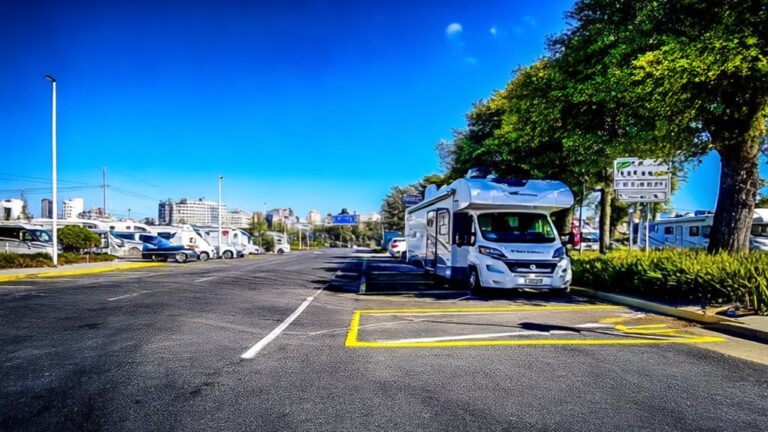
You can park your RV long term at private resorts or campgrounds with designated extended stay sections. These spots usually offer full hookups and secure, level sites.
Look for places with amenities like laundry, Wi-Fi, and community spaces to make your stay comfortable and social.
For budget-friendly options, consider state parks, federal lands, or Walmart lots with permission. Just keep an eye on stay limits and safety.
If you want to explore more tips on finding the perfect spot and managing costs, keep going.
How to Choose the Right Long-Term RV Site
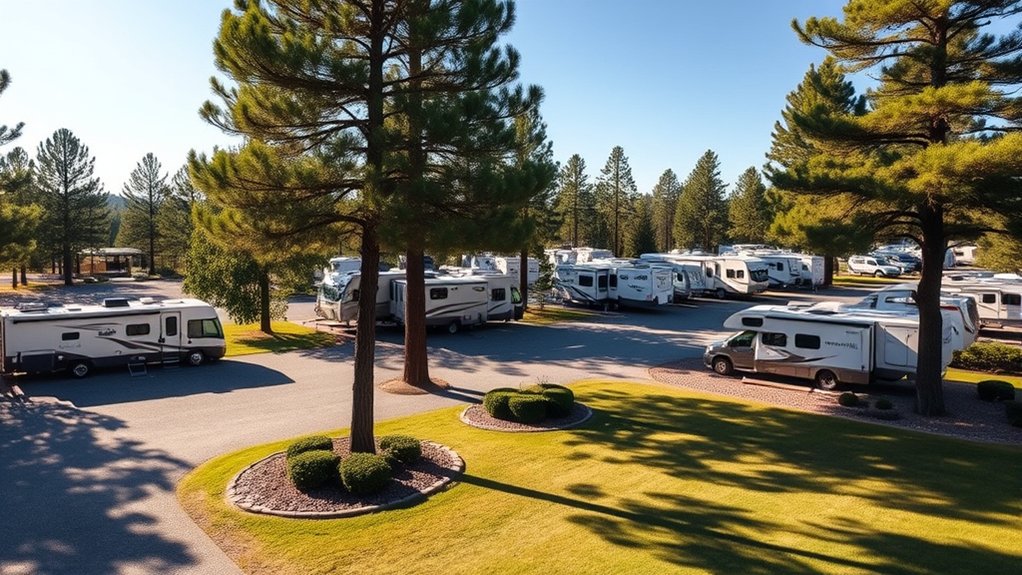
When choosing the right long-term RV site, you’ll want to focus on campgrounds that offer designated sections specifically for extended stays. This way, you can settle into a stable community with familiar faces.
Look for full hookups like water, electric, and sewer to keep your daily life comfortable and hassle-free.
Security matters, so prioritize places with monitored, secure areas where you can relax without worry.
Amenities like laundry facilities, reliable Wi-Fi, and maintenance services add convenience and make daily routines smoother.
Also, check the site layout and terrain carefully.
You’ll need level ground and enough space to fit your RV and any outdoor gear comfortably.
By considering these factors, you’ll find a spot that not only meets your needs but also makes long-term living enjoyable and stress-free.
It’s all about finding a place that feels like home.
Types of RV Parks Ideal for Long-Term Parking

Finding the perfect long-term RV site means understanding the different types of parks designed to accommodate extended stays. You’ll want to look for parks that offer comfort, security, and community tailored for longer visits.
Here are three common types ideal for long-term parking:
- Private RV Resorts: These often have designated long-term or seasonal sites with full hookups and private outdoor spaces. They provide a resort-like living experience that feels more like home than just a parking spot.
- Campgrounds with Long-Term Sections: Many campgrounds separate long-term residents into specific areas. This setup helps foster a friendly community and adds an extra layer of security.
- Mixed-Use Parks: Some parks combine short-term and long-term sites. This gives you flexibility if your stay length changes or if you want to switch things up.
Try to avoid state and federal parks for long-term parking. They usually restrict stays to about two weeks, which isn’t ideal if you want to stay longer.
Essential Amenities for Extended RV Stays

Because you’ll be living in your RV for an extended period, having essential amenities is crucial to maintain comfort and convenience. Look for full hookups like water, sewer, and 50-amp electrical service to keep your stay smooth.
Level gravel or paved pads make setup easy and stable. Laundry facilities, Wi-Fi, and communal areas support daily needs and socializing. Privacy fencing or landscaping offers a sense of seclusion, while extras like mail service and on-site maintenance simplify life.
| Amenity | Benefit | Why It Matters |
|---|---|---|
| Full Hookups | Continuous utilities | Comfort and functionality |
| Level Pads | Stable setup | Prevents damage |
| Laundry Facilities | Convenience | Saves time and effort |
| Wi-Fi | Connectivity | Work and entertainment |
| Privacy Features | Seclusion | Peaceful living |
Top Long-Term RV Parks Near North Augusta
Although North Augusta offers an array of RV parks, those catering to long-term stays stand out by providing dedicated spaces that balance community, privacy, and security. When searching for the perfect spot, you’ll want parks that not only offer comfort but also create a safe environment with familiar neighbors nearby.
Many parks separate seasonal or long-term sites from transient areas, ensuring a peaceful atmosphere for extended stays. It really makes a difference when you can relax knowing your surroundings are stable and welcoming.
Consider these top options near North Augusta:
- KOA parks, known for flexible long-term and short-term site options.
- Campgrounds with designated long-term sections, enhancing security and social opportunities.
- Locations with monitored sites, giving you peace of mind while you enjoy your stay.
These parks support your lifestyle, making long-term RV living both practical and enjoyable. It’s all about finding a place that feels like home, wherever the road takes you.
Building Community in Long-Term RV Parking Areas
When you settle into a long-term RV spot, how you interact with your neighbors really shapes the community’s vibe and sense of security.
You’ll probably notice that shared amenities naturally become gathering spots where people connect and build trust.
Just remember to be mindful of boundaries while enjoying these spaces—it helps keep the environment welcoming and safe for everyone.
Neighborly Interaction Patterns
If you want to enjoy a sense of belonging while parking your RV long term, understanding neighborly interaction patterns is key. Long-term residents often settle near familiar neighbors or common areas, creating a balance between connection and privacy.
How you engage with others shapes the community’s atmosphere, so respecting boundaries and campground etiquette is essential.
Here’s what you can expect in these interactions:
- Informal networks emerge, where neighbors share tools, advice, and support.
- Proximity to quiet corners or social spots helps you choose your level of engagement.
- Teaching and modeling respectful behavior, especially around children, strengthens community bonds.
Community Security Measures
Because long-term RV parking areas prioritize both safety and connection, they often implement robust community security measures that help you feel secure while fostering a sense of belonging. You’ll find gated access, surveillance cameras, and on-site personnel working together to protect the community.
Neighbors and staff often monitor designated sections, creating an informal neighborhood watch that enhances safety. Boundaries are respected, and everyone’s encouraged to act considerately to prevent conflicts.
These secure environments don’t just focus on protection. They build community through shared spaces like fire pits and outdoor kitchens where you can easily connect with others.
Shared Amenities Usage
Security and community spirit go hand in hand in long-term RV parking areas, and shared amenities play a big role in bringing neighbors together. When you park long term, you’ll find designated communal spaces like fire pits, picnic spots, and outdoor kitchens that encourage socializing.
Many parks also host events like barbecues, holiday celebrations, or group outings that help you connect with fellow residents. Shared facilities such as laundry rooms, bathhouses, and recreation centers are conveniently placed to foster interaction while keeping your private site separate.
These shared amenities offer more than convenience; they build a welcoming community through organized social activities that engage residents, collaborative upkeep of common areas, and spaces designed to balance privacy and togetherness.
Using these amenities, you’ll enjoy a vibrant, connected long-term RV lifestyle.
Managing Costs for Long-Term RV Parking
You’ll want to explore affordable parking options, like state parks or retail lots, to keep costs down during your long-term stay. It’s all about finding a balance between what you’re paying each month and the amenities you actually need.
Budgeting carefully can make a big difference. Sometimes, it’s worth asking if private campgrounds are open to negotiating their rates. You never know until you try!
Finding the right spot doesn’t just save you money—it also means you’ll have a comfortable place to park your RV. So take your time and weigh your options.
Affordable Parking Solutions
When managing long-term RV parking costs, exploring affordable options can make a big difference in your budget. You don’t have to settle for pricey campgrounds when several budget-friendly spots exist.
For example, many Walmart SuperCenters allow overnight RV parking if you call ahead and get permission.
Truck stops like Flying J also offer economical overnight stays, often between $10 and $20 per night.
Additionally, state and federal recreation areas, such as Corps of Engineers parks, provide low-cost or even free parking with basic amenities.
Consider these affordable choices:
- Walmart SuperCenters with store management approval
- Truck stops offering inexpensive overnight rates
- State and federal parks with budget-friendly or free parking
Using these options, you can keep your RV parked safely without breaking the bank.
Budgeting Long-Term Stays
Finding affordable parking spots is a great start, but keeping your long-term RV stay within budget takes a bit more planning. You’ll want to weigh costs against amenities and location to get the best value.
Extended stay parks often offer discounted monthly rates, sometimes as low as $200, while private campgrounds can run up to $700 monthly depending on services. Free or low-cost options like boondocking on BLM land are great if you can manage without hookups.
| Parking Option | Monthly Cost Range |
|---|---|
| Extended Stay Parks | $200 – $250 |
| Private Campgrounds | $300 – $700 |
| State/Federal Parks | Limited stay, $0-$50 |
| Boondocking (BLM land) | Free or minimal fees |
Compare amenities and location carefully to stretch your budget efficiently. It really pays off to shop around and know what you’re getting for your money.
Frequently Asked Questions
What Insurance Is Needed for Long-Term RV Parking?
You’ll need all-encompassing insurance covering theft, vandalism, and accidental damage, plus liability for injuries or property damage.
Check your policy carefully, and consider specialized long-term parking coverage or riders to protect your RV and belongings fully.
It’s worth taking the time to make sure you’re covered right so you can park with peace of mind.
Can I Receive Mail at Long-Term RV Parks?
Yes, you can often receive mail at long-term RV parks, but you’ll need to check each park’s policy. Some offer mailboxes or forwarding, while others don’t.
Are Pets Allowed in Long-Term RV Parking Areas?
Pets are often welcome in long-term RV parking areas, but rules vary widely. While some parks offer spacious, fenced play zones and pet showers, others restrict breeds or require vaccinations. So, you’ll want to check each site’s policies carefully.
It’s always a good idea to ask ahead and make sure your furry friend will be comfortable and welcome. After all, every park has its own set of rules when it comes to pets.
How Do Utilities Work for Off-Grid Long-Term Parking?
You’ll rely on solar panels and battery banks for power. For water, you can store it in tanks or use wells.
When it comes to waste, composting toilets or dump stations are your go-to options. Your RV needs to be self-sufficient, handling all utilities on its own when you’re off-grid.
Basically, you’re managing everything independently, so you can stay comfortable without hookups.
What Are the Rules for RV Maintenance On-Site?
You’ll need approval before doing any maintenance on-site, and major repairs or engine work are usually prohibited. Expect restrictions on open flames, power tools, and waste disposal.
Minor fixes are often allowed in designated areas only. It’s best to check the specific rules where you’re staying to avoid any hassles. Following these guidelines helps keep the site safe and clean for everyone.
Conclusion
Think of your long-term RV parking choice like planting a sturdy tree. You want a spot with rich soil—amenities that nourish your comfort, a welcoming community to grow roots, and a location that suits your lifestyle.
Just as a tree thrives in the right environment, your RV experience will flourish when you pick the perfect place to park.
So, choose wisely, and watch your journey unfold with ease and joy.