How To Build An RV Park – Step-by-Step Guide
To build an RV park, start by researching your target audience and crafting a solid business plan. Choose a location that fits your market and secure all necessary permits early.
Design your park with efficient layouts, amenities, and durable utility installations. Market your park effectively and manage daily operations with safety and maintenance in mind.
Plan for future trends like luxury options and smart tech to grow your business. Keep refining your approach as you progress for the best results.
Research RV Lifestyle and Define Your Audience

Before you start planning your RV park, you need to understand who your guests are and what they want. Today’s RV travelers include a growing number of Millennials and Gen Z adventurers who value connectivity, community, and convenience. They expect Wi-Fi, pet-friendly spaces, and open communal areas for socializing.
Families look for kid-friendly activities, while retirees often seek quiet natural surroundings. Defining your primary audience, whether it’s outdoor enthusiasts, luxury travelers, or multigenerational families, will shape your park’s design and amenities.
Keep in mind, guests prefer locations near landmarks, parks, or scenic spots, so your offerings should align with these preferences.
Develop a Business Plan and Choose Your Location

You’ll want to start by analyzing the market to pinpoint demand, key customers, and competitors in your chosen area. This will give you a clear picture of what’s needed and who you’ll be serving.
Next, take a close look at site features like access, utilities, and nearby attractions. These factors are important because they help ensure your location will draw consistent visitors.
Finally, put together a solid business plan that aligns your financial goals with the unique aspects of your site and the market conditions. This way, you’ll have a clear roadmap to guide your business toward success.
Market Analysis Essentials
How do you assure your RV park stands out in a competitive market? Start with thorough market research to identify demand, competition, and target demographics. Analyze tourism trends and RV ownership growth to guarantee your location remains viable long-term.
Develop a detailed business plan with financial projections, marketing strategies, and operational costs tailored to your site. Early assessment of zoning laws, permits, and environmental regulations prevents costly setbacks.
| Key Aspect | What to Focus On |
|---|---|
| Market Demand | Local demographics, tourism trends |
| Competition | Nearby RV parks, unique offerings |
| Infrastructure | Water, sewer, electricity access |
| Regulations | Zoning, permits, environmental rules |
This groundwork ensures your RV park meets market needs and regulatory standards efficiently.
Strategic Location Selection
Choosing the right location for your RV park requires careful evaluation of multiple factors that directly impact its success. Start by conducting thorough site evaluations. Consider proximity to attractions, natural landmarks, and key transportation routes that appeal to your target travelers.
Next, analyze local zoning laws, land use regulations, and utility access to guarantee the site complies with all legal requirements. Don’t skip feasibility studies. Soil testing, drainage analysis, and environmental impact assessments reveal site suitability.
Visit potential locations with industry professionals to assess infrastructure potential and growth opportunities.
Ultimately, select a site that matches your target demographic’s preferences, offers easy accessibility, and provides natural or cultural appeal to attract visitors consistently.
This strategic location selection lays a solid foundation for your RV park’s lasting success.
Financial Planning Basics
Where do you start when turning your RV park idea into a profitable venture? Begin by developing a solid business plan and carefully choosing your location. Your business plan should analyze market demand, estimate startup costs, and project long-term revenue while including financial metrics like break-even points and cash flow projections.
At the same time, assess potential sites through feasibility studies focusing on zoning, utilities, and growth potential. To keep you on track, focus on these essentials:
Conduct thorough site visits with industry experts to evaluate land suitability and infrastructure needs. Analyze proximity to tourist spots, transportation, and natural landmarks to ensure steady visitor flow. Include contingency funds in your financial plan to safeguard against unexpected challenges.
This strategic approach lays a strong foundation for your RV park’s financial success.
Get Your Permits and Choose Your Business Setup
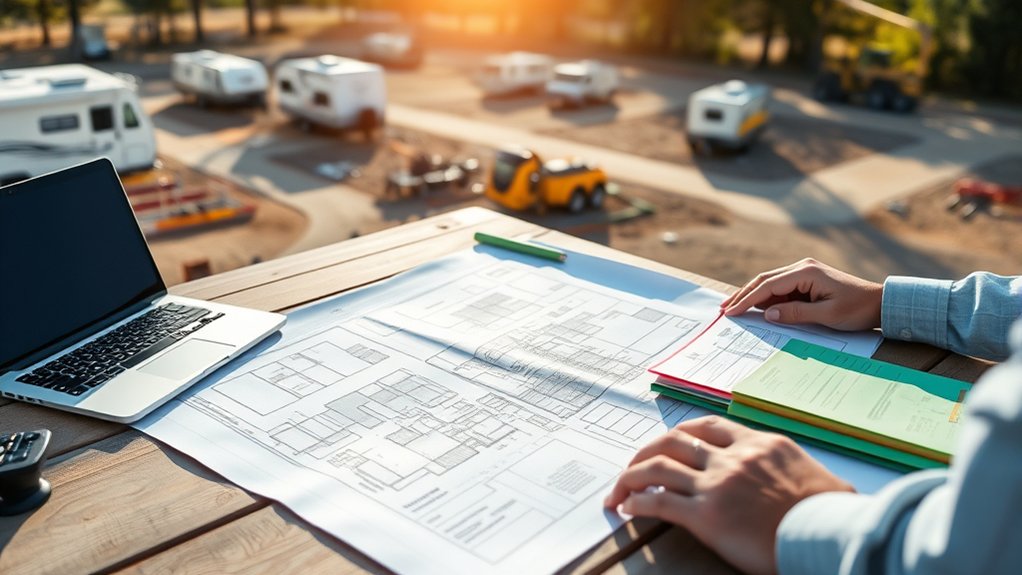
Before you break ground, make sure you secure all the necessary permits. You’ll also want to confirm that your property complies with zoning and environmental regulations. It’s important to get these details sorted early so you don’t run into any surprises down the road.
Next up, think about the business structure that suits you best. Whether it’s an LLC, partnership, or corporation, your choice will affect your liability and tax responsibilities.
It’s a good idea to chat with local authorities and maybe even a legal advisor to make sure you’re covering all your bases.
Business Structure Options
Since your business structure impacts both liability and tax flexibility, you’ll want to carefully evaluate options like forming an LLC or corporation. Each choice affects your RV park’s liability exposure, taxation, and ability to attract financing.
For example, an LLC offers personal liability protection with pass-through taxation, while a corporation might provide greater investment opportunities but involves more regulatory requirements.
When deciding, consider these factors: liability protection level and personal asset safety, tax implications and filing complexity, and flexibility for management and future growth.
Register your business with local authorities and get your EIN early to guarantee compliance. It’s a good idea to consult legal experts to help align your structure with local laws.
This will safeguard your investment and smooth operations. Making the right choice here sets a solid foundation for your RV park’s success.
Permit Requirements Overview
Choosing the right business structure goes hand in hand with securing the necessary permits to get your RV park off the ground. First, conduct a thorough site analysis to confirm your land meets local zoning and land use regulations for RV parks.
Next, select a business setup, like an LLC or corporation, that aligns with licensing needs and provides liability protection.
Before construction, make sure to obtain all required permits: zoning, building, environmental, and health from local, state, and federal agencies. You’ll need to submit detailed site plans and development proposals for approval.
Don’t forget to secure utility permits for water, sewer, electrical, and stormwater systems to ensure legal, safe infrastructure.
Staying organized and proactive during this phase really helps streamline your project and can save you from costly delays. It might feel like a lot upfront, but taking these steps carefully pays off in the long run.
Regulatory Compliance Essentials
While securing permits can seem overwhelming, getting them right is essential to avoid costly setbacks. Before construction, make sure you obtain all necessary approvals: zoning, building, health, and environmental. Also, confirm the land is zoned specifically for RV park use to prevent compliance issues later.
When setting up your business, consider forming an LLC. It shields your personal assets and offers tax advantages.
Keep these key points in mind:
- Secure utility permits early for water, sewer, and electrical connections to avoid delays.
- Regularly check in with local planning and environmental agencies throughout development.
- Choose a business structure that aligns with your liability protection and tax goals.
Staying proactive with permits and your business setup keeps your project on track and protects your investment. It really pays off to stay ahead of the game.
Plan RV Park Layout and Design Amenities
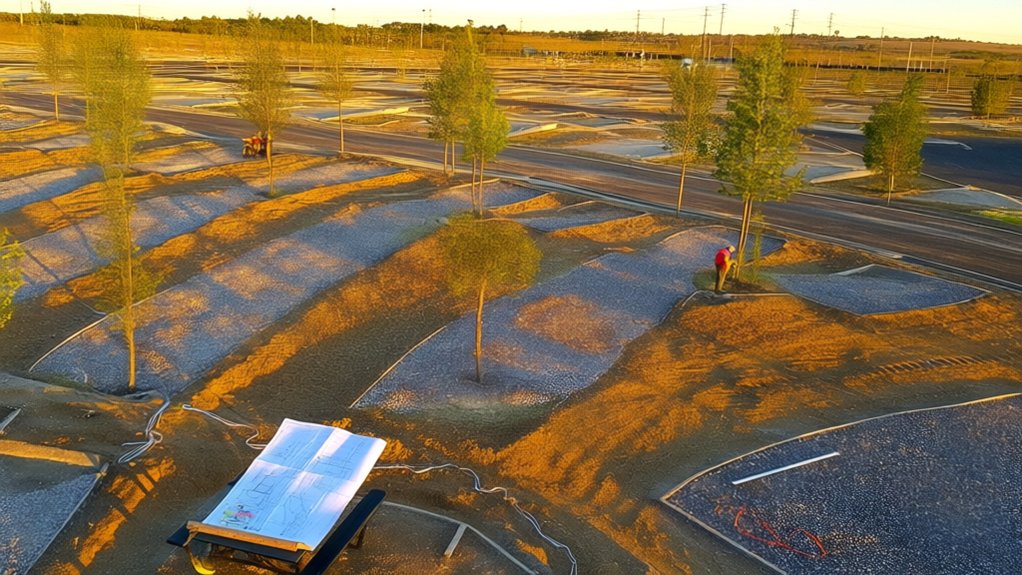
When you plan your RV park layout, engaging professionals early can help you maximize site utilization and create a balanced design that enhances both the number and quality of your RV sites. Incorporate natural landscape features and preserve existing vegetation to boost aesthetics and sustainability.
Design clear circulation pathways for RVs and pedestrians, ensuring safe, easy movement and efficient access. Position communal amenities like fire pits, picnic areas, and social spaces strategically to encourage guest interaction.
Don’t forget to allocate buffer zones and private spaces between sites; these reduce noise and increase privacy, markedly improving guest satisfaction.
Thoughtful layout and amenity planning set the foundation for a successful RV park that appeals to visitors seeking both convenience and comfort. It’s all about creating a space where people feel welcome and relaxed. When you get this right, guests keep coming back.
Develop Infrastructure and Essential Utilities
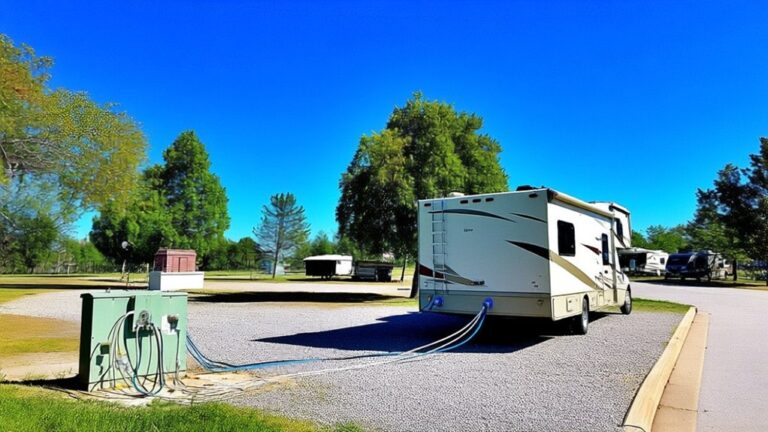
Because reliable infrastructure forms the backbone of any successful RV park, you’ll need to install underground utilities such as water, sewer, and electrical lines to guarantee every site has dependable service. Use high-quality pipes and wiring to ensure safety and longevity.
Reliable underground utilities are essential for every RV site, ensuring safe, long-lasting service and guest satisfaction.
Proper drainage systems are critical to prevent water accumulation and manage stormwater effectively.
Make sure to strategically place utility pedestals at each site for easy hookup access. This makes things more convenient for your guests and keeps everything organized.
Focus on these key steps:
- Install durable, code-compliant water, sewer, and electrical lines underground
- Design and implement efficient drainage systems throughout the park
- Position utility pedestals for convenient access at every RV site
Finally, conduct thorough inspections and test all connections before opening. This helps verify compliance and reduces maintenance issues down the road. It’s always better to catch problems early than to deal with them later!
Create an RV Park Marketing Strategy
Although building a well-equipped RV park sets the foundation for success, attracting guests requires a strong marketing strategy tailored to your target audience. Start by developing a professional website with online booking and detailed park info to convert visitors into reservations.
Use social media to showcase your amenities, scenic views, and guest experiences. This will boost your visibility and engagement. List your park on popular RV travel directories like Campendium, Good Sam, and RV Park Reviews to reach audiences actively seeking RV destinations.
Invest in reflective, eye-catching signage at key road entrances and nearby highways to capture drive-by traffic.
Finally, run targeted advertising campaigns during peak seasons and special events to maximize occupancy and revenue. This will help ensure your park remains competitive and well-known in the RV community.
Manage Daily RV Park Operations and Maintenance
To keep your RV park running smoothly and guarantee guest satisfaction, you need to stay on top of daily operations and maintenance tasks. Focus on regular inspections of utility connections like water, electric, and sewer to ensure everything functions safely.
Maintaining cleanliness and aesthetics is vital, so schedule routine landscaping and debris removal consistently. Also, implement preventative maintenance for key equipment such as laundry, Wi-Fi, and fire safety gear.
Consistent landscaping and upkeep of essential equipment ensure a clean, safe, and attractive RV park experience.
Make certain your team is well-trained in emergency procedures and customer service to create a safe, welcoming environment. Keep detailed records of all inspections and repairs to help with compliance and budgeting.
- Inspect and maintain utilities daily
- Schedule landscaping and debris cleanup
- Train staff on safety and service protocols
This hands-on management approach keeps your park efficient and guest-friendly.
Prepare for Future Trends and Growth Opportunities
As you plan for the future of your RV park, staying ahead of emerging trends and growth opportunities will keep your business competitive and appealing. Anticipate rising demand for luxury amenities and glamping as more high-income travelers hit the road.
Incorporate flexible, sustainable infrastructure to adapt easily to environmental regulations and eco-conscious guests.
Offer diverse accommodations like tiny homes, cabins, and upscale RV rentals to attract a wider audience.
Use smart site management systems and app-based booking to meet tech-savvy expectations.
Regularly monitor industry insights and demographic shifts to update amenities and services accordingly.
By proactively evolving your park’s offerings and operations, you’ll position yourself to capture new markets and stay relevant in a fast-changing RV travel landscape.
It’s all about being ready for what’s next and making your park a place people want to come back to again and again.
Frequently Asked Questions
What Is the Average Cost to Build an RV Park?
You’ll spend between $500,000 and over $2 million building an RV park, depending on size and amenities. Expect $10,000 to $50,000 per site, plus zoning, permits, utilities, and ongoing maintenance costs.
Keep in mind, these costs can vary a lot based on location and what you want to offer. So, it’s a good idea to plan carefully and budget for unexpected expenses too.
How Do I Handle Waste Disposal and Recycling?
You’ll handle waste disposal by installing sealed, odor-proof bins and scheduling regular pickups with licensed services.
Did you know 75% of waste can be recycled? Educate guests on sorting to boost recycling compliance and keep your park clean.
It’s easier than you think, and it makes a big difference! Just a little effort helps the environment and keeps everyone happy.
What Insurance Policies Are Needed for an RV Park?
You’ll need general liability, property, commercial vehicle, and workers’ compensation insurance.
Also, consider pollution liability and equipment breakdown coverage to protect against specific risks like utility failures and environmental damage on your RV park.
These policies help keep your business safe from unexpected problems. It’s a good idea to chat with an insurance agent to figure out exactly what fits your park’s needs.
Can I Host Special Events or Group Bookings?
Yes, you can host special events or group bookings. Just make sure to obtain the proper permits and insurance first. It’s also important to plan dedicated spaces for your guests.
Offering group discounts is a great way to attract more bookings. You can promote these deals through local partners to reach a wider audience. And of course, always guarantee safety to keep everyone happy.
This approach helps you maximize occupancy and guest satisfaction, especially during off-peak times. So, go ahead and start planning your events!
How Do I Ensure Safety and Security for Guests?
Think of your RV park like a fortress. Install surveillance cameras, secure gated entries, and bright lighting to deter threats. Regular safety audits and staff training keep everything tight.
This way, guests can feel safe and secure every time they stay. It’s all about making sure they have peace of mind while enjoying their visit.
Conclusion
Building your RV park is like planting a sturdy oak. Rooted in thorough research and careful planning, it will grow strong with the right location, layout, and amenities.
Keep nurturing it through smart marketing and daily care, making sure utilities and operations run smoothly. By staying adaptable to future trends, your park will stand tall, welcoming travelers like branches reaching out.
With dedication, your RV park becomes more than a business. It’s a thriving community and lasting legacy.