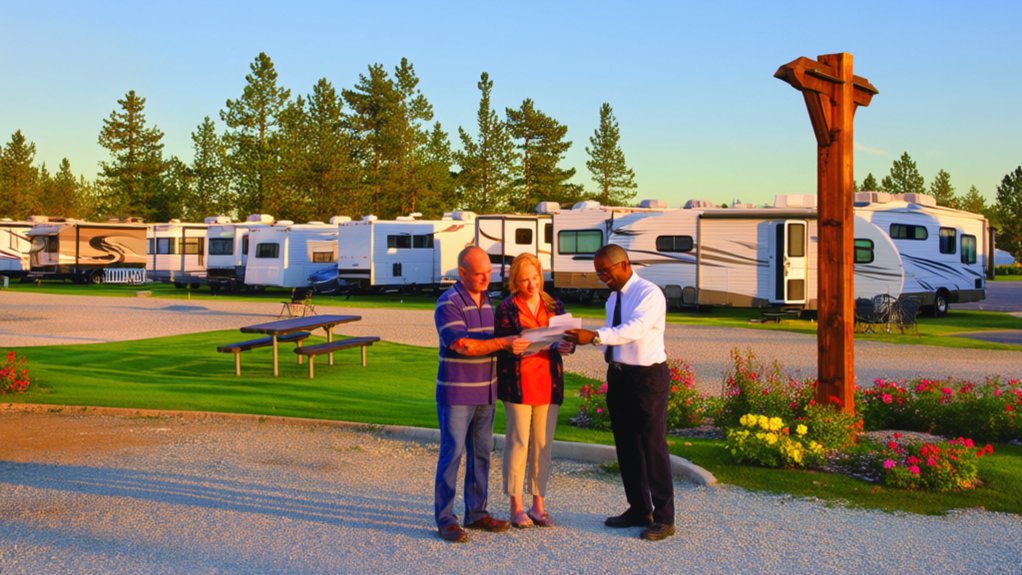
How To Sell An RV Park – Quick Tips
To sell your RV park quickly, start by accurately valuing it using income multiples and market comps. Organize all financial and maintenance records to build buyer confidence.
Decide if a private sale, trade-in, or consignment fits your goals and timeline. Create a detailed listing with high-quality photos and highlight key amenities.
Respond promptly to inquiries, set clear negotiation terms, and prepare legal documents for a smooth closing. Keep going to discover how to optimize each step effectively.
Understanding RV Park Valuation Before Selling

Before you list your RV park for sale, you need to understand how its value is determined. The key method is income multiples, like the capitalization rate, which reflect how much income the property generates.
To get this right, you’ll analyze financial statements, rent rolls, and reservation reports to calculate your net operating income (NOI). Factors such as occupancy rates, amenities, location, and how efficiently you run the park directly impact its market value.
You should also look at comparable sales of similar RV parks nearby to gauge realistic pricing and market demand. Many sellers rely on professional appraisals and valuation tables for an objective estimate before listing, ensuring you price your park accurately and attract serious buyers.
Choosing the Best Selling Method for Your RV Park

When you’re ready to sell your RV park, picking the right method can really impact how much you make and how quickly it sells.
You might want to go the private sale route if you’re aiming for higher net proceeds.
Or, if you’re looking for some professional help but don’t want to fully commit to a broker, consignment could be a good middle ground.
Let’s break down these options so you can figure out which one matches your goals best.
Private Sale Benefits
Although selling an RV park privately requires more hands-on effort, you can save considerably on commission fees and keep more of your sale proceeds.
Private sales also offer greater confidentiality, letting you avoid public exposure and reduce market competition.
You’ll negotiate directly with motivated buyers, which often speeds up closing times.
This approach lets you tailor pricing and terms to fit your legacy and operational goals, giving you more control over the process.
With targeted marketing and thorough preparation, private sales can even close at a premium, according to market data.
While it demands more involvement, choosing a private sale method can maximize your financial outcome and align the sale with your personal objectives.
Trade-In Versus Consignment
Deciding between a trade-in and consignment sale hinges on your priorities for speed, convenience, and financial return. If you want a quick, straightforward exchange with credit toward a new property or vehicle, a trade-in suits you.
But if maximizing your sale price is key, consignment offers professional marketing and access to qualified buyers. It takes longer and may cost more in fees, though.
Consider these factors:
- Immediate transaction versus extended listing period
- Lower net proceeds with trade-in versus potential higher sale price via consignment
- Convenience of credit toward another asset versus cash sale
- Less market exposure in trade-in versus broad marketing reach
- Broker expertise and valuation services with consignment
Choose the method that aligns best with your timeline and financial goals.
Preparing Your RV Park With Maintenance and Financial Records
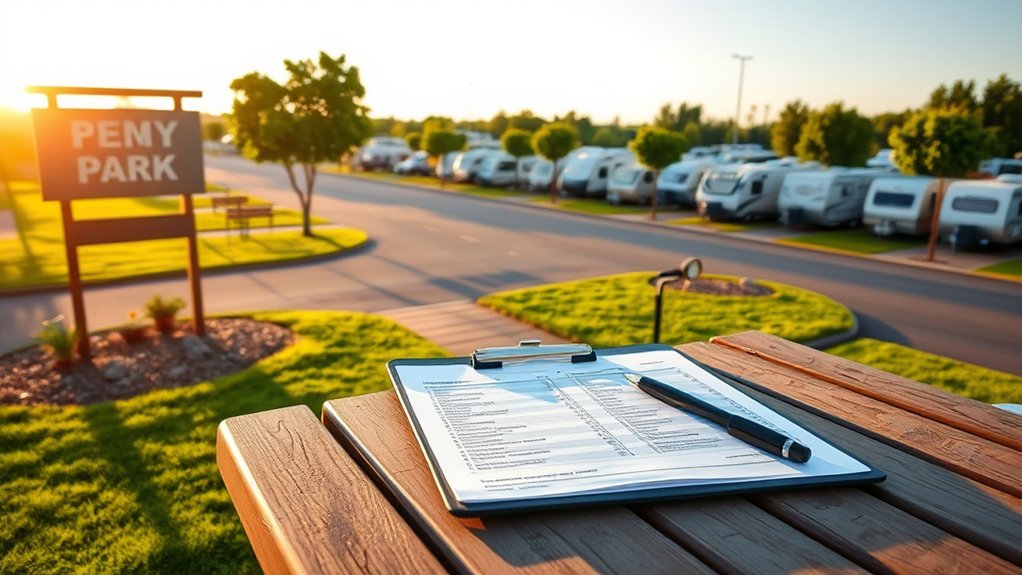
To prepare your RV park for sale, you need to organize all financial and maintenance records carefully. Start by compiling profit and loss statements, rent rolls, and tax returns to show steady income and transparency. Make sure you verify these against supporting documents to avoid any discrepancies during negotiations.
Next, gather property details like site maps, permits, licenses, warranties, and operational reports. This will help simplify the buyer’s due diligence process and keep things moving smoothly.
Keep thorough maintenance logs, repair records, and upgrade documentation ready to highlight your park’s upkeep and improvements.
It’s also a good idea to pre-authorize inspections such as environmental, structural, and title. Doing this upfront can speed up the review process and minimize any delays when closing.
Having these records well-organized not only builds buyer confidence but also helps you manage the sale efficiently, making the whole transaction a lot smoother.
Creating a Compelling RV Park Listing to Attract Buyers
When you create your RV park listing, focus on clear, high-quality photos and a detailed description that highlights your park’s best features. Use well-lit images showing all exterior angles, amenities, and any damage to build trust.
Write an engaging description that covers location, occupancy rates, revenue, and unique selling points like recent upgrades.
Include accurate financial and operational data to boost buyer confidence. Use relevant keywords in your title and description to increase visibility.
To make your listing stand out, feature spacious, paved RV sites with full hookups. Also mention onsite amenities like a pool, clubhouse, or laundry.
Highlight picturesque surroundings or proximity to attractions. Don’t forget to point out recent infrastructure upgrades or renovations.
Be sure to mention consistent occupancy and a solid revenue history too.
Promote actively across RV forums and social media for maximum exposure. Getting the word out there really helps attract the right buyers.
Managing RV Park Buyer Inquiries and Negotiations
After crafting a compelling listing, you’ll start receiving inquiries from potential buyers. Respond promptly and professionally to keep their interest and avoid delays. Be ready to answer detailed questions about your park’s financials, operations, and property condition.
Before negotiations begin, set clear boundaries, including your minimum acceptable price and any non-negotiable terms. Share proof of ownership, permits, and relevant documents early to help buyers conduct due diligence smoothly.
Throughout negotiations, use written agreements to outline all terms clearly. This prevents misunderstandings and ensures both sides are aligned. Staying organized and transparent will build trust and streamline the process, making it easier to manage inquiries and negotiations efficiently.
Completing the Sale: Documentation and Closing Steps
Although negotiations have concluded, your work isn’t done until you complete the necessary documentation and closing steps. This final phase ensures a smooth, legally sound transfer of ownership.
Start by organizing all essential documents like the title, permits, and financial records.
Then, conduct a final inspection to verify both parties have met their obligations.
Next, sign and notarize the deed or sale agreement following local laws.
Securely exchange funds via wire transfer or escrow to protect both sides.
Finally, notify authorities and update ownership records to officially close the sale.
Key steps include:
- Preparing and organizing legal documents
- Conducting a thorough final inspection
- Signing and notarizing transfer documents
- Exchanging funds through secure methods
- Notifying authorities and updating records
Frequently Asked Questions
How Do Seasonal Trends Affect the Timing of Selling an RV Park?
Seasonal trends affect your RV park sale timing by influencing buyer demand and competition. Selling in late winter or fall can speed up sales with less competition.
On the other hand, spring and summer bring high demand but also more listings to compete against. So, while more buyers are out there, you’ll be up against a lot more sellers too. It’s all about finding the right balance for your situation.
What Are the Tax Implications of Selling an RV Park?
You’ll face a mountain of taxes when selling an RV park. These can include capital gains, depreciation recapture, and more. But don’t panic just yet.
There are ways to reduce your tax bill with deductions and 1031 exchanges. These tools can really help if you plan carefully.
It’s always a smart move to consult a tax pro before moving forward. They can guide you through the best options for your situation.
Should I Hire a Broker or Sell the RV Park Myself?
You should hire a broker if you want faster sales and expert guidance, especially if you’re inexperienced.
If you have time, knowledge, and want to save on commissions, selling yourself can work. But keep in mind, it requires significant effort.
How Can I Verify the Legitimacy of Potential Buyers?
You can verify buyers by requesting proof of funds and conducting background checks. It’s also important to confirm their identity with a government-issued ID. Using escrow services to handle payments securely is a smart move.
Always get a signed letter of intent early on. This helps set clear expectations from the start. Taking these steps can save you a lot of trouble down the line.
What Are Common Pitfalls to Avoid When Selling an RV Park?
Don’t overprice emotionally, ignore repairs, or skip organizing documents. Avoid hiding issues or misunderstanding legal, tax, and zoning rules.
It’s really important to stay transparent and thorough. That way, you keep buyers’ trust and close the deal smoothly.
Conclusion
Selling your RV park doesn’t have to feel like moving mountains. By understanding its true value, choosing the right selling method, and keeping your records spotless, you’ll attract serious buyers quickly.
Stay clear and confident during negotiations. Don’t skip any closing steps to avoid headaches.
Follow these straightforward tips, and you’ll wrap up your sale smoothly, getting you one step closer to your next adventure without the usual stress.